After dozens of successful ground launches, suicide drone crashes within 4 seconds in first sea test
A domestically developed medium-sized suicide UAV crashed immediately after launch in both attempts during its first sea trial, and the program was concluded without a retest.
강병지
Published
A medium-sized suicide UAV under development by the Navy and the Agency for Defense Development (ADD) crashed into the sea immediately after launch in both attempts during its first maritime launch test on Aug. 25. ADD pointed to a launcher defect, not a problem with the aircraft itself, as the cause, and military authorities concluded the program without any additional sea trials.
■ What happened
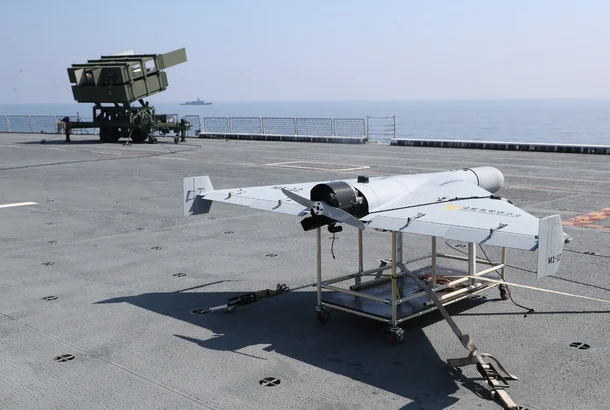
The test was conducted on Aug. 25 from the flight deck of the large transport ship Marado (LPH, 14,500-ton class), which was in waters south of Busan. It was the first combat trial to verify the maritime operational capability of the medium-sized suicide UAV being developed by ADD. The drone was supposed to launch from the ship, track an unmanned target boat maneuvering at high speed 2 km away and strike it.
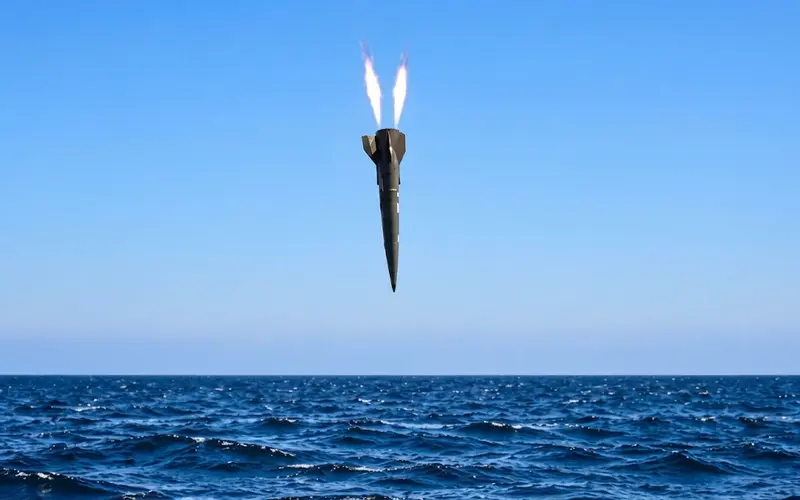
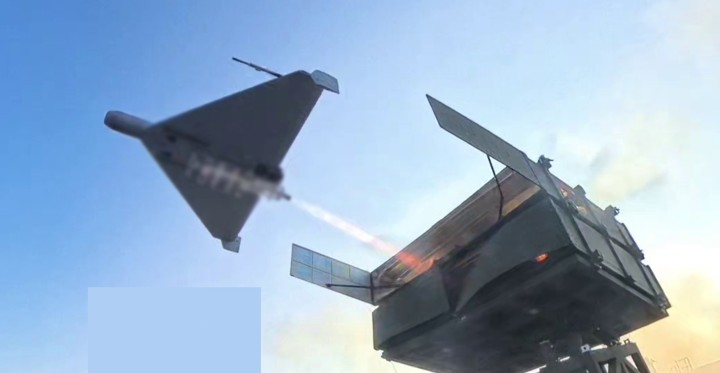
However, in the first launch at 3:30 p.m. and the second at 5:30 p.m., the aircraft fell into the sea immediately after takeoff and never reached the target-strike phase. Both aircraft crashed within four seconds.
The UAV is a fixed-wing aircraft with a wingspan of about 3 meters and a length of about 2 meters, powered by a propeller engine. It is launched from a two-tier multi-tube launcher using rocket-assisted propulsion (a rocket-assisted launch system). An electro-optical/infrared (EO/IR) lens for detecting targets is mounted on the nose.
■ Cause: "Launcher defect, aircraft normal"
In a preliminary analysis on Aug. 28, ADD identified a launcher defect, not the aircraft, as the cause. It said the left hatch on the lower launch tube was not properly aligned, causing launch flames and gas to vent asymmetrically and thrust to skew to one side. Because the aircraft was still in the initial phase of flight, it crashed without recovering its attitude. ADD explained that the hatch deformation appeared only at the moment of launch and immediately returned to its original shape, so it was not immediately confirmed at the scene.
An ADD official said the UAV and the overall system were confirmed to be operating normally, adding that the launch tube appears to have developed an alignment problem while the launcher was being moved, or during loading and assembly. The exact cause remains under further investigation.
■ What comes next
ADD says it has already secured the core technologies needed to operate a medium-sized suicide UAV through dozens of ground test launches. Accordingly, the Defense Acquisition Program Administration concluded the research and development project as scheduled, without any additional launch tests at sea. The project began in 2024 and aims to secure low-earth-orbit satellite connectivity, automatic target recognition (ATR) capabilities and design technologies. A total of 48.6 billion won has been invested through this year.
Development of the medium-sized suicide UAV has moved ahead as North Korea rapidly expands its suicide drone force. Most suicide drones currently operated by the South Korean military are either small or imported, and this domestic development of a medium-sized model is an attempt to fill that gap.
■ Remaining questions
Questions remain, however, about the explanation for the cause. If the left hatch was misaligned, the aircraft should have tilted to the left, but the first aircraft crashed after veering to the right. Over that directional mismatch, some inside and outside the military have raised the possibility of a flight-control gap that cannot be explained by a launcher problem alone.