Although aimed at Cheongung-Ⅱ, what Trump wants is South Korea's contribution.
Trump shared a column urging the sale of Cheongung-Ⅱ to Ukraine. There are interpretations that this is a pressure signal for South Korea to 'contribute more' beyond just weapons.
강병지
Published
■ The column shared by Trump
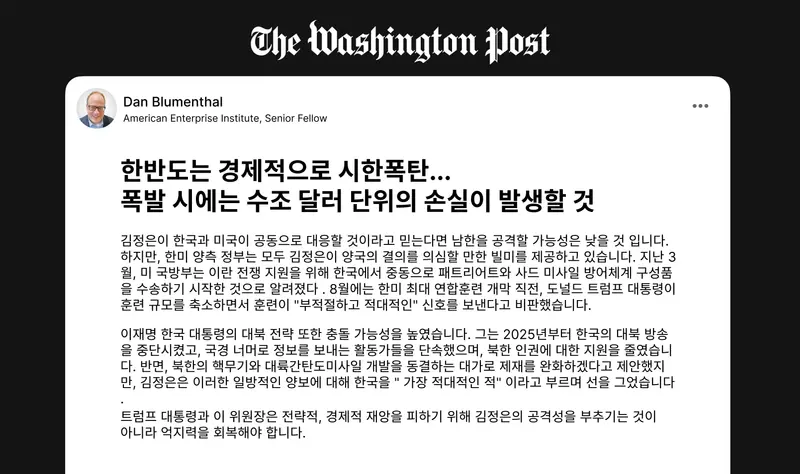
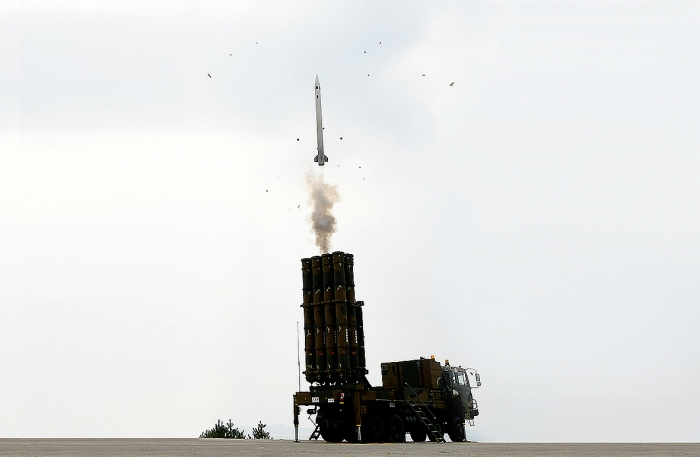
The next bill from the U.S. seems to be targeting South Korea's representative air defense weapon. On the 4th (local time), U.S. President Donald Trump shared a column suggesting that South Korea should be pressured to sell its medium-range surface-to-air missile Cheongung-Ⅱ to Ukraine. Although no specific comments were attached, the fact that the author of the column is known to be someone Trump seeks advice from makes the sharing itself read as a signal towards South Korea.
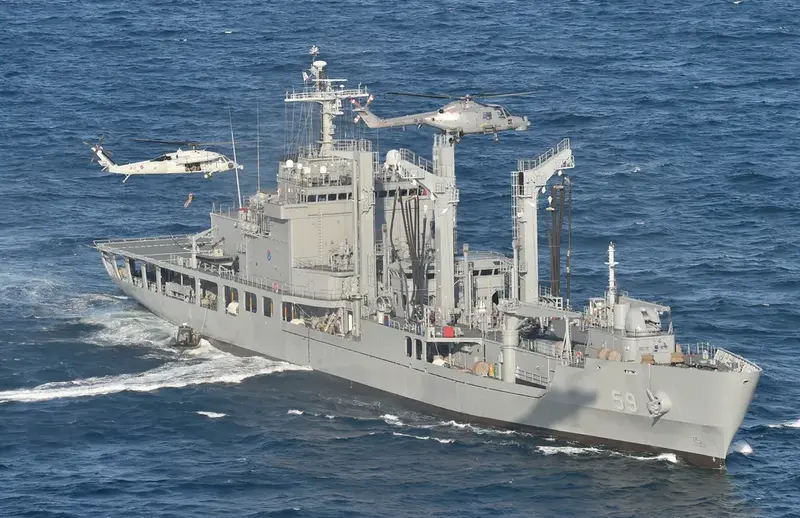
The column predicted that Russia's airstrikes on Ukraine would intensify as winter approaches. However, the U.S. is in a tight situation regarding the interceptor missiles it can spare for Ukraine due to its engagement with Iran. The author pointed to South Korea as an alternative to fill that gap. President Trump should push for South Korea to sell Cheongung-Ⅱ, known as the 'Korean Patriot,' from its vast domestic stockpile to Ukraine.
■ Four justifications, and the 'UAE double standard'
The author presented four justifications. First, that President Trump is already displeased with South Korea's refusal to support the Strait of Hormuz, making this the best way to restore relations. Second, it alleviates the burden of U.S. interceptor missiles for Ukraine. Third, it aligns with South Korea's national interests as it allows for the performance of Cheongung-Ⅱ to be verified in real combat against North Korean missiles deployed in the Ukraine war. Fourth, it is an opportunity to prove that South Korea is a reliable ally.
The column also contained a rebuttal to the principle that South Korea could claim, 'We do not export weapons to countries at war.' The author argued that South Korea is already selling Cheongung-Ⅱ to the war-torn United Arab Emirates (UAE), claiming it is a double standard. However, the case of the UAE is characterized by existing contracts and early delivery in preparation for regional threats such as Iran, raising debate over whether it can be viewed with the same standards as Ukraine, which is currently in full-scale combat.
■ The real items on the bill
The weight of this issue is not solely on the specific weapon Cheongung-Ⅱ. President Trump has publicly criticized South Korea and NATO member countries for their non-cooperation regarding Iran. The pressure that started with demands for support in the Strait of Hormuz has now shifted to air defense weapons, but the underlying message is closer to a bill demanding 'more contributions as allies.' In diplomatic circles, there is a perspective that sees the focus on Cheongung-Ⅱ not as a specific demand but as a general request for additional contributions from South Korea. Last month, former Vice President Mike Pence also mentioned the possibility of supporting South Korean interceptor missiles to Ukraine via the U.S.
The South Korean government previously rebutted President Trump's claims of non-cooperation regarding Iran by stating, 'We are actively participating in international efforts for the prompt normalization of the global maritime logistics network.' The export of Cheongung-Ⅱ is a government approval matter based on the Defense Acquisition Act and the Foreign Trade Act, and exports to conflict parties are handled with caution. Ultimately, the question that needs to be answered converges into one.
Whether the item on the bill is Cheongung-Ⅱ or not, how far will the burden of the alliance be shared?