Hanwha Systems posts strong third-quarter earnings, operating profit up 60.5% year on year
Revenue rises 30.1% on expanded Middle East Cheongung-II radar exports and domestic defense mass-production programs
Defense segment operating profit reaches 76.0 billion won, 50.8% above market forecasts
Published

Hanwha Systems posted strong third-quarter results this year, driven by defense exports to the Middle East and expanded domestic mass-production programs for key weapons systems. Improved profitability in its defense segment and continued growth in its information and communications technology (ICT) business pushed operating profit up by more than 60% from a year earlier.
Hanwha Systems said in a regulatory filing on the 27th that its consolidated third-quarter revenue this year was provisionally tallied at 831.598 billion won and operating profit at 99.15 billion won. Revenue rose 30.1% and operating profit 60.5% from a year earlier. Operating profit was 50.8% above the market forecast of 65.8 billion won compiled by Yonhap Infomax, while the operating margin rose 2.2 percentage points from a year earlier to about 11.9%.
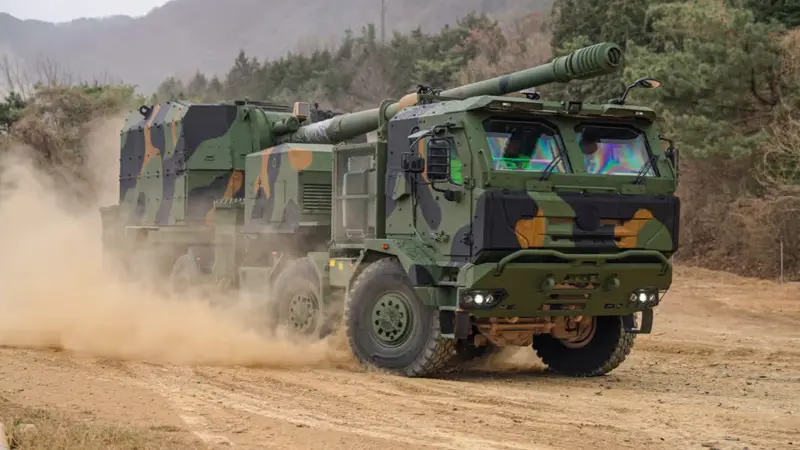
The earnings improvement was led by defense exports. Revenue in the defense segment rose about 28% from a year earlier to 617.4 billion won, while operating profit increased about 53% to 76.0 billion won. A major factor was expanded revenue related to the multi-function radar (MFR) for Cheongung-II, a domestically developed medium-range surface-to-air guided weapon system supplied to the United Arab Emirates, Saudi Arabia and Iraq. The multi-function radar is a key piece of equipment that detects and tracks enemy aircraft and ballistic missiles and supports interception engagements, and it is a major item in Hanwha Systems' large supply contracts with Middle Eastern countries.
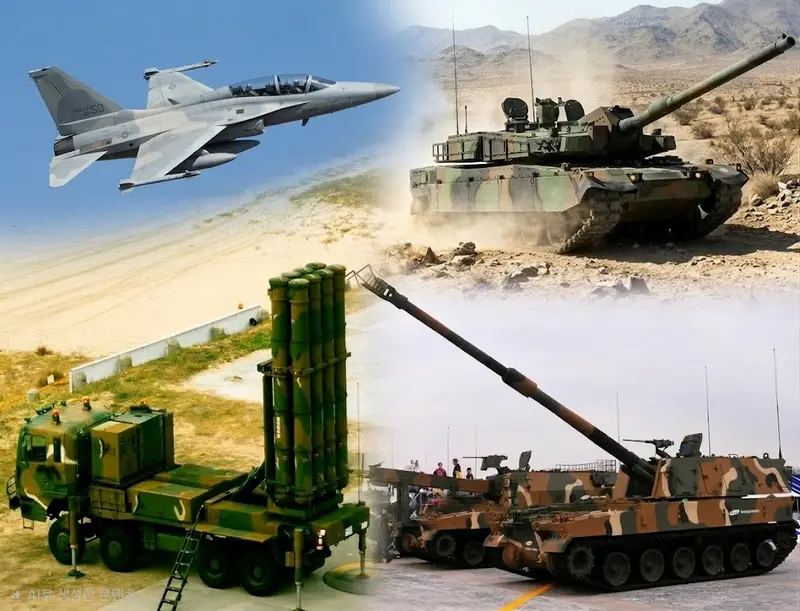
In its domestic defense business, mass production of avionics and radar for the KF-21 Boramae fighter and the fourth-stage Tactical Information Communication Network (TICN) project also contributed to higher revenue. K2 tank-related business also served as a key revenue source. With export volumes increasing and domestic mass-production programs progressing steadily, the defense segment accounted for about 74% of total consolidated revenue.
The ICT segment also continued its growth. Third-quarter ICT revenue came to 212.6 billion won, up about 37% from a year earlier, while operating profit nearly doubled to 24.0 billion won. Revenue and profitability both improved as information system construction projects for group affiliates such as Hanwha Life and Hanwha Philly Shipyard expanded. The ICT segment's operating margin was tallied at 11.3%.
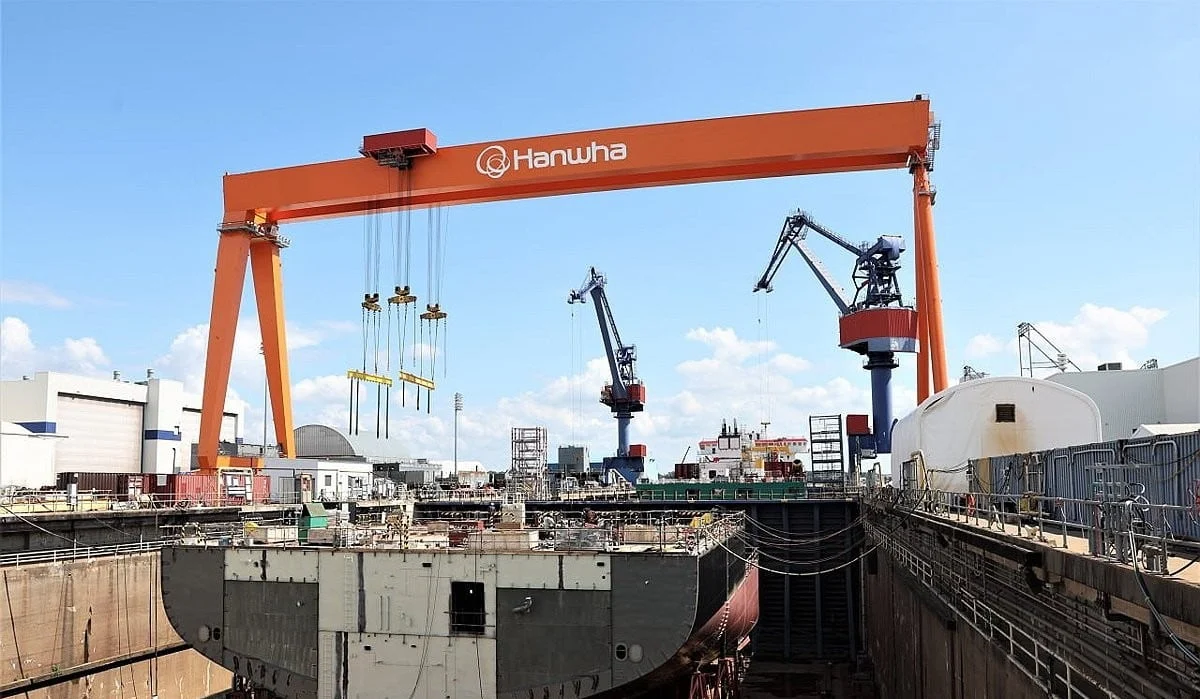
The decision to sell a stake in Hanwha Philly Shipyard in the United States was also reflected in the accounting treatment for these results. Hanwha Systems decided this past September to sell the 60% stake in Philly Shipyard held by its U.S. subsidiary HS USA Holdings to Hanwha Defense USA Shipbuilding for about 325.1 billion won. As a result, the Philly Shipyard business was classified as discontinued operations and excluded from consolidated revenue and operating profit for this quarter, while the comparison base for third-quarter operating profit a year earlier was restated from the previous 22.5 billion won to 61.8 billion won.
Compared with the previous quarter, revenue fell 6.3% and operating profit dropped 19.1%. A major factor was the decline in defense-segment operating profit to 76.0 billion won in the third quarter from 103.7 billion won in the second quarter. Net profit for the period came to 3.8 billion won, down 97.5% from a year earlier. Cumulative revenue for the first through third quarters of this year reached 2.3637 trillion won and operating profit 302.4 billion won, up 29.0% and 64.7%, respectively.
As of the end of the third quarter, total order backlog stood at 8.8653 trillion won, of which the defense segment accounted for 8.3956 trillion won. Air defense network construction projects in the Middle East and domestic development and mass-production programs for key weapons systems are expected to support future results.
Hanwha Systems also said in an earnings conference call that day that it plans to expand business cooperation based on the heads of terms agreement it signed with EDGE Group, a state-owned defense company in the UAE, on building an integrated air defense network. It plans to take part in building a multilayered air defense network that integrates various air defense systems from short range to long range and links them with ground weapons systems, while also pursuing a space data services business using artificial intelligence (AI)-based satellite image analysis technology.