K9 Self-Propelled Howitzer Opens the Door to Western Europe
Hanwha has made its first entry into Western Europe with the K9. This localized model, where a Spanish company designs and produces the chassis rather than shipping a complete product, has opened a market with high entry barriers.
강병지
Published
Updated

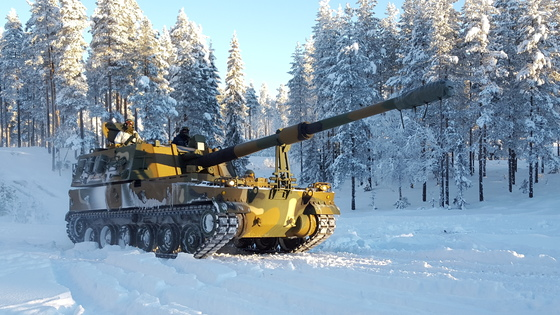
Hanwha Aerospace announced on August 31 that it signed an 'export execution contract for the K9 self-propelled howitzer' with the Spanish defense company Indra Sistemas. The contract was signed on August 28. This is the first time the K9 has entered Western Europe. Until now, it has expanded its operational base mainly in Northern and Eastern Europe, including Poland, Finland, Norway, Estonia, and Romania. According to Hanwha Aerospace, Spain is the 11th export country for the K9.
■ Not a Complete Product, but a 'Basic Platform'
What is noteworthy is the form of the contract. This project does not involve shipping a complete product made in Korea. Indra will directly design and produce the chassis at its factory in Gijón, northern Spain, and combine it with the platform technology of the K9, including the turret and gun provided by Hanwha Aerospace. Mission systems such as battlefield management, command and control (C2), and communications will be integrated with Spanish components. As a result, what Spain is introducing is closer to a 'basic platform' that can be redesigned to meet its own requirements rather than a completed weapon system. What Korea has transferred is not just a single self-propelled howitzer, but a significant portion of the rights to produce it.
The background for this model's success lies in the uniqueness of the Western European defense market. Western Europe, with strong domestic defense companies and weapon system foundations like Germany, France, the UK, Italy, and Spain, is considered a market with high entry barriers for foreign platforms. However, after the Russia-Ukraine war, countries have begun to prioritize securing supply chains that allow them to produce and maintain weapons independently in times of crisis. There is a trend to secure the ability to manufacture rather than just purchasing complete products. According to local reports, the K9 was selected as the tracked platform, surpassing competing models like the German PzH2000. Its performance and real-world verification, along with a proactive response to technology transfer and local production demands, were deemed decisive.
■ A Higher Level of Localization, and Remaining Questions
In fact, this method is not the first card the K9 has played. In Turkey, the T-155 Firtina was born through technology transfer, and the K9 has taken root in various forms and names in India with the Vajra-T, Australia with the AS9 Huntsman, and Poland with the Krab and K9PL. However, considering that even Poland, the largest importing country, produces the recent contract's complete vehicles in Korea, the Spanish model, where local companies are responsible for chassis design and production, represents a higher level of localization. The scope of the 'K9 User Club,' a cooperative body where importing countries share operational and maintenance know-how, has also expanded to Western Europe.
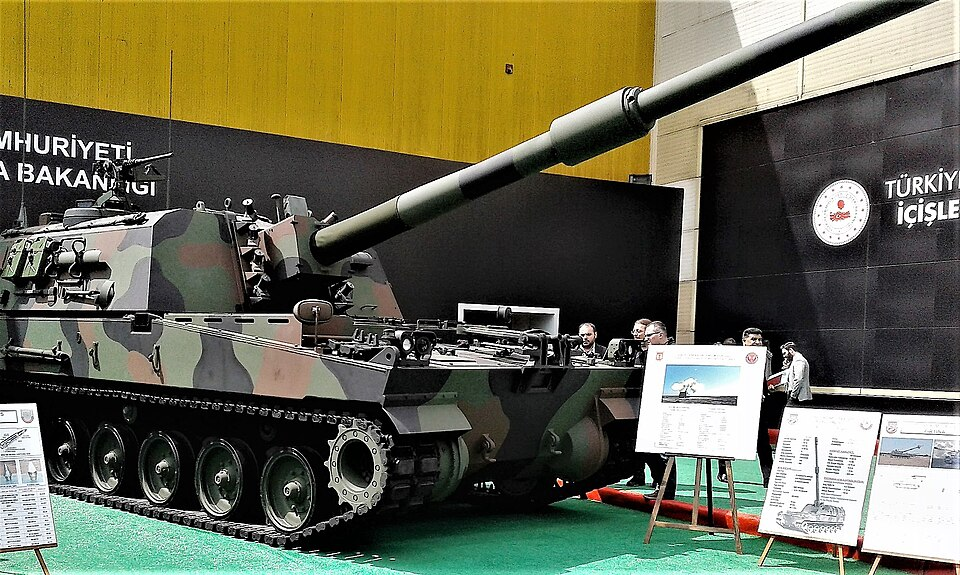
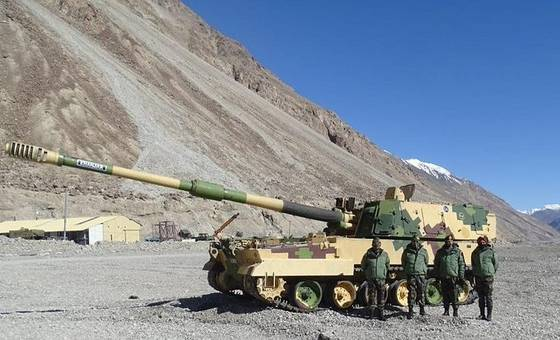
There are still remaining questions. Hanwha Aerospace did not disclose the contract amount, quantity, or duration due to business confidentiality. It is estimated to be at least 660 billion won based on the Korean Exchange's contract announcement standards, but this is not a confirmed figure (industry and securities analysts speculate it could exceed 1 trillion won). The separate figures mentioned in the trillions of won refer to the overall scale of the Spanish Army's artillery modernization project, which is different from this Hanwha contract. The scope of joint development officially announced by Hanwha Aerospace and Indra in March includes 128 K9-based self-propelled howitzers, 120 ammunition supply vehicles, and additional recovery and command vehicles, totaling over 280, all belonging to Spain's tracked self-propelled howitzer project (the wheeled 86 units are separate). However, it is not known how much of this execution contract encompasses. The specific scope of technology transfer, ownership of key intellectual property rights, and export rights to third countries are also sensitive conditions that cannot be confirmed solely through public documents.
Nevertheless, one thing is clear. The K9 has laid the groundwork for designing a domestic self-propelled howitzer in Western Europe, rather than being a completed weapon. It remains to be seen whether this approach, which has changed 'what to sell' to open doors in a market with high entry barriers, can serve as the same key at the next door of Western Europe.