LIG D&A faces possible revocation of its defense contractor designation after a 2-year bidding ban, adding uncertainty to counter-drone fielding
DAPA has asked the Ministry of Trade, Industry and Energy to review revoking LIG D&A's defense contractor designation for the small unmanned aircraft response system, affecting a 122.3 billion won project
The agency approved the maximum 24-month bidding ban over bribery and cost-fraud allegations, and is also considering clawing back hundreds of billions of won in incentive profit
Published
Updated

After imposing a 2-year restriction on LIG Defense & Aerospace's eligibility to participate in bids over a bribery and cost-fraud case, the Defense Acquisition Program Administration is also pushing to revoke the company's defense contractor designation for the small unmanned aircraft response system project. If the designation is revoked, the company would be unable to enter not only new bids but also sole-source contracts based on its status as a designated defense contractor.
On the 20th, DAPA convened the Defense Acquisition Contract Deliberation Committee to review sanctions on LIG D&A as an improper contractor and approved a 24-month restriction on bid participation, the maximum level under the State Contracts Act. It also confirmed on the 25th that it had asked the Ministry of Trade, Industry and Energy to review revoking the company's defense contractor designation in connection with the small unmanned aircraft response system project.
DAPA is reported to have already requested a review of revoking the designation this past September.
460 million won bribery case, prosecutors say it even altered evaluation results
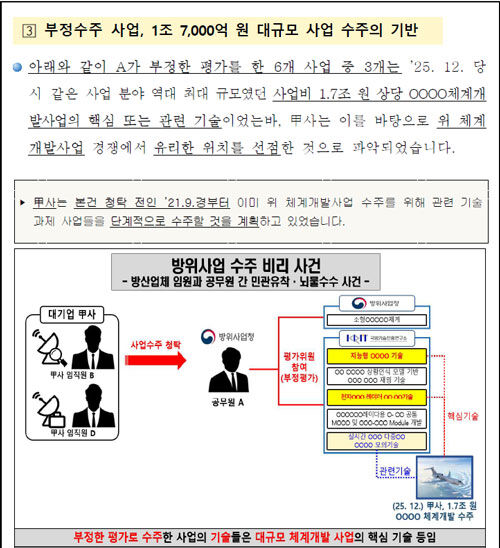
The sanctions stem from a bribery case between a defense company and a DAPA official announced this past August by the Suwon District Prosecutors' Office.
According to prosecutors, a Grade 5 DAPA official is accused of giving evaluations favorable to LIG D&A while serving as a proposal evaluator on six defense projects worth a combined 91.5 billion won from 2021 to 2025.
In particular, investigators found that in a 2021 evaluation of an intelligent signal-detection technology project, the official gave LIG D&A the highest score in 16 of 20 evaluation categories and the lowest score to a rival company in every category. Prosecutors believe the official's evaluations in some projects actually changed the outcome of contractor selection.
The money and valuables the official is alleged to have received totaled 460 million won. Of that, 320 million won was identified as having been provided by the LIG D&A side, while the remaining 140 million won was reportedly received in return for involvement in selecting partner companies.
Prosecutors believe the LIG D&A side used false service contracts and other means to disguise bribe money as legitimate contract payments. Company executives and partner-firm officials involved in the process were indicted.
DAPA cited the case as the largest bribery scandal since the agency's launch in 2006 and said it had also confirmed planned cost fraud carried out over a long period. The Defense Acquisition Contract Deliberation Committee considered the possibility of imposing a surcharge but ultimately chose a bid participation ban.
However, the related criminal trial is still under way, and no final ruling has yet been issued on the criminal liability of the individual defendants.
Beyond a bid ban, possible loss of defense contractor status could affect counter-drone production

The key point of the additional sanctions is that the bid participation restriction and the revocation of defense contractor designation have different effects.
Sanctions on an improper contractor under the State Contracts Act, in principle, restrict participation in new bids. By contrast, the designation system for defense items and defense contractors allows sole-source contracts with specific companies so the military can secure supplies that are difficult to procure through ordinary competitive bidding. As a result, even if a company is barred from bids, it may still be able to sign sole-source contracts as a designated defense contractor. But if that designation is revoked, that route is blocked as well.
The review now under way concerns the small unmanned aircraft response system developed by LIG D&A.
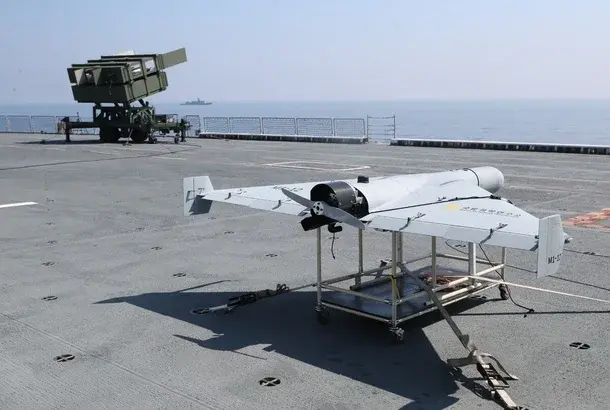
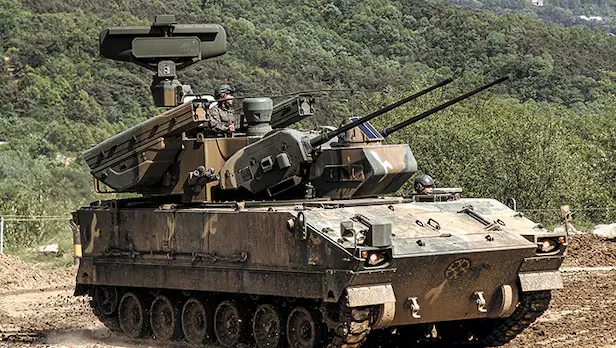
The small unmanned aircraft response system is designed to detect enemy small drones and then use jammers and other electronic jamming equipment to disrupt their communications or navigation functions. It is a so-called soft kill method that neutralizes threats by electronic means rather than physical interception. LIG D&A took part in system development for the project in 2022 and was designated a defense contractor for it. After completing system development earlier this year, it has been pursuing a follow-on mass-production program. The total project cost, including mass production, is 122.3 billion won. If the Ministry of Trade, Industry and Energy decides to revoke the designation, LIG D&A will no longer be able to sign a sole-source production contract for the project. For now, however, the matter remains under review, and neither an actual revocation nor the follow-on procurement method has been finalized.
The issue is also tied to the schedule for securing South Korea's domestic counter-drone defense capability. As battlefield use of drones expands and the need grows to respond to North Korea's unmanned aircraft threat, any change in the entity responsible for mass production of the system or in the procurement schedule could also affect the military's fielding plans.
Revocation of cost management certification also under review, with possible recovery of hundreds of billions of won
Beyond the bidding restriction and possible revocation of defense contractor designation, DAPA is also considering additional measures related to cost fraud.
Also under review is LIG D&A's defense cost-management system certification. The certification assesses whether a defense contractor has an appropriate cost-management system in place, and certified companies are granted additional incentive profit. DAPA is considering revoking LIG D&A's cost-management certification and clawing back the 1 percent incentive profit paid so far. Media reports have put the expected recovery at hundreds of billions of won. However, that is not a finalized amount, and the actual contracts and sums involved are to be determined through the cost-fraud investigation and a separate review.
Of the six defense projects investigated by prosecutors, five excluding the small unmanned aircraft response system were core technology programs commissioned by the Korea Research Institute for Defense Technology Planning and Advancement. That has raised the possibility of separate sanctions for those projects as well under the National Research and Development Innovation Act and related rules.
Uncertainty over new contract awards, with KF-21 missile project also in focus
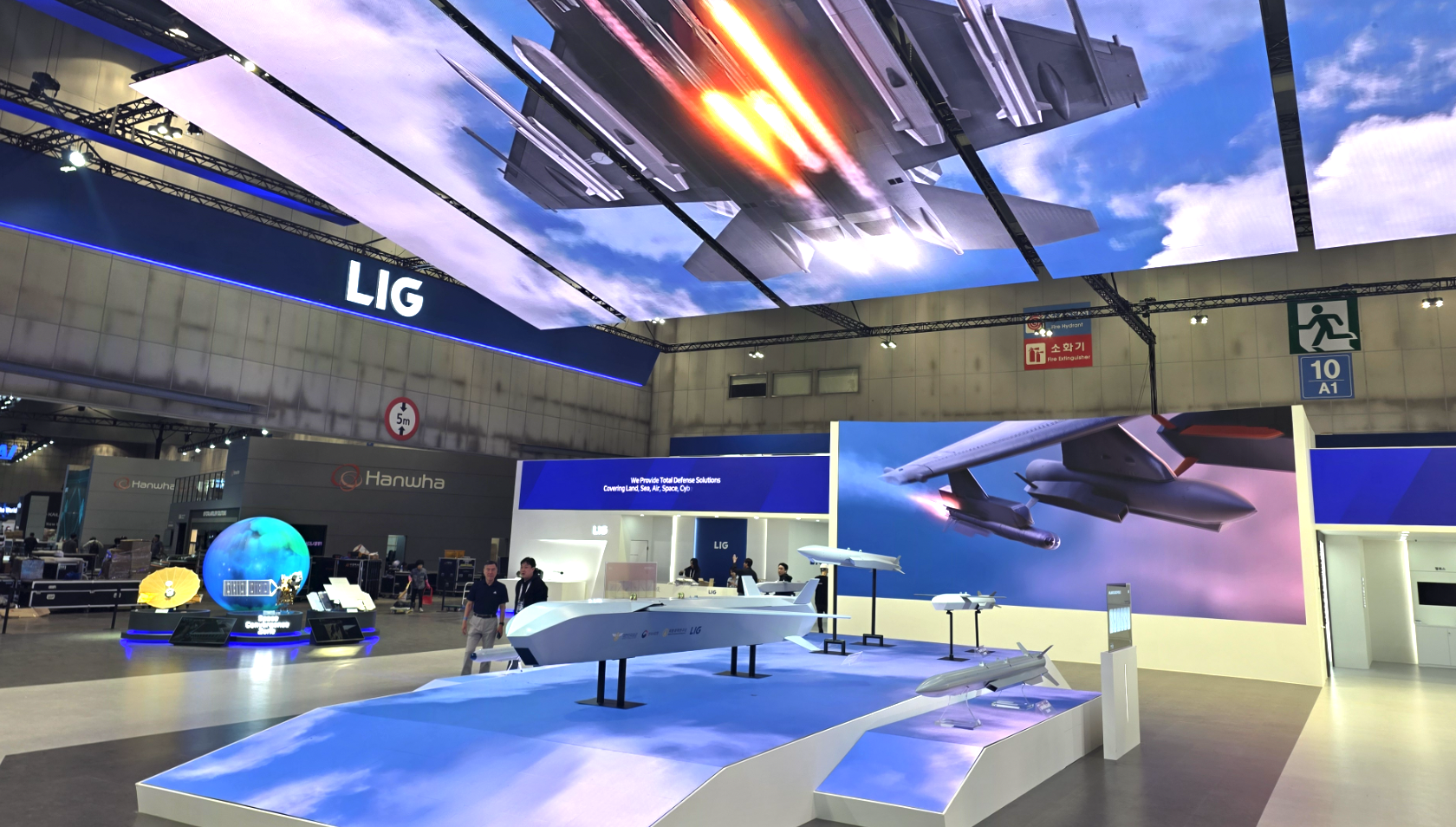
If enforced, the sanctions are expected to affect LIG D&A's ability to win new domestic orders as well.
According to a filing LIG D&A made on the 22nd, the restriction on its eligibility to participate in bids will run from Oct. 29 through Oct. 28, 2028. It applies to bids from the central government, local governments and public institutions. Last year, the company's sales related to government and public institutions totaled about 2.7773 trillion won, accounting for 64.5% of its consolidated revenue, but not all of that amount will disappear because of the sanction. Contracts already signed will in principle remain in force, and overseas export contracts are not directly subject to this domestic bidding restriction. The issue is new contracts that must be signed going forward.
In particular, the system development project for a long-range air-to-air guided missile to be mounted on the KF-21 Boramae fighter is being cited as a key variable. LIG D&A has been selected as the preferred bidder for the project, but because a final contract has not yet been signed, uncertainty could arise over whether the deal can proceed depending on whether the sanctions take effect.
LIG D&A, meanwhile, is contesting the sanctions. On the 22nd, it filed a court application to suspend their effect and an administrative lawsuit seeking to overturn the disposition. In a press release, the company said it regretted that administrative sanctions had been imposed based on the indictment while the facts are still being established through criminal proceedings, and said it would explain its position through the prescribed procedures. Some critics said the statement amounted to a coordinated announcement between a defendant company and a defendant agency.
If the court grants the stay request, the bidding restriction would be suspended for a set period, potentially allowing the company to participate in new bids. However, whether the stay will be granted and the outcome of the main lawsuit have not yet been determined.
This case is simultaneously raising two issues: holding domestic defense firms, which effectively operate in a monopoly structure, accountable for illegal acts, and ensuring the military's stable procurement of weapon systems. As the Defense Acquisition Program Administration moves from imposing the highest level of bidding restriction to also pursuing revocation of the company's designation as a defense contractor, the Ministry of Trade, Industry and Energy's decision and the court's ruling on the stay request are likely to be key turning points. In particular, if the designation is revoked, how to continue mass production and fielding of the weapon system is likely to remain a follow-up task.