Same Ship, Different Brain: The Changes Brought by the Black Eagle-B Batch-II
The successor of the Chamsuri, which continued from the Second Battle of Yeonpyeong, the first ship of the Black Eagle-B Batch-II has been delivered. The coastal defense capability to counter North Korean small fast boats has been modernized.
강병지
Published
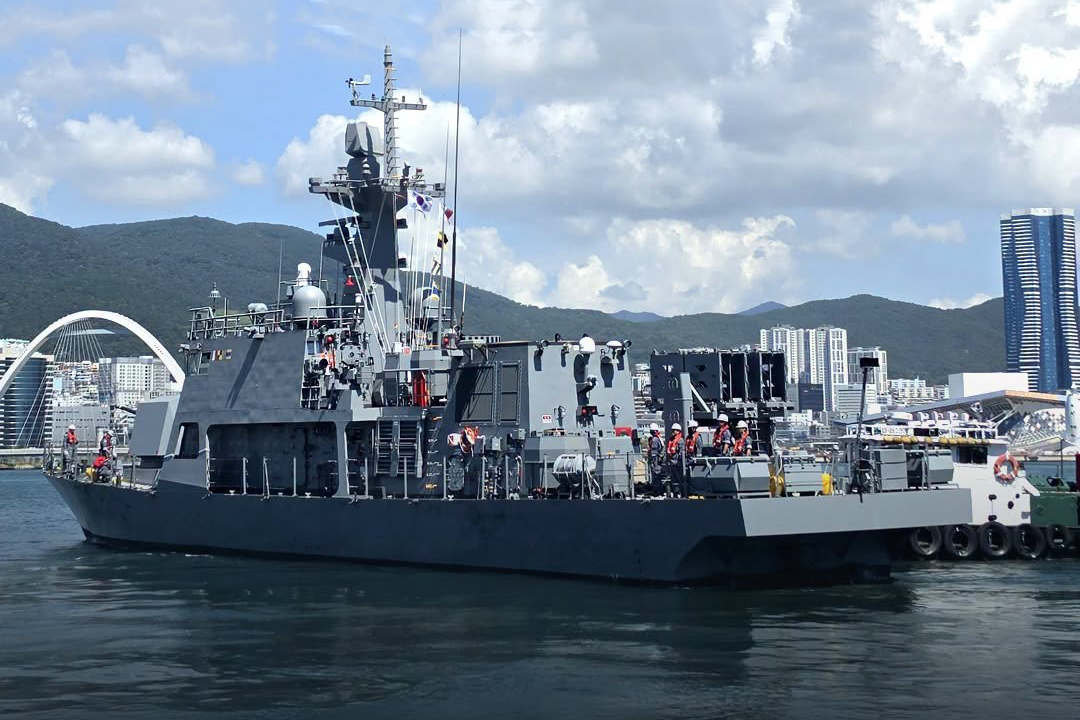
On August 14, the Defense Acquisition Program Administration delivered the new fast boat Black Eagle-B Batch-II (Chamsuri-231) to the Navy at HJ Heavy Industries' Yeongdo shipyard in Busan. This is the first ship of the follow-up production of the next-generation fast boat project, which replaces the aging Chamsuri-class fast boats (PKM), and it will be deployed in the Northern Limit Line (NLL) area after going through the operational process.
■ What Has Changed Is Not the Hull
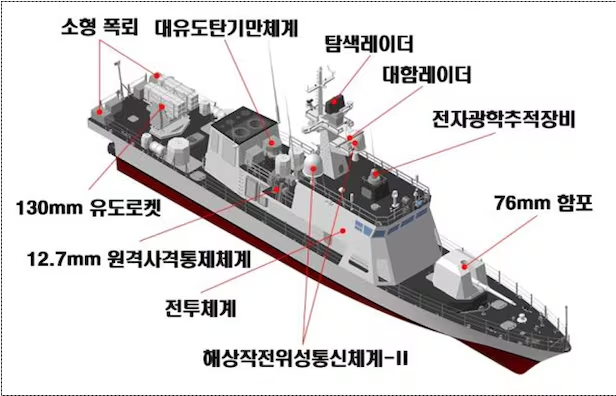
At first glance, this ship has the same hull shape as the previous Batch-I. The main onboard equipment configuration, including the 76mm naval gun, Biryong 130mm guided rocket, small electronic warfare equipment, and anti-guided missile decoy system, remains unchanged. What has changed is the way the weapons are handled.
Batch-II incorporates over 30 improvements and enhancements compared to Batch-I. The core of these improvements is twofold. First, the control and launch functions of the 130mm guided rocket and the 12.7mm remote-controlled weapon system (RCWS) have been integrated into the combat system. This means that weapons, which were previously handled individually, can now be detected, aimed, and launched within a single system. Second, the anti-jamming capability has been strengthened. The Defense Acquisition Program Administration confirmed that the ability to precisely guide the 130mm guided rocket while maintaining satellite navigation and communication in a strong electronic warfare environment has been verified.
Previously, Batch-I had engine design flaws revealed in the early construction ships, leading to improved engines being installed from the ninth ship onward. The 'identified problem improvements' in this Batch-II reflect these early operational experiences.
■ Why This Weapon
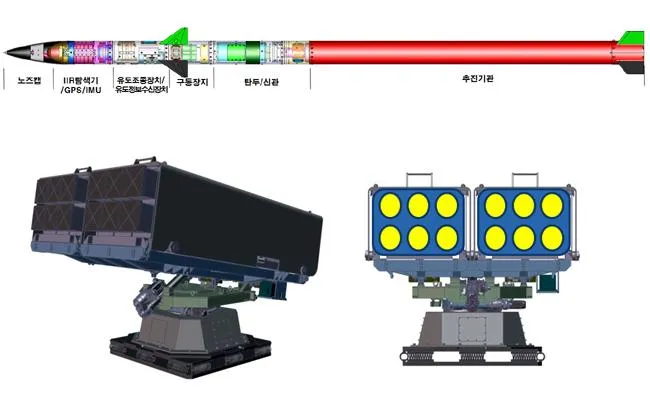
To understand the nature of Batch-II, one must first look at the reason for the existence of the Biryong 130mm guided rocket. The Navy's main anti-ship missile, Haeseong, is powerful, but its cost per shot is too high and its destructive power is excessive for dealing with the small fast boats or hovercraft that North Korea possesses in large numbers.
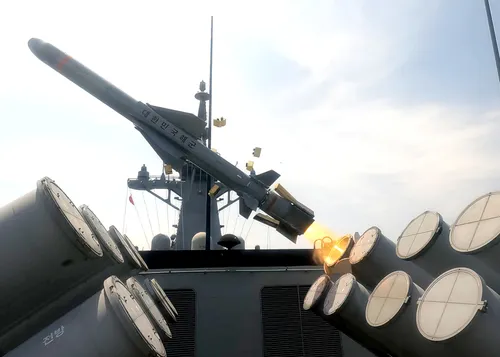
There was a need for a means to target multiple targets simultaneously, accurately, and at a low cost. The Biryong is a fleet anti-ship guided rocket developed for such small targets, using a method that receives real-time target information to improve hit rates. The integration of this weapon's control and launch into the combat system of Batch-II means that its inherent mission capability to quickly handle multiple targets has been enhanced.
■ The Lineage of Chamsuri
The Black Eagle-B carries on its lineage from its name. The ship's name inherits the hull number of the old Chamsuri fast boat. The roots of the project trace back to the Second Battle of Yeonpyeong in 2002. The Navy reflected on the lessons learned from that battle and divided the next-generation fast boat into two branches. The larger 570-ton class is the Black Eagle-A (Yun Young-ha class guided missile fast boat), while the 200-ton class specialized in coastal defense is the Black Eagle-B (PKMR). Choosing water jets instead of propellers was also to ensure smooth maneuvering in shallow coastal waters.
■ Design Choices
The Black Eagle-B is not an all-purpose vessel. While it focuses on suppressing surface targets with a 76mm naval gun and a 130mm guided rocket, its self-defense capabilities are limited. This choice is based on the design concept of a small fast boat performing coastal missions under the fleet air defense of larger vessels, but it also means there are limits to its standalone survivability.
■ Filling the Frontline Again
A total of 18 Black Eagle-B Batch-IIs will be built by 2030. Following the first ship, three subsequent ships are scheduled to be delivered sequentially within this year. As the new ships are operational, the old Chamsuri fast boats will gradually be phased out. A ship with a more sophisticated brain has begun to fill the long-standing position at the forefront of the NLL again.