South Korea's first space debris removal satellite to begin assembly in November, launch on Nuri in 2027
KAIST-developed Active Space Object Control Satellite clears system integration readiness review; robotic arm to capture defunct satellite and guide atmospheric re-entry
Wooribyul-3 likely first removal target; Japan and Europe also competing to remove space debris, with hopes of securing in-orbit servicing technology
Published
Wooribyul-3 likely first removal target; Japan and Europe also competing to remove space debris, with hopes of securing in-orbit servicing technology
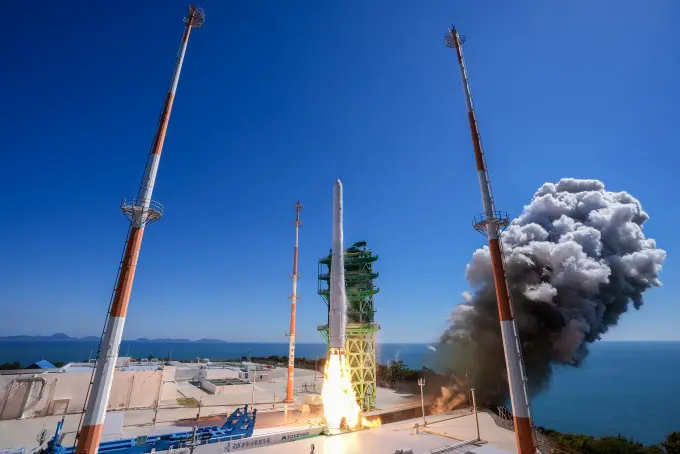
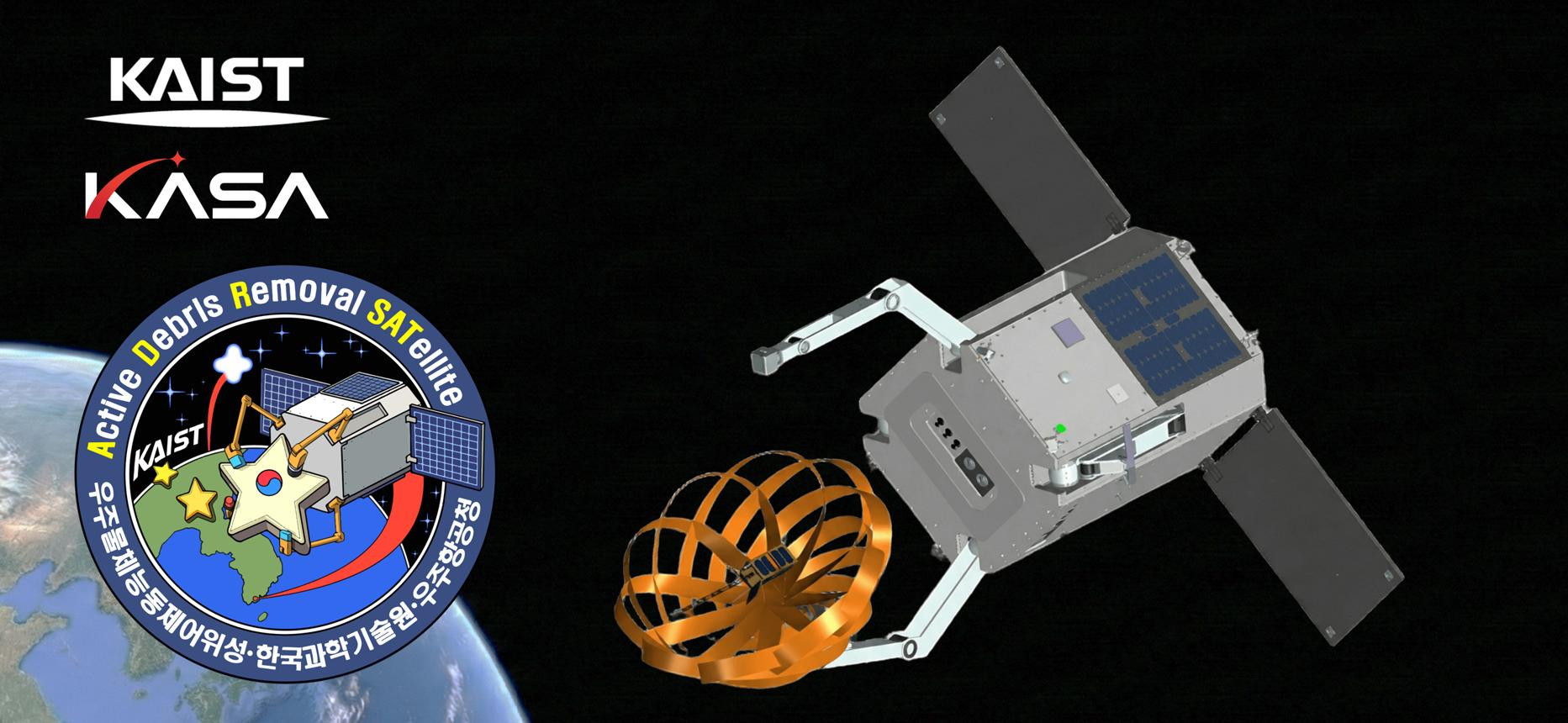
South Korea will launch a space debris removal satellite next year to demonstrate technology for directly capturing and removing abandoned satellites in space. The Active Space Object Control Satellite (ADR-SAT), under development by the Korea Advanced Institute of Science and Technology (KAIST), has passed the final review before assembly, moving the country's first space debris removal mission into full-scale production. The satellite is scheduled to ride aboard the sixth launch of South Korea's Nuri rocket in 2027, enter Earth orbit, and verify technology for tracking and capturing a satellite that has completed its mission, then sending it into the atmosphere to burn up.
The Korea AeroSpace Administration said it held a System Integration Readiness Review (S-IRR) for the Active Space Object Control Satellite on the 26th at KAIST's Satellite Research Institute in Daejeon. The meeting comprehensively reviewed the readiness of the satellite's components and subsystems, as well as assembly procedures, the adequacy of facilities and equipment, and technical risks expected during system integration. External reviewers from industry, academia and research institutions evaluated the project's status and confirmed that it met the success criteria set out in the Korean Systems Engineering Handbook.
Accordingly, KAIST's Satellite Research Institute plans to begin assembling the flight model (FM), the version that will actually be launched into space, in November. Unlike ground test equipment used to verify design and functions, a flight model is a satellite built for actual launch and space operations. Once assembly is complete, it will undergo tests to confirm that it can withstand operating conditions such as launch vibration and shock, as well as the vacuum of space and extreme temperature changes.
The Active Space Object Control Satellite is being developed as part of the Korea AeroSpace Administration's Preliminary Technology Development Project for Active Control of Space Objects, with KAIST's Satellite Research Institute serving as the lead research institution. The satellite is scheduled to head into space on Nuri's sixth launch in 2027 along with five ultra-small cluster satellites and various secondary payloads for technology demonstrations. According to the payload plan announced by the Korea AeroSpace Administration last December, a total of 13 satellites, including the active control satellite, will be carried on Nuri's sixth launch.
Robotic arm to capture defunct satellite and lower its orbit; Wooribyul-3 likely first target
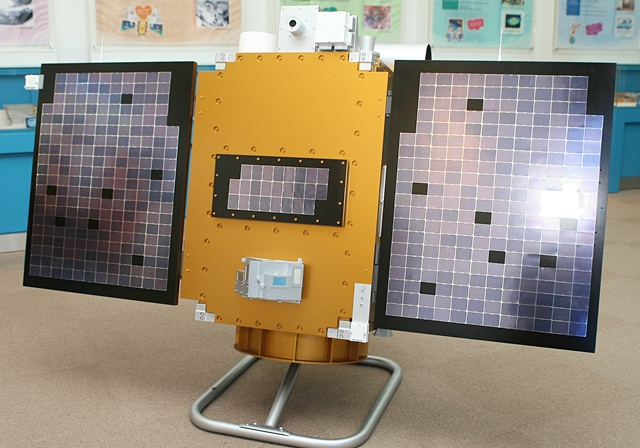
The mission of the Active Space Object Control Satellite is to approach a satellite that has lost functionality and is drifting in orbit, capture it, and then lower its altitude so it re-enters Earth's atmosphere. To do that, the satellite will carry a robotic arm and a gripper, a pincer-like device designed to seize the target.
The disclosed mission plan consists of stages including initial operations, verification of gripper operation, orbital transfer, far- and close-range approach, target capture and release of the captured object. After launch, the satellite will check whether its various systems are functioning properly, move to the orbit where the target is located, and approach while adjusting its relative position and speed. It will then grab the target with the robotic arm and gripper, lower its altitude and release it to induce atmospheric re-entry. Once an object enters the atmosphere, it is rapidly heated through interaction with the air, and most of its structure is destroyed.
According to Yonhap News Agency and other reports, South Korea's Earth observation satellite Wooribyul-3, launched in 1999, is being strongly considered as the first removal target. Wooribyul-3 was developed by the KAIST Satellite Research Center and ended its mission in 2002, but it remains in Earth orbit to this day. If the removal target is finalized, it will mark the first demonstration of South Korea recovering and disposing of a satellite it launched in the past using technology developed at home.
The most difficult aspect of space debris removal is precisely controlling relative motion with the target. Satellites in low Earth orbit circle the planet at about 7 to 8 kilometers per second, but a capture satellite must first match the target's orbit and speed, then reduce the relative speed to approach safely. A satellite that has already lost functionality cannot control its attitude or change its orbit from the ground, making it harder to approach. When capturing a rotating object, control is also needed to prevent additional debris from being generated by impact.
In particular, in space, the reaction force generated when a robotic arm grasps a target can also affect the attitude of the capture satellite. Stable capture is possible only if relative navigation technology that measures the target's movement, the satellite's propulsion and attitude-control technology, and the robotic arm's mechanical design all work together. KAIST's space robotics team is also developing soft gripper technology to capture a CubeSat in connection with the project, and robot specialist company Neuromeka and others are taking part in the research.
About 47,000 man-made objects still tracked in orbit; space debris removal market expands
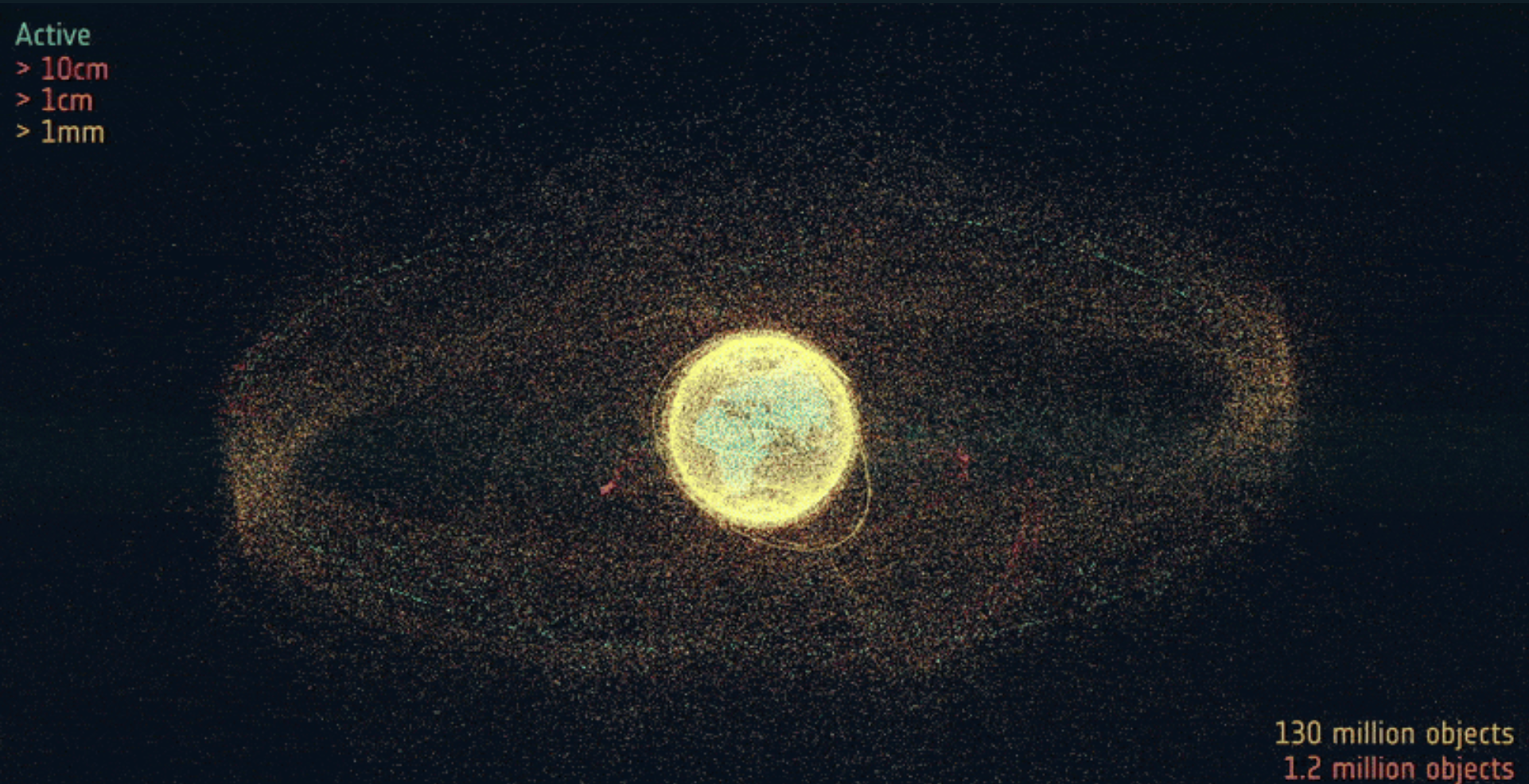
The importance of space debris removal technology is growing along with the expansion of the private space industry. That is because large satellite constellation projects that launch hundreds to thousands of communications and Earth observation satellites are expanding, sharply increasing the number of satellites operating in low Earth orbit.
According to space environment statistics updated by the European Space Agency (ESA) on the 23rd, about 47,260 man-made objects in Earth orbit are regularly tracked by space surveillance networks around the world. If small fragments that are difficult to track with ground-based monitoring equipment are included, the number is far higher. ESA estimates there are about 1.5 million pieces of space debris measuring 1 to 10 centimeters and about 230 million fragments measuring 1 millimeter to 1 centimeter.
Even small fragments like these can cause critical damage in a collision to a satellite's solar panels, communications equipment and observation instruments. The phenomenon in which collisions create new debris, and that debris collides with other satellites, causing the space environment to deteriorate in a chain reaction, is known as Kessler Syndrome. In its 2026 Space Environment Report released this past September, ESA also assessed that, given the current growth trend in space activity, active space debris removal technology is needed to curb the long-term increase in debris.
Countries are pushing ahead with demonstration projects, viewing space debris removal technology as a major field in the next-generation space industry. Japan's space company Astroscale succeeded in 2024 in approaching to within about 15 meters of a rocket upper stage left in Earth orbit using its ADRAS-J satellite. ADRAS-J verified technology for closely observing the condition of an actual removal target and flying along its orbit, and Astroscale is developing capture and removal technology through follow-up projects.
Astroscale had earlier also demonstrated, in its 2021 ELSA-d mission, technology for capturing its own experimental satellite using a magnetic method. The European Space Agency is pursuing the ClearSpace-1 project with a target launch in 2029. The mission aims to use four robotic arms to grab and remove from orbit the 95-kilogram observation satellite PROBA-1, launched in 2001.
As demonstration experience in close-proximity flight and capture technology accumulates internationally, South Korea is attempting to verify in a single flight mission the capture and deorbiting of a satellite that has actually completed its mission. If the demonstration proceeds as planned, South Korea will also be able to secure its own active space debris removal technology and join the international race to develop in-orbit servicing technology.
The technology needed for space debris removal could later be expanded into the field of in-orbit servicing. That is because technology for approaching another satellite, controlling relative position and making contact with a robotic arm can be used for a variety of services, including repairing malfunctioning satellites, replacing parts, refueling and moving them to different orbits. If technology that extends satellite mission life and lowers operating costs is commercialized, a new market is expected to form not only in satellite manufacturing and launch but also in post-launch operations.
Oh Tae-seok, administrator of the Korea AeroSpace Administration, described the project as a highly difficult technology involving approaching space debris moving at high speed in orbit, capturing it and sending it back into the atmosphere. He said the plan is to secure core capabilities with domestic technology and strengthen the country's ability to respond to space risks.
With KAIST's Satellite Research Institute passing the readiness review for assembly, the next key steps will be flight model production, ground testing, the Nuri launch and mission verification in actual orbit. In particular, whether precise approach, stable capture and induced deorbiting of mission-ended satellites such as Wooribyul-3 can be carried out as planned is expected to determine the success or failure of the country's first space debris removal demonstration project.