U.S. approves sale of 500 Patriot interceptors to Ukraine, with delivery likely years away
$2.1 billion PAC-3 MSE sale approved, backed by Canada, Germany, Norway and others, with no U.S. government funding
Interceptor stockpiles shrank sharply during the war with Iran; with delivery of newly built rounds seen only in the early 2030s, Ukraine is seeking early transfers from U.S. military stocks
Published
Updated
The U.S. government has approved the sale of 500 Patriot interceptors to Ukraine as it responds to Russian ballistic missile attacks. The sale, worth $2.1 billion, is to be financed with support from allies including Canada, Germany and Norway and is intended to secure a large supply of interceptors needed to sustain Ukraine's air defenses. Yet actual delivery is expected to take considerable time. After the United States consumed large numbers of interceptors in the war with Iran and global demand for Patriot systems rose, a key question has emerged over whether the U.S. defense industry has the production capacity to handle new supply contracts.
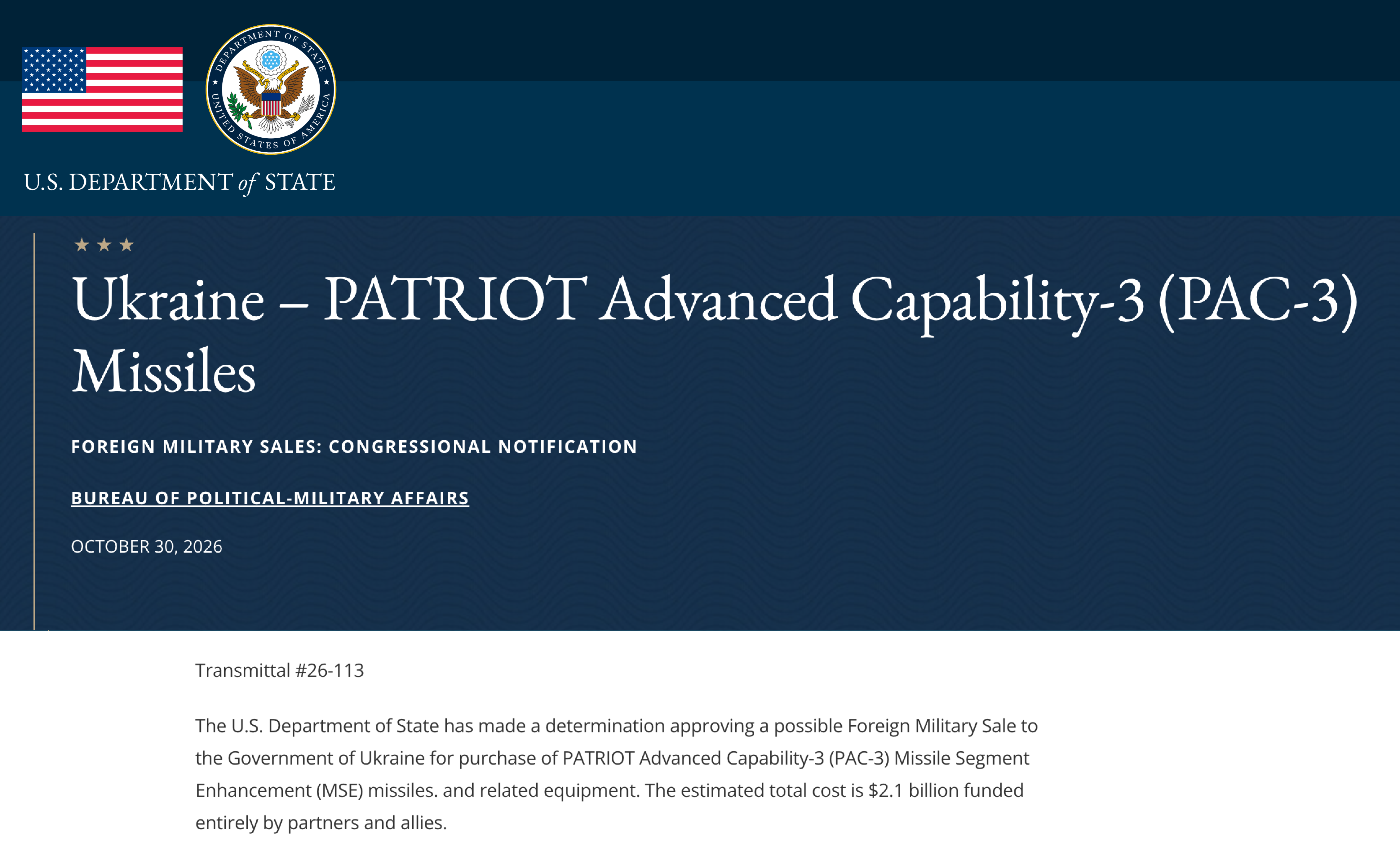
The U.S. State Department said on the 30th (local time) that it had approved a Foreign Military Sales (FMS) sale to Ukraine of 500 Patriot PAC-3 MSE (Missile Segment Enhancement) interceptors and related equipment. In addition to the interceptors, the package includes classified and unclassified spare parts, logistics support, and services needed for program management, with the total estimated cost set at $2.1 billion. The prime contractor is Lockheed Martin. The State Department said the sale would help strengthen Ukraine's integrated air and missile defense capabilities and sustain operation of its existing Patriot systems.
The cost of the program will be borne by U.S. allies and partner countries. Canada, Germany and Norway will provide funding through JUMPSTART, the U.S. multinational support program for Ukraine, and Ukrainian funds backed by European Union loans for Ukraine assistance will also be used. JUMPSTART is a mechanism designed to let Ukraine procure weapons, logistics support and training by linking allies' financial support to the U.S. Foreign Military Sales process. The U.S. government said no U.S. budget funds would be used for the sale.
The decision comes as Ukraine has repeatedly asked the United States to speed up supplies of Patriot interceptors. Ukrainian President Volodymyr Zelensky claimed on the 26th that deliveries of key air defense weapons were being delayed while awaiting approval from the U.S. Department of Defense. As Russia continues missile strikes targeting Ukraine's energy infrastructure, including power plants and the electricity grid, concerns are also growing over power supplies this winter. Ukraine's military has used the Patriot system to intercept ballistic missiles, and a stable supply of interceptors is regarded as a key element of air defense operations protecting major cities and military facilities.
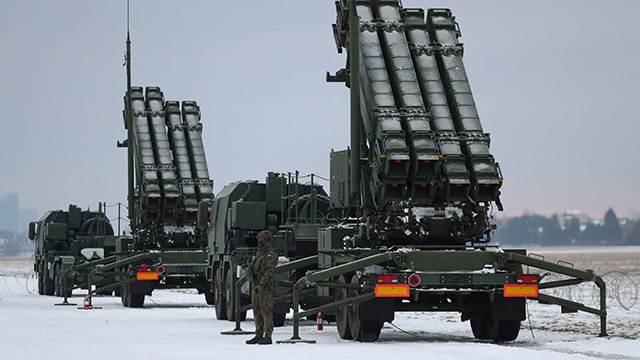
The PAC-3 MSE is the latest ballistic missile defense interceptor, with improved propulsion, guidance and control performance over earlier Patriot interceptors. Unlike typical surface-to-air missiles, which rely on fragmentation effects from an explosion, the PAC-3 family uses hit-to-kill technology that destroys a target through direct impact. The MSE variant is equipped with a more capable propulsion system than the earlier PAC-3, expanding the area it can defend, and was designed to counter a range of aerial threats, including ballistic missiles.
The issue is production and delivery timelines. The 500 interceptors approved by the U.S. State Department have not yet been produced or delivered. Even after the sale approval, congressional review, contracting, production and delivery procedures still lie ahead. The sale approval documents released by the State Department also did not provide a specific delivery timeline. Reuters reported that actual delivery of newly produced missiles is not expected until the early 2030s and that Ukraine is seeking to receive interceptors from existing U.S. military stocks first, with those later replenished by future production.
U.S. interceptor stockpiles were sharply reduced during this year's war with Iran. An analysis released in July by the Center for Strategic and International Studies (CSIS) estimated that the war with Iran had reduced Patriot interceptor stocks to fewer than 1,000 missiles. THAAD interceptors were also assessed to have been consumed in large numbers. These figures are estimates by a research institute, not official inventory numbers released by the U.S. Department of Defense, but they highlight concerns over whether the United States could maintain sufficient air defense capability if it had to respond simultaneously to large-scale ballistic missile attacks in other regions.
Lockheed Martin is moving to expand production capacity. In January, the company signed a seven-year production expansion framework agreement with the U.S. government to raise annual PAC-3 MSE production capacity from about 600 interceptors to 2,000. It delivered 620 PAC-3 MSE interceptors last year. Because it will take time to add new production lines, workers and supplier capacity, the gap between interceptor demand and supply is expected to persist for the time being.
The 500 interceptors requested by Ukraine amount to about 80% of Lockheed Martin's deliveries last year. Because the scale of this single procurement program approaches existing annual output, it could affect munitions procurement schedules not only for Ukraine but also for the United States and other Patriot operators. Patriot systems are operated by a number of countries, including South Korea, Japan, Germany, Poland and Saudi Arabia, and additional demand for purchases to counter missile threats from Russia and Iran is also continuing.
The sale approval is an administrative step that makes large-scale air defense support for Ukraine possible, but it remains a challenge how quickly the interceptors needed on the battlefield can be delivered. The United States and its allies are therefore likely to continue working on both redistributing existing stocks and expanding new production.