U.S. refuses visa for National Assembly Defense Committee Chair Jin Seong-jun after delaying review for Jung Cheong-rae, disrupting parliamentary diplomacy
U.S. notifies refusal ahead of planned visit to Indo-Pacific Command, seeks past criminal judgment and English translation
Jin Seong-jun was sentenced to three years in prison in 1991 for violating the National Security Act; attention turns to whether additional administrative processing will follow as the reason for the refusal remains undisclosed
Published
Updated
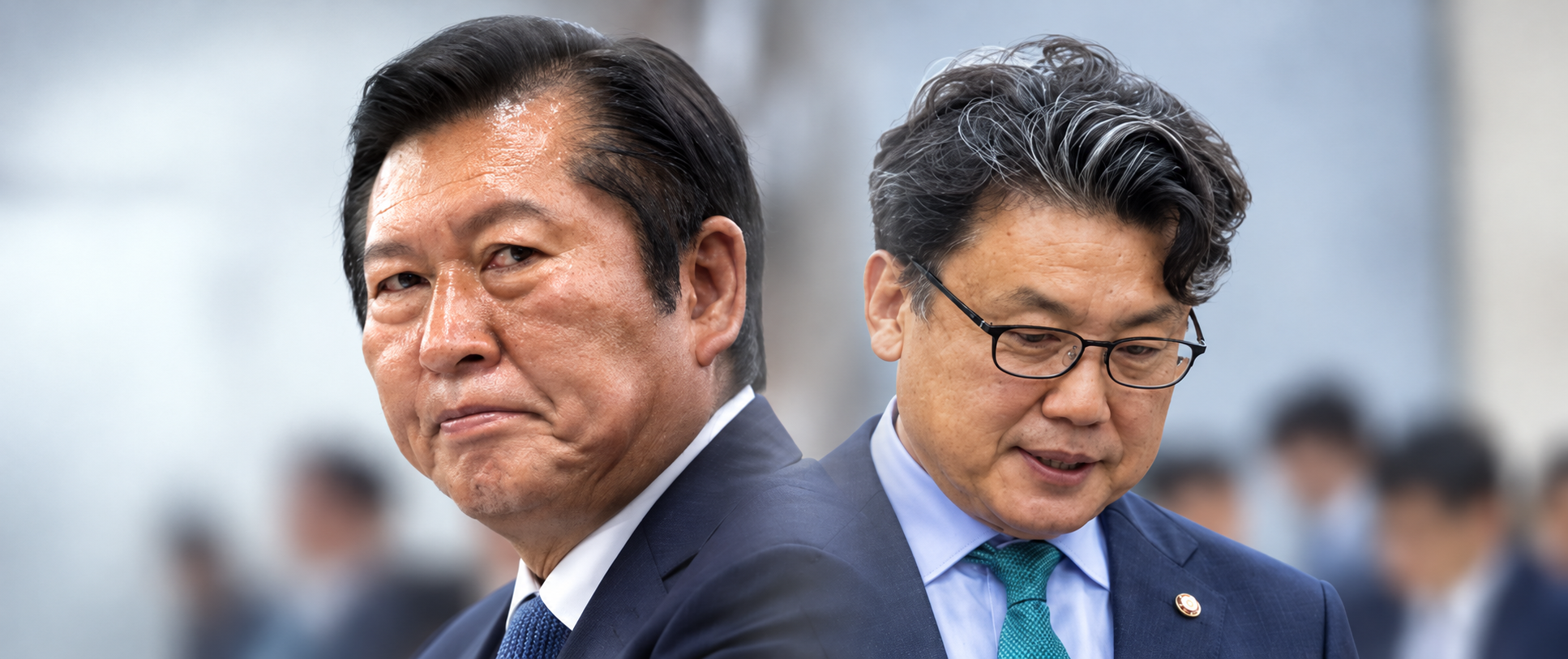
After delaying the issuance of a visa for Democratic Party lawmaker Jung Cheong-rae, the U.S. government has now also refused to issue an official visa to Jin Seong-jun, chair of the National Assembly Defense Committee, causing repeated disruptions to the Assembly's diplomatic and security activities involving the United States. Jin had been preparing to visit U.S. Indo-Pacific Command to strengthen South Korea-U.S. military cooperation and had already finalized meetings with senior U.S. military commanders, but confirmed four days before departure that his visa application had been refused. The U.S. side is reported to have requested additional documents related to a past criminal judgment, and it did not disclose the specific reason for the refusal.
Defense Committee Chair Jin Seong-jun said in a press release and on social media on the 28th that the U.S. government had refused to issue his official A-2 visa, expressing strong regret. The National Assembly Defense Committee had planned to visit Indo-Pacific Command in Hawaii from Nov. 1 to 5 to discuss ways to strengthen South Korea-U.S. security cooperation and develop the alliance. The delegation was to include four cross-party Defense Committee members led by Jin, including Democratic Party lawmaker Kim Byung-joo, People Power Party lawmaker Lim Jong-deuk and Reform Party lawmaker Cheon Ha-ram.
According to Jin's side, the delegation had also finalized meetings with Samuel Paparo, commander of U.S. Indo-Pacific Command, as well as senior commanders from the Pacific Fleet, Pacific Air Forces, Pacific Army and Pacific Space Forces, and with officials from the Hawaii chapter of the Korean War Veterans Association. U.S. Indo-Pacific Command is a unified combatant command that oversees U.S. military operations across the Indo-Pacific, including the Korean Peninsula, and the visit was arranged at the National Assembly level to discuss the South Korea-U.S. combined defense posture and regional security issues.
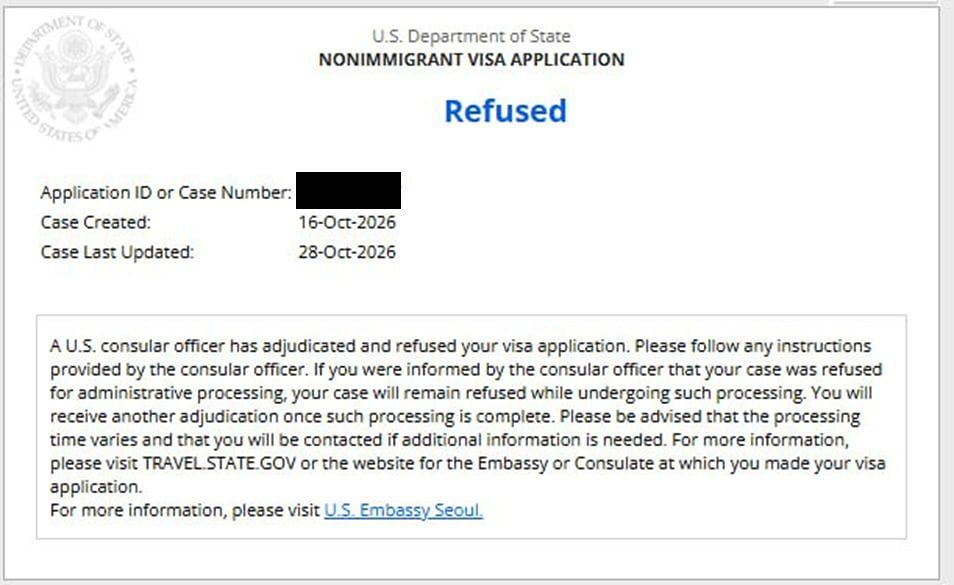
A U.S. State Department visa application status screen released by Jin's side shows the application status as "Refused." The application was created on the 16th, and the final status update date is listed as the 28th. The screen says a U.S. consular officer reviewed the application and refused issuance, and explains that if additional administrative processing is required, the application may remain in refused status during that review period.
According to a report by the Kyunghyang Shinmun on the 28th, the U.S. side did not disclose the specific reason for the visa refusal, but it was reported to have instructed Jin's side to submit additional documents, including the judgment related to his past criminal record and an English translation. Jin was sentenced on Feb. 12, 1991, to three years in prison and three years of suspension of qualifications for violating the National Security Act.
Jin took part in the student movement while attending Jeonbuk National University, and was arrested in 1989 during his military service on charges of violating the National Security Act and tried by a military court. He later entered politics and served as a lawmaker, and in March 2014, when he was a member of the National Assembly Defense Committee during the 19th National Assembly, he visited U.S. Pacific Command. The U.S. side's latest request for additional documents shows that a verification process regarding the past criminal judgment is under way during the visa review. It is not known how much that record affected the refusal decision or how the review will proceed after the additional documents are submitted.
Jin criticized the U.S. action as one that disregards the standing of South Korea's National Assembly and damages the mutual respect and trust that underpin the South Korea-U.S. alliance. He said the refusal to issue a visa to the Defense Committee chair had the effect of obstructing the National Assembly's official legislative activities, and called on the U.S. government to take constructive action. He also said the decision was hard to understand, noting that he had visited the United States in 2014 for military diplomacy of the same nature.
The issue of U.S. visas for South Korean lawmakers had already become controversial earlier this month in the case of lawmaker Jung Cheong-rae. Jung, a member of the National Assembly Foreign Affairs and Unification Committee, had prepared to visit the United States for the National Assembly's audit of overseas missions in the Americas, including South Korea's embassy in the United States, but changed the audit destination to Europe because his visa had still not been issued by the 8th, three days before departure. Jung said at the time that he had been informed that the U.S. State Department was still reviewing his application and that no decision had been made either to approve or deny it.
At the Foreign Affairs and Unification Committee's comprehensive audit on the 27th, Jung said his visa application was still under review. He expressed regret over the way U.S. authorities handled the matter and also pushed back against political claims interpreting the issue as a crack in the South Korea-U.S. alliance. Jung stressed that the visa delay was an issue that should be raised with the U.S. side regardless of party lines.
This is not the first time Jung has faced disruptions in obtaining a U.S. visa. In 2013, he also sought to attend the Foreign Affairs and Unification Committee's audit of overseas missions in the Americas, but was unable to receive a visa before departure and instead joined the Europe audit. By contrast, in 2012 he conducted an audit of overseas missions in the United States, and in 2014 he visited the country as a lawmaker and discussed Korean Peninsula issues with local political figures. Jung was previously imprisoned on charges of violating the National Security Act in connection with the 1989 sit-in occupation at the residence of the U.S. ambassador to South Korea, and some in political circles have raised the possibility that this past record affected the visa review.
In response to earlier media questions about the delay in Jung's visa issuance, the U.S. State Department said all visa applications are reviewed individually under U.S. law and that strict standards related to national security and public safety are applied. It also said it does not disclose the details of reviews for individual applications. Section 222(f) of the U.S. Immigration and Nationality Act provides for the confidentiality of records related to visa issuance and refusal, placing legal limits on U.S. consular authorities' ability to disclose an applicant's identity or review details externally.
The request for additional documents from Jin also needs to be viewed in connection with U.S. visa administrative processing procedures. Since March 2020, the U.S. State Department has changed the CEAC visa application status system so that some applications requiring additional administrative processing are displayed as "Refused" instead of the previous "Administrative Processing." In cases of refusal under Section 221(g) of the U.S. Immigration and Nationality Act, consular authorities may reassess visa eligibility after the applicant submits the required documents or administrative processing is completed.
According to official U.S. State Department guidance, a consular officer may refuse a visa application under Section 221(g) while requesting additional information or documents, and may reconsider the previous review result once the applicant submits them. The status screen released by Jin also includes an explanation about additional administrative processing. However, the specific legal provision actually applied to Jin, the deadline for submitting the additional documents, and whether the review will resume have not been disclosed. As it has been confirmed that he was asked to provide materials related to a past criminal judgment, the outcome of the U.S. side's document review is likely to be a key variable in determining whether the visa is issued.
The A-2 visa Jin applied for is an official visa issued to foreign government officials visiting the United States on official business. According to U.S. State Department visa guidance, individuals performing official duties on behalf of a foreign government must receive an A-1 or A-2 visa depending on the purpose of the visit and their position, and cannot enter using the standard Electronic System for Travel Authorization, or ESTA. Whether a visa is issued is reviewed individually by U.S. consular authorities, and the process must be completed even if meetings with U.S. institutions have already been finalized.
The delay in Jung's visa issuance has already led to debate in the National Assembly over South Korea-U.S. relations. People Power Party lawmaker Song Seok-jun, during the Foreign Affairs and Unification Committee's comprehensive audit on the 27th, voiced concern over whether there was any problem in South Korea-U.S. relations, citing the fact that Jung had not received a U.S. visa. Kim Dae-sik of the same party also pointed to the responsibility of the Foreign Ministry, which is supposed to support parliamentary diplomacy. Jung and Democratic Party lawmakers, by contrast, said the priority was a bipartisan raising of concerns over how the U.S. side handled the visa processing.
On the 9th, the Foreign Ministry said regarding the delay in Jung's visa issuance that South Korea and the United States are in close communication on a range of issues and that it would not be appropriate to link an individual visa matter to the overall bilateral relationship. Kang Kyung-wha, South Korea's ambassador to the United States, also said during the parliamentary audit of the embassy on the 12th that U.S. visa screening is becoming stricter overall and that even if inquiries are made to U.S. authorities, it is difficult to obtain a specific explanation regarding an individual application.
Foreign Minister Cho Hyun said during a parliamentary audit on the 27th that he intended to raise Jung's visa issue directly with the U.S. side. Cho said he plans to visit the United States from the 29th through the 2nd of next month and would bring up the issue in a meeting with U.S. Secretary of State Marco Rubio. The refusal to issue Jin's visa was made public the day after those remarks, and attention is now on whether the Foreign Ministry will handle the two lawmakers' cases together.
After visa problems disrupted the National Assembly Foreign Affairs and Unification Committee's audit of overseas missions and now the Defense Committee's visit to U.S. military commanders, the U.S. official visa screening process and the system of prior coordination between South Korea and the United States for official visits are emerging as issues. With four days left until Jin's scheduled departure, attention is focused on any further action by U.S. consular authorities and on whether the Defense Committee's U.S. visit schedule will be adjusted.