Drone swarms fall into 'hypnosis': Israel IAI's soft-kill air defense HYPNOSIS
IAI unveils soft-kill air defense HYPNOSIS that neutralizes drone swarms through satellite navigation disruption
강병지
Published
Israel Aerospace Industries (IAI) unveiled the new air defense system HYPNOSIS in late July, ahead of the Farnborough International Airshow (which opens on July 20). This system disrupts the satellite navigation signals that drones rely on, preventing them from reaching their targets instead of intercepting incoming drone swarms. The name 'hypnosis' comes from the idea of deceiving drones into being directed to the wrong locations.
■ Disruption rather than interception
The official name is 'High-Power Soft-Kill Navigation Warfare (NAVWAR) Air Defense System.' Drones and unmanned vehicles rely on Global Navigation Satellite Systems (GNSS) to obtain accurate position and time information, and HYPNOSIS neutralizes these signals in two ways.
One method is jamming. It covers satellite signals with strong radio noise, preventing drones from calculating their own positions. Since satellite signals are very weak by the time they reach the ground, they can be blocked with relatively low power. The other method is spoofing. It sends out counterfeit signals that mimic real ones, leading drones to calculate incorrect positions on their own. Drones fly in the wrong direction without even realizing they have been disrupted. For this reason, spoofing is harder to detect than jamming.
The system consists of multiple mobile stations deployed around the defense area, which are linked to a central command and control (C2) unit that simultaneously disrupts multiple satellite constellations, frequency bands, and directions. IAI stated that this command unit can autonomously operate the entire station without human intervention. It is designed to reduce response time to attacks approaching from multiple directions. The defense targets include critical national assets such as energy facilities, major strategic points, and air defense systems.

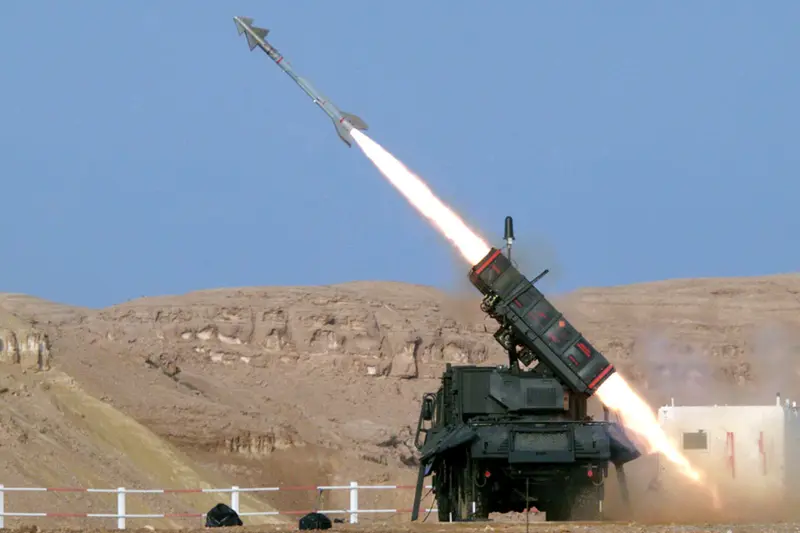
Hypnosis jamming system overview, IAI (Israel Aerospace Industries)
■ A new layer called 'soft-kill'
HYPNOSIS is a 'soft-kill' method that neutralizes targets rather than destroying them with missiles, which is known as 'hard-kill.' IAI explained that this system is not a replacement for existing interception systems but rather a cost-effective additional layer of defense that operates alongside them.
The background involves cost asymmetry. The structure of using millions of dollars worth of intercept missiles to stop a single suicide drone costing tens of thousands of dollars is disadvantageous for the defender. In swarm attacks where drones come in dozens or hundreds, the stock of interceptors may run out first. Soft-kill mitigates this issue by neutralizing multiple targets at once without using interceptors.
HYPNOSIS is the offensive variant of the defensive anti-jamming system that IAI has operated for over 20 years.
■ Things that are still undisclosed
However, there are unverified aspects. IAI's materials claim that this technology has been validated in real-world operations, but they do not specify which operations or against whom it was validated. The price, effective range, output, and customers have also not been disclosed.
There are also limitations to its effectiveness. The most common threat, the Iranian Shahed-type suicide drones, have an inertial navigation system (INS) as a backup in addition to satellite navigation. These drones register their position via GPS immediately after takeoff, then turn off the receiver and estimate their direction and position using a gyroscope while flying long distances. This means that even if satellite navigation is disrupted, such drones may not be completely stopped. Recent modified versions have even been equipped with Starlink satellite terminals to bypass ground electronic warfare. As visual and inertial navigation spreads among attack drones, whether soft-kill can maintain its advantage remains an open question.
It is also worth noting the impact of high-power satellite navigation disruption on civilian aircraft and ships outside the defense area. According to the International Air Transport Association (IATA), reports of GPS spoofing in civilian aviation are expected to increase by 500% in 2024 compared to the previous year, with military activities in conflict zones cited as the main cause. However, IAI's public materials did not address these civilian spillover issues.