There was no plague, so why were 200 people quarantined?
An employee at a plague research institute died of pneumonia of unknown cause, yet Russia quarantined 200 people while saying there had been neither an accident nor plague.
강병지
Published
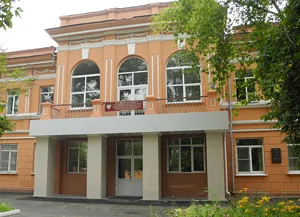
On Sept. 29, a 28-year-old woman was brought to a district hospital in Shelekhov, a small city outside Irkutsk in Siberia, with severe pneumonia. The facility had been used as a dedicated infectious disease hospital during the COVID-19 pandemic. Her condition deteriorated rapidly, and she was put on a ventilator, but she died early on Oct. 2, three days after being admitted.
The deceased was a laboratory technician at the Irkutsk Siberian and Far Eastern Anti-Plague Research Institute. Founded in 1934 to control plague, the institute still oversees plague surveillance across Siberia and handles high-risk pathogens such as cholera, anthrax and tularemia. She herself was listed as a co-author on a research presentation in March this year on the antibiotic susceptibility of plague bacteria collected from natural foci in Siberia.

Nearly two weeks later, Russian authorities still officially list the cause of death as "pneumonia of unknown cause." Yet over this single case, Russia quarantined about 200 people, the head of the federal sanitary authority flew in from Moscow, and the U.S. president signaled a call between the leaders. No one has publicly said yet whether it was plague. But before that answer emerged, something else faltered first: information.
■ The first 72 hours: "A particularly dangerous infectious disease"
On Oct. 2, the day she died, the governor of Irkutsk region held an emergency meeting of the sanitary and epidemic-control commission with Anna Popova, head of the Federal Service for Surveillance on Consumer Rights Protection and Human Wellbeing (Rospotrebnadzor) and Russia's chief sanitary doctor. The agenda was a suspected case of a particularly dangerous infectious disease in one resident. In Russia's disease-control system, that term is used for the highest-risk class of infections, including plague and cholera.
That same day, the head of neighboring Buryatia wrote on social media that "the woman who died of plague in Irkutsk region had never visited Buryatia." It was the first time a public official had openly used the word plague. The post was later revised to say she "may have died of plague."
The measures on the ground were even clearer. According to some reports, about 197 contacts were identified, and 189 of them were admitted for observation to two hospitals and the institute. The Shelekhov hospital where she died halted admissions and discharges. On Oct. 3, the nearby city of Baykalsk advised residents not to visit Shelekhov, citing "unofficial information" about a plague case, then deleted the notice, while an aluminum plant in Shelekhov instructed employees to wear masks. There were also reports that ambulances transporting contacts were escorted by security authorities, though that was not confirmed.
During those 72 hours, the regional government never disclosed the name of the disease. Official language remained limited to a "dangerous infectious disease," while reports said anxious residents were buying up antibiotics at local pharmacies. However, reporters who visited the area also heard conflicting accounts that there had been no panic buying.
■ The turn: "No accident, no plague"
The federal authorities' first official statement came on Oct. 4, about 60 hours after her death. Rospotrebnadzor said she had died of "pneumonia of unknown cause," that no work-related microorganisms were detected in biological samples, and that there had been no accident involving the handling of pathogenic microorganisms at the institute. In a follow-up statement carried by a state news agency, it said plague was not the cause of death.
Subsequent statements pointed in the same direction. Tests on contacts found only two cases of COVID-19 and two of rhinovirus. On Oct. 6, Russia replied to a World Health Organization inquiry under the International Health Regulations (IHR), classifying the case as "community-acquired pneumonia" and saying it had initially appeared to be a typical acute respiratory viral infection. The reply said plague had not been confirmed either in the deceased or in anyone else, and that monitoring of contacts had been completed. On Oct. 7, authorities added that she had been vaccinated and was immune to the pathogen being studied, and that no dangerous pathogen had been found in about 5,000 tests.
At the same time, the authorities also moved to rebut reports. Rospotrebnadzor's Irkutsk branch said reports that an enhanced disease-control regime and strict restrictions had been introduced in the region were false. A Kremlin spokesperson said most media reports were untrue and told the public to trust only official statements from the federal sanitary authorities.
The problem is that this explanation does not sit well with what authorities did in the previous 72 hours. They ruled out both an accident and plague, but did not explain why they activated plague-level quarantine measures from the outset, or what the actual cause of the pneumonia was. Critics point out that a plague institute should be able to screen for plague bacteria by PCR within hours. Others counter that a definitive diagnosis takes longer. Either way, even the screening results have still not been made public.
■ Questions from beyond the border
That gap drew pressure from abroad. The WHO asked Russia for information on Oct. 3. Its initial risk assessment was "moderate to low" for Irkutsk, "low" for Russia as a whole and "very low" for the European region. One reason the WHO gave for judging the risk of spread beyond Russia to be very low was that Russia's international exchanges had fallen sharply because of the war in Ukraine and sanctions.
The United States was more direct. The State Department said it had been in contact with Russia's Foreign Ministry from shortly after the death and urged Russia to share accurate information quickly and publicly. It also said it formally requested additional information on Oct. 7. President Trump said on Oct. 5 that he would "help" and then signaled that he would speak with President Putin about the matter. The Kremlin welcomed the offer of help but provided no concrete information.
On Oct. 7, reports emerged that a second employee at the same institute was suffering from pneumonia of unknown cause. The Kremlin effectively denied it, and the next day Rospotrebnadzor formally rebutted the report as false. In the meantime, the WHO director-general publicly called for timely and transparent information sharing under the IHR in connection with the report. The existence of the second case has yet to be confirmed.
Neighboring countries did not wait. Central Asian countries including Kazakhstan, Kyrgyzstan and Uzbekistan strengthened border quarantine measures, and Mongolia was also reported to have raised its alert in areas bordering Russia.
■ What happened inside the institute?
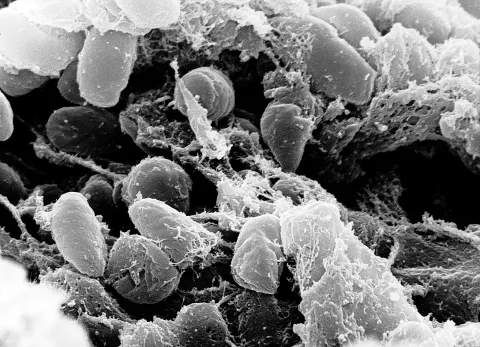
The biggest question is the route of infection. A local independent media outlet, citing an anonymous source, reported that she broke a test tube containing plague bacteria on Sept. 25. That was said to have been her last day at work, and there was also a claim that she did not report the accident. If true, that would mean a chance to use prophylactic antibiotics immediately after the accident was missed, which could explain why a young researcher died from a treatable infectious disease. However, the authorities deny there was any accident at all, and there is no public evidence to support the claim.
There are other theories as well. Claims circulated that she fell ill after a trip to Thailand, or that she had traveled on business to the Mongolian border or to Buryatia, but again no evidence has been made public. Authorities in Buryatia denied that she had visited.
Experts are divided as well. A Russian epidemiologist working in the United States said infection from a broken test tube was unlikely because institute staff work in protective clothing. By contrast, a British virologist said it looked like a rare laboratory accident, though one unlikely to spread far. A former head of Rospotrebnadzor even questioned whether it was a plague case in the first place.
The investigative trail is also conflicting. Some Russian media outlets reported that investigators had opened a criminal case on charges of causing death by violating sanitary regulations (Article 236 of the Criminal Code), then deleted those reports. That would directly contradict the sanitary authorities' statement that there had been no accident, but there has been no official confirmation.
The authorities' claim of "vaccination" also does not, by itself, establish the cause of death. Rospotrebnadzor said the deceased had been vaccinated and was immune to the pathogen studied at the institute, but vaccination and actual protection are separate matters, and no test results supporting that have been released. The fact of vaccination alone does not rule out the possibility of plague.
■ Russia's account may be correct
There are also clear facts pointing the other way. Based on the information released so far, there has not been a single secondary infection. Pneumonic plague has a short incubation period and spreads between people through respiratory droplets. The fact that none of the roughly 200 contacts had fallen ill nearly two weeks after the death lends weight to Russia's explanation.
The Irkutsk area is close to natural plague foci to begin with. In 2023, Mongolia identified 137 natural foci in 17 regions, including areas bordering Russia, and Russia's last officially recorded plague patient was a 10-year-old boy infected while skinning a marmot in the Altai Republic in 2016. If an employee at a lab handling dangerous pathogens died of severe pneumonia, it is also a basic public health principle to impose the highest level of isolation first, regardless of the cause. An excessive response may be evidence not of a cover-up but of caution. Nor can it be ruled out that the deletion of early articles and notices was simply the correction of false reports.
So there is only one thing this article can say with certainty. It is impossible to know what Russia is hiding.
■ A single test result
Research facilities handling high-risk pathogens are increasing around the world. When an accident is suspected at such a facility, the only avenue the international community ultimately has to verify the situation is the information the government concerned discloses under the IHR. In this case, Russia formally responded to the WHO's inquiry. But it did not provide the test results or identify the causative pathogen, the key evidence needed to determine the cause of death. Deleted notices, revised posts and anonymous sources filled that gap.
A single test result could have provided more reassurance than quarantining 200 people. If it was not plague, disclosure was the fastest way to prove it. If it was plague, disclosure was also the fastest way to limit the damage. This case has again shown that for an infectious disease surveillance system to work across borders, trust must first exist over what should be disclosed, and by when, when an accident is suspected.
Russia in fact lifted disease-control restrictions around Irkutsk on October 8. It said more than 90% of contacts had completed observation and there were no additional patients. Without the cause of death being made public, the situation moved into a phase of being wound down.
The points to watch from here are clear: whether the autopsy and test results are released, whether the truth of the second employee case emerges, whether the criminal case is officially confirmed, and what information was exchanged in a call between the U.S. and Russian presidents.
On October 21-22, Irkutsk is to host an international academic conference on plague and infectious diseases. Organizers said it had already been scheduled in June and was unrelated to this death. Will that conference offer an answer to what killed the 28-year-old technician who studied plague?