Russian military aircraft come close to breaching Ulleungdo airspace; F-15Ks scrambled
Russian aircraft fly in the East Sea KADIZ for about 20 minutes; Ulleungdo receives its first alert over Russian aircraft
Military and interior ministry incorrectly report an airspace breach; defense ministry summons Russian defense attaché
Published
Updated
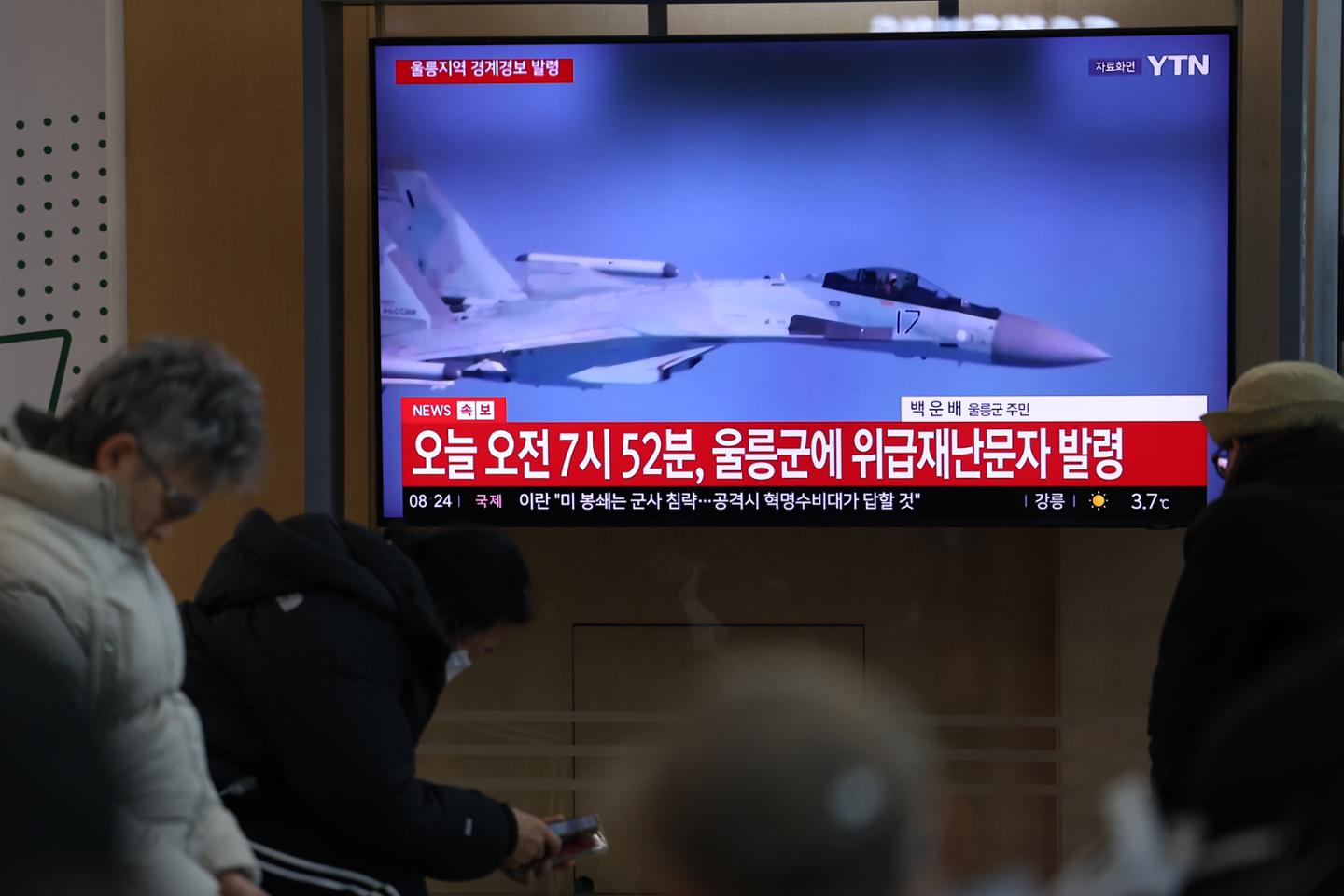
Several Russian military aircraft entered the Korea Air Defense Identification Zone (KADIZ) over the East Sea on the morning of Nov. 24 and came close to breaching the airspace around Ulleungdo. South Korea scrambled F-15K fighters and other aircraft in response, and a civil defense alert was issued for Ulleung County for about three minutes. The Russian aircraft left the KADIZ without entering South Korean airspace.
According to the Joint Chiefs of Staff (JCS), fewer than five Russian military aircraft entered the KADIZ over the East Sea that morning and flew south toward Ulleungdo. The military detected their movements before they entered the zone and deployed air force fighters to take tactical measures against possible contingencies.
The Russian aircraft approached very close to the airspace north of Ulleungdo before turning toward Japan and leaving the KADIZ in response to the South Korean Air Force's actions. They subsequently headed north again. They were assessed to have spent about 20 minutes inside the KADIZ. The specific aircraft types were not disclosed.
At a regular briefing that day, JCS public affairs director Jang Do-young said the Russian military aircraft had come close to breaching the airspace around Ulleungdo. "Because an airspace violation was expected, we issued an alert as a precaution to ensure public safety," he said.
Military authorities assess that the Russian aircraft could have entered Ulleungdo's airspace within seconds had they maintained their flight paths. A Russian military aircraft also approached to within about 20 kilometers of the airspace north of Ulleungdo in March last year, but the aircraft involved this time reportedly flew even closer.
Considering an airspace violation highly likely, the military asked the Ministry of the Interior and Safety to issue a civil defense alert. It was reportedly the first alert issued on Ulleungdo because Russian military aircraft were approaching its airspace.
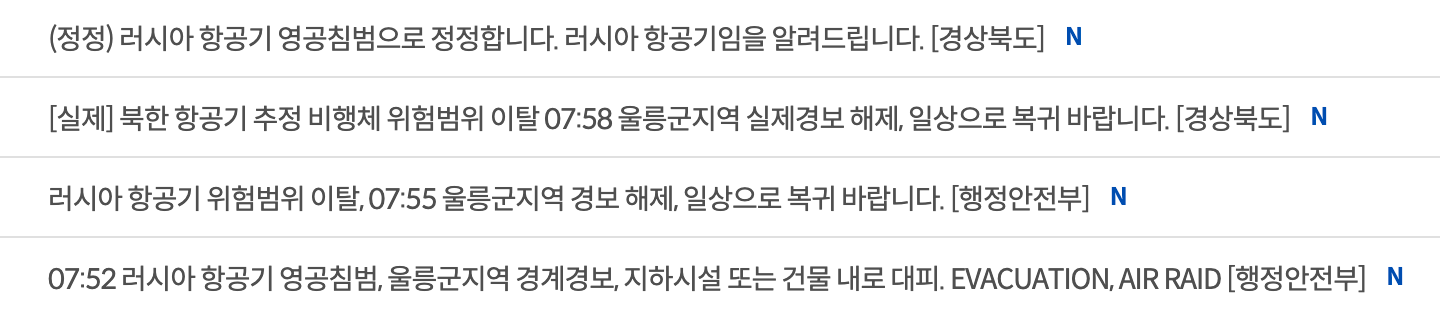
The interior ministry issued an alert for Ulleung County at about 7:52 a.m. and sent an emergency text message at about 7:53 a.m., instructing residents to take shelter underground or inside buildings. After the Russian aircraft moved away in response to the South Korean military's actions, the ministry lifted the alert at about 7:55 a.m. and sent an all-clear text message at about 7:57 a.m.
During the alert process, residents received information that did not reflect the actual military situation. The interior ministry's first emergency text message said Russian aircraft had violated South Korean airspace, but the JCS confirmed that no airspace violation had occurred.
The wording the military sent to the interior ministry when requesting the alert was also found to have stated that Russian military aircraft had violated South Korean airspace. The JCS said the alert was a precautionary measure to protect residents when an airspace violation appeared imminent. The interior ministry maintained that its emergency text message directly reflected the reason for the alert provided by the military.
North Gyeongsang Province also sent an erroneous all-clear text message. At about 7:58 a.m., it instructed residents to resume their normal activities while describing the aircraft as a "flying object believed to be a North Korean aircraft."
The provincial government explained that the error occurred because it had changed only the time in a message template normally used for drills. It sent another message at about 8:39 a.m. correcting the aircraft's nationality to Russian, but that message again used the term "airspace violation," even though no violation had occurred.
This was the third entry by Russian military aircraft into the KADIZ in the past week. Russian military aircraft also entered and left the KADIZ over the East Sea on Nov. 17 and 19, prompting South Korean Air Force fighters to scramble on both occasions.
On June 27 this year, about 10 military aircraft participating in a joint Chinese-Russian air exercise entered the KADIZ over the East Sea and South Sea. On Aug. 25, several Russian military aircraft also entered and left the KADIZ near Ulleungdo and Dokdo. South Korean Air Force fighters responded on both occasions, and no airspace violations occurred.
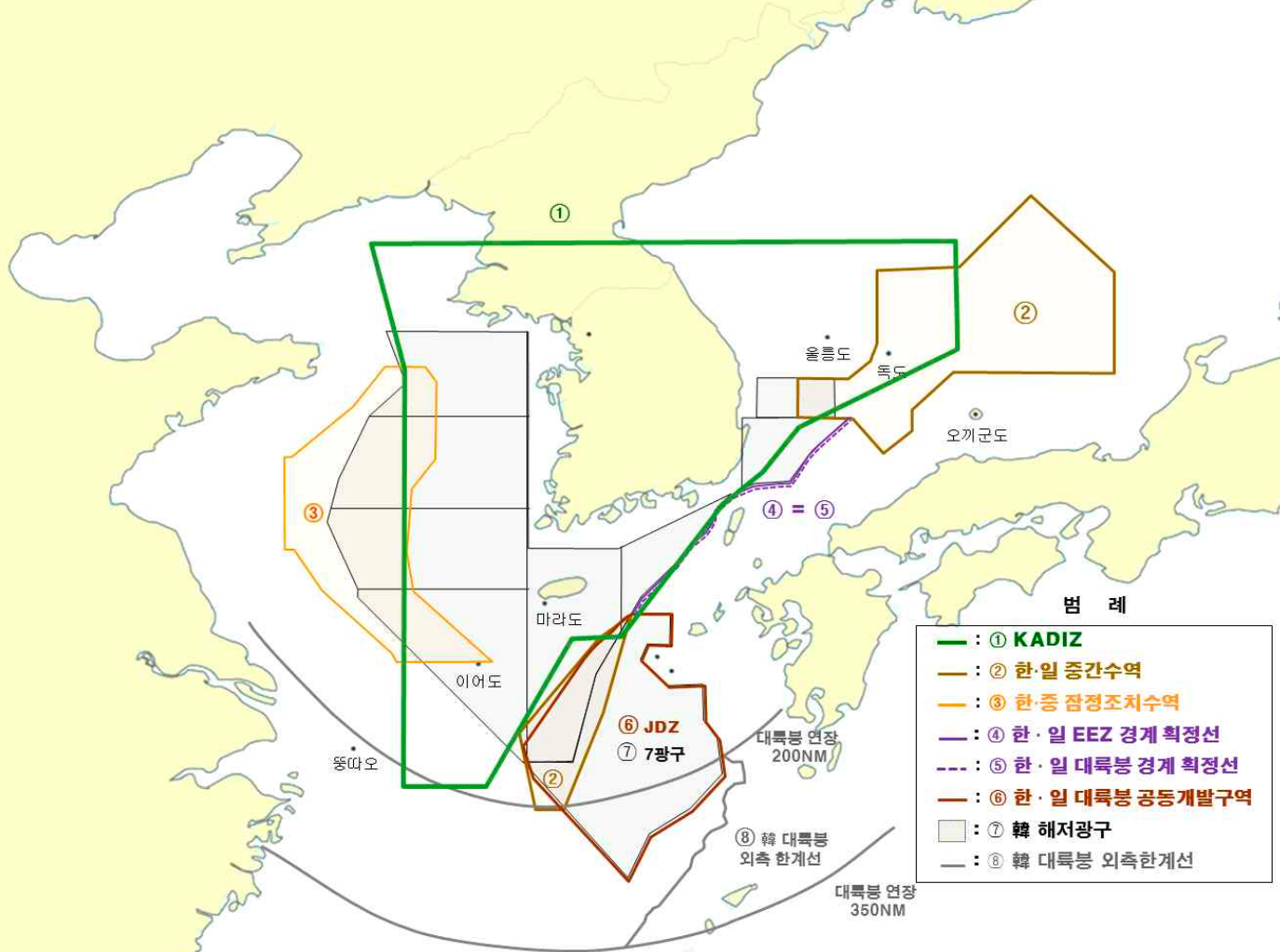
The KADIZ is a zone established to identify and respond early to aircraft approaching South Korean airspace. It is distinct from the sovereign airspace over which a state exercises jurisdiction. International practice calls for military aircraft entering another country's air defense identification zone to submit flight plans in advance and report their positions, but Russia has maintained that it does not recognize the international legal basis for South Korea's KADIZ.
In July 2019, a Russian Air Force A-50 airborne early warning and control aircraft entered the KADIZ over the East Sea and then violated South Korean airspace near Dokdo twice, prompting South Korean Air Force fighters to fire warning shots.
That afternoon, the defense ministry summoned Russia's defense attaché to South Korea, Air Force Col. Nikolai Marchenko, to its headquarters in Seoul's Yongsan district to lodge a protest. It was the first time South Korea had summoned a Russian representative over Russian military aircraft entering the KADIZ in about a year and eight months, since the incident near Ulleungdo's airspace in March last year.
As Marchenko entered the ministry building, reporters asked whether the Russian military aircraft had intended to enter South Korean airspace. "No comment," he replied.