More than 10 missiles launched over the dialogue signal: North Korea conducts military demonstration a day before UFS ends
A day before UFS ends, shortly after Wang Yi's visit to South Korea, and on the day Trump hinted at a meeting. North Korea launched over 10 missiles at a point where these three moments overlapped.
강병지
Published
Updated
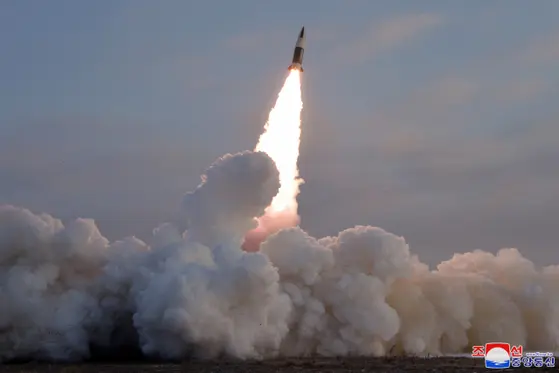
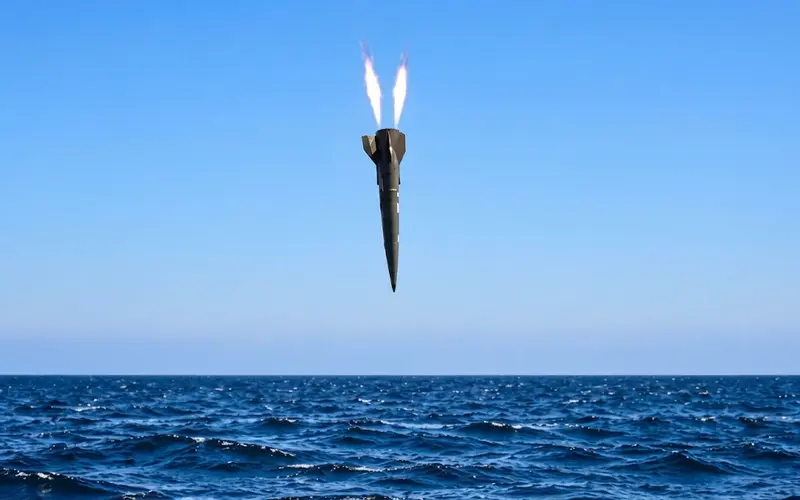
North Korea launched over 10 short-range ballistic missiles into the East Sea around 5 PM on the 20th from the Pyongyang area. According to military authorities, these missiles traveled about 300 km. This was the twelfth launch of the year and the first provocation in eight days since the 12th.
Minister of National Defense An Gyu-baek stated at the National Assembly Defense Committee that this missile is believed to be a 600mm multiple rocket launcher. The military tracked the trajectory from the moment of launch to the flight and loss stages using Green Pine radar and other means. Some have raised the possibility that it could be a super-large multiple rocket launcher capable of carrying tactical nuclear weapons, but the exact model and specifications are still under analysis by South Korean and U.S. intelligence authorities.
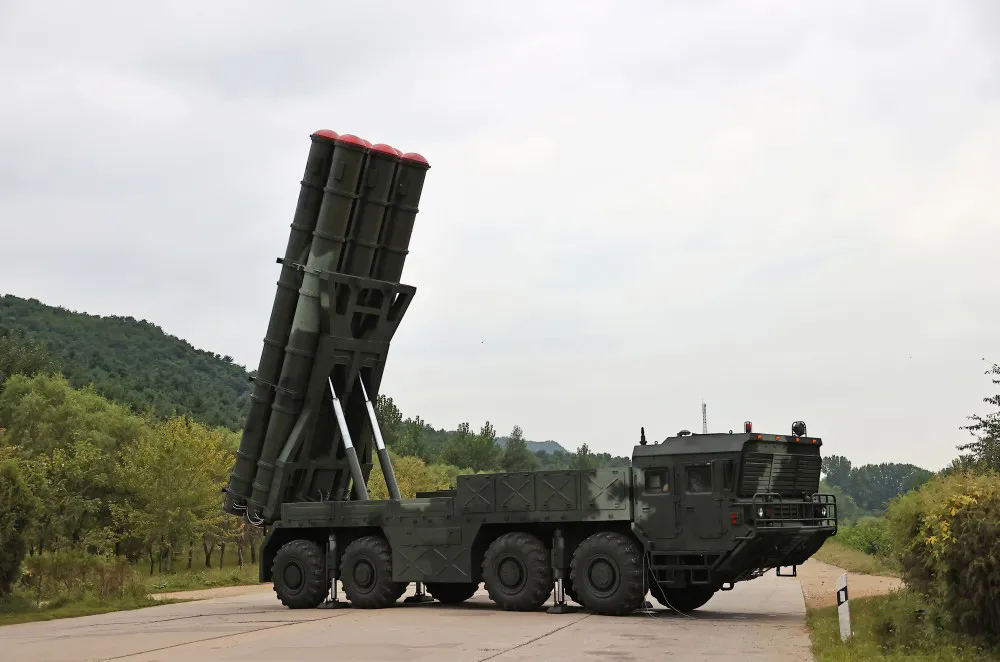
600mm super-large multiple rocket launcher, Namu Wiki
The noteworthy point is the timing of the launch. This provocation came at the intersection of three trends.
First, it was just a day before the conclusion of the South Korea-U.S. joint exercise 'Ulchi Freedom Shield' (UFS). This exercise was scaled down in duration and size to create conditions for dialogue between North Korea and the U.S. Second, it was right after Wang Yi, the Chinese Foreign Minister, completed his visit to South Korea. Third, it was also shortly after the U.S. proposed dialogue.
U.S. President Trump had previously stated at the White House that he expected to meet with Chairman Kim Jong-un by the end of the year. He also mentioned for the first time that North Korea possesses 57 nuclear weapons, while avoiding a clear answer on whether the goal of dialogue is denuclearization. There were speculations about pushing for a North Korea-U.S. summit during the Asia-Pacific Economic Cooperation (APEC) summit in Shenzhen, China, in November, but neither the U.S. nor North Korea officially confirmed any meeting plans.
North Korea's response was cold. Kim Yo-jong, the Deputy Director of the Workers' Party of Korea, stated in a statement released the day before that she sees no value in commenting on the reduction of joint exercises and has no interest at all. She argued that reducing the scale or duration of the exercises does not change their aggressive nature. Regarding the possibility of dialogue between leaders, she distanced herself by saying, 'I have no idea at all.' This was a response to gestures of reconciliation with military demonstrations and a cold statement.
Our military has been tracking and sharing developments with the U.S. from the initial launch, and has also shared relevant information with Japan. They stated that they are enhancing monitoring and vigilance in preparation for the possibility of additional launches, and are maintaining a posture to respond overwhelmingly to any provocation. Japan's Ministry of Defense assessed that the missiles fell outside its exclusive economic zone (EEZ).
This launch, occurring in a phase that seems to open the door to dialogue, is interpreted as a signal that North Korea intends to set the terms from a favorable position even if it sits at the negotiation table. With the party extending a hand and the party demonstrating strength coinciding within a few days, it provides a glimpse into the nature of the upcoming dialogue.