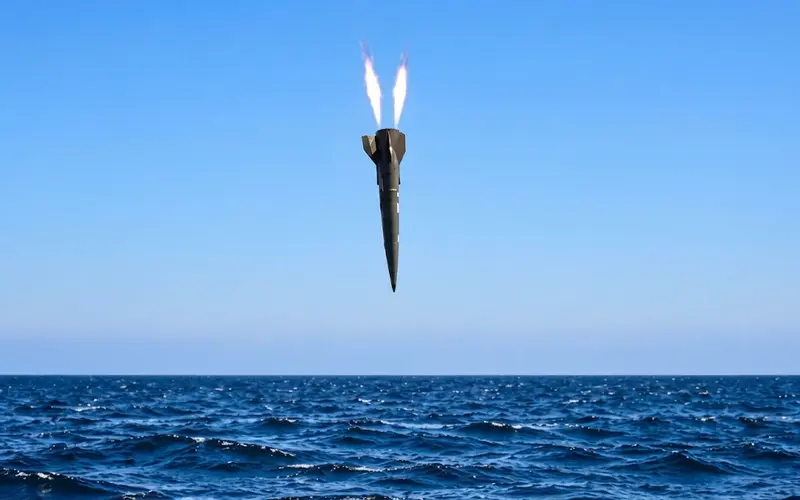
SpaceX Falcon 9 debris collides with the Moon... Danuri was watching
The upper stage of SpaceX Falcon 9 collided with the Moon. Korea's Danuri captured the moments before and after the collision, revealing the absence of international norms to regulate lunar debris.
강병지
Published
Updated
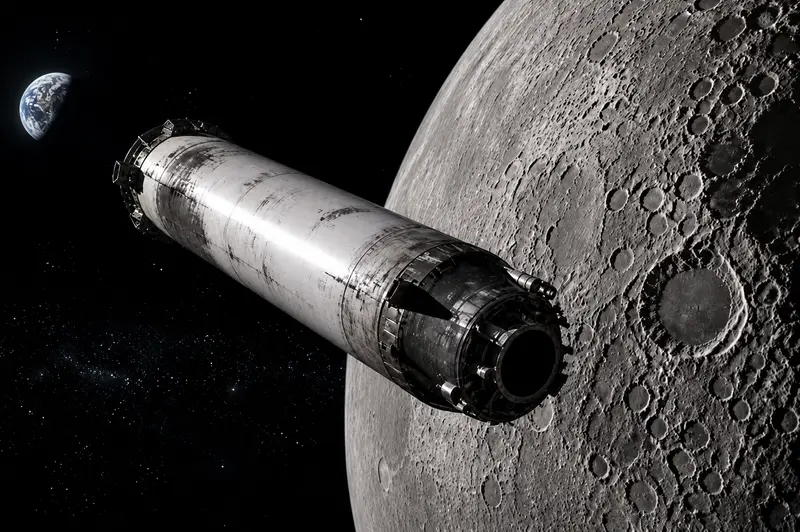
The upper stage of the SpaceX Falcon 9 rocket, which had been drifting in space for over a year and a half, collided with the lunar surface on August 5. South Korea's first lunar orbiter Danuri (KPLO) captured images before and after the collision, and the Korea Aerospace Research Institute released these images on the 6th.
■ 4.9-ton debris falls into the Einstein crater
The collision occurred at 3:34 PM (Korean time) near the Einstein crater on the western edge of the Moon. Independent astronomers tracked the orbit using publicly available data, and their predicted time and location closely matched the actual event.
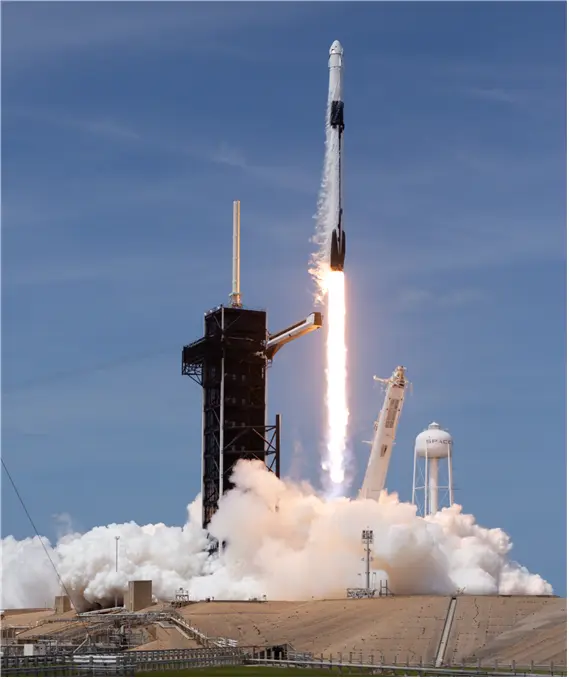
This object is the second stage (upper stage) of the Falcon 9 launched on January 15 last year. It is part of the rocket that sent the lunar landers Blue Ghost 1 from American Firefly Aerospace and Resilience from Japan's iSpace to the Moon, remaining in space after placing the two landers into their target orbits.
Over the next 18 months, solar activity and the gravitational forces of the Sun, Earth, and Moon gradually altered its orbit, placing the upper stage on a collision course. SpaceX explained that while they handled it according to regulations, they could not reverse the orbit with the remaining fuel.
The colliding upper stage, with a mass of about 4.9 tons, is analyzed to have fallen to the surface at a speed of 2.43 km/s (approximately 8,750 km/h), creating a crater approximately 20-30 m in diameter. The collision energy is equivalent to detonating about 3 tons of TNT at once. (Some observations report a mass of about 4 tons and a crater diameter of about 18 m, indicating some variation in the figures.)
■ Artificial collision captured by Danuri
Danuri was the spacecraft that approached closest to the collision point before and after the event. Actively controlling its orbit, it passed about 340-350 km above the collision site, capturing a total of 8 images from 3:01 PM, about 30 minutes before the collision, to shortly after, using a high-resolution camera (LUTI) and a polarization camera (PolCam). The released before-and-after images show a previously unseen black shadow and traces of ejected material radiating outward. The exact scale and shape of the crater, as well as the distribution of ejected material, will be revealed after further analysis.
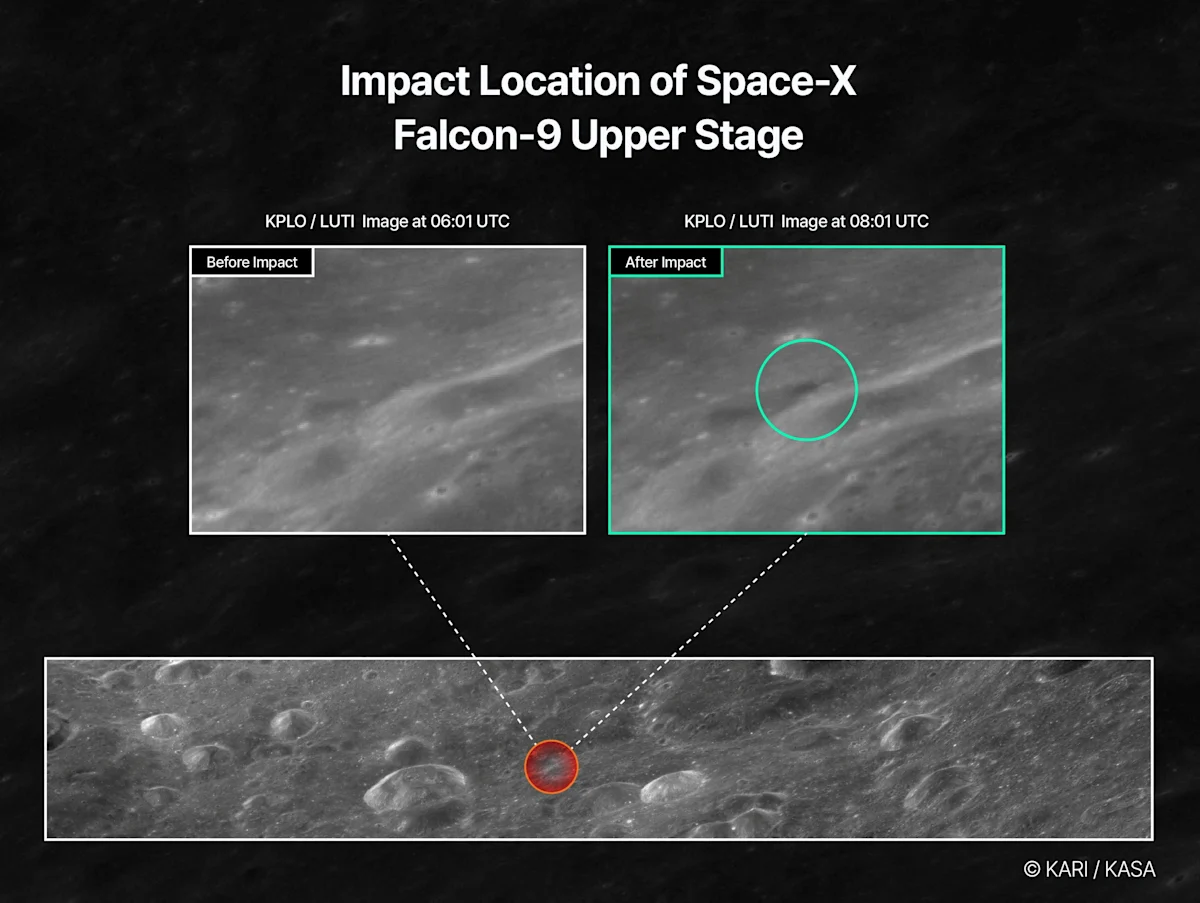
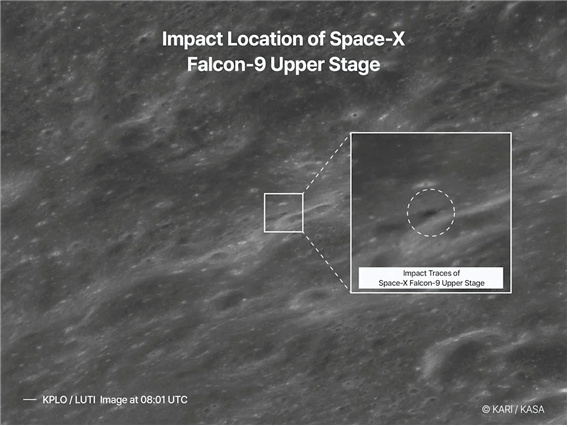
NASA's Lunar Reconnaissance Orbiter (LRO) was on the far side of the Moon at the time of the collision and could not capture images immediately, but will observe the area in the future. The data secured by Danuri will be used to plan LRO's imaging schedule. There were also achievements from the ground. The Very Large Telescope (VLT) of the European Southern Observatory (ESO) detected spectral lines of sodium and lithium in the material ejected shortly after the collision for about 5-10 minutes. Sodium may have come from the lunar soil, while lithium could have originated from the rocket.
The confirmation of an accidental rocket debris collision with the Moon is the second instance, following the March 2022 incident where debris from China's Chang Zheng 3C left a double crater on the far side of the Moon. This collision left only local traces and is unlikely to change the Moon's orbit or geology or impact Earth. However, it was again pointed out that there are currently no international norms to regulate debris management in the Earth-Moon space, especially as countries are preparing to build lunar bases.