From Ganghwa Island to the east coast, 'empty guns'... did no one higher up know?
Though reports said the so-called 'empty guns' guard posture had been reported as far as Ground Operations Command, the audit concluded higher headquarters 'did not know.' The same pattern surfaced twice in six months.
강병지
Published
Updated
■ 1st Corps shaken twice in one day
On July 30, the Army Ground Operations Command issued a fragmentary order directing frontline corps responsible for general outposts (GOP) and guard posts (GP) to keep crew-served weapons loaded. A similar order covering personal weapons followed the next day. The move came just after it emerged the previous day that the 1st Corps on the western front had been standing guard for more than six months without loading live rounds into heavy machine guns.
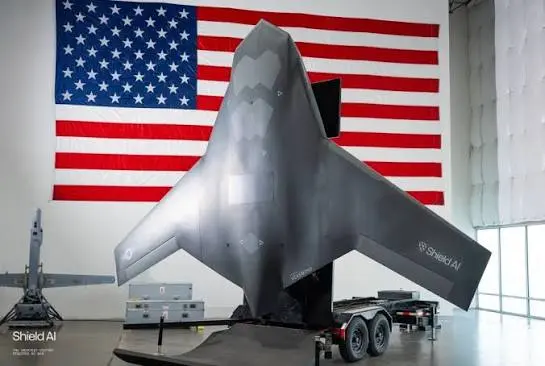
That same day, near the armistice line in Paju, Gyeonggi Province, the 1st Corps identified a U.S. Marine Corps drone participating in a combined U.S.-South Korea exercise as an unidentified aircraft, issued 'Duru-mi,' the readiness posture for responding to enemy drones, and prepared to intercept it. The U.S. military had texted the flight plan the day before to a working-level official at the 1st Corps without going through the required approval procedures with Air Force Operations Command, and even that information did not go up the chain of command. In a single day, one corps came under scrutiny over both readiness and reporting. Four days later, the Defense Ministry removed Lt. Gen. Han Gi-seong, commander of the 1st Corps, from duty.
■ From one corps' deviation to a problem across all corps
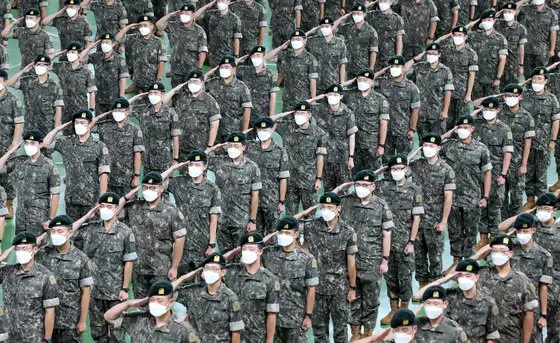
Initially, it seemed to be a problem limited to the 1st Corps. But according to Defense Ministry audit results disclosed through the National Assembly in early October, unloaded guard duty was also confirmed in the 1st, 2nd, 3rd and 5th Corps, as well as the Marine Corps 2nd Division, which handles coastal and riverbank security under the Capital Corps' direction. It was effectively the entire front, from the western front to the eastern front.
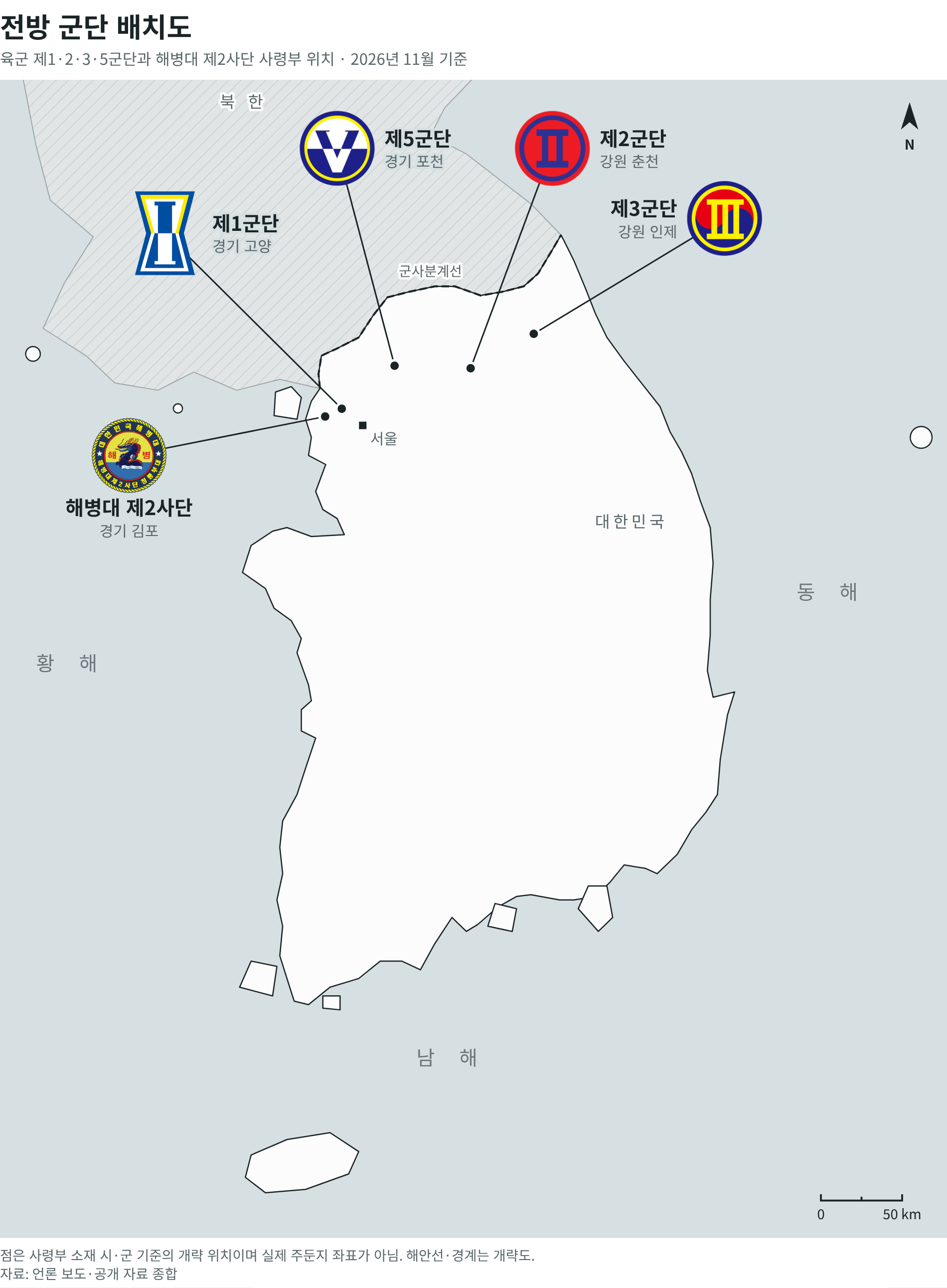
One part of the audit conclusion draws even more attention. According to information disclosed through the National Assembly, the Defense Ministry's inspector general's office judged that the Joint Chiefs of Staff (JCS) and Ground Operations Command, which direct and supervise guard operations, did not know about it. In a military where reporting to higher headquarters is routine, is it really possible to conclude that no one knew how ammunition was being handled across all frontline corps? This article traces three questions in order: why the corps removed live rounds, how far that fact went up the chain, and why no one stopped it.
■ What changed
The principle is clear. K6 heavy machine guns and K4 automatic grenade launchers deployed at GPs and GOPs are supposed to be kept loaded with live ammunition so they can respond immediately to contingencies. The K6 fires about 600 rounds of 12.7 mm ammunition per minute and has an effective range of about 1.8 km, making it the largest-caliber gun in the South Korean military's inventory.
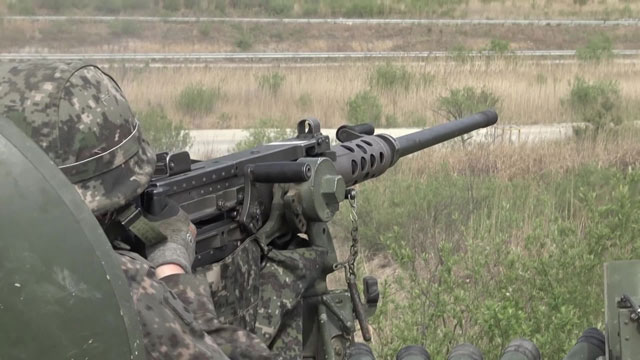
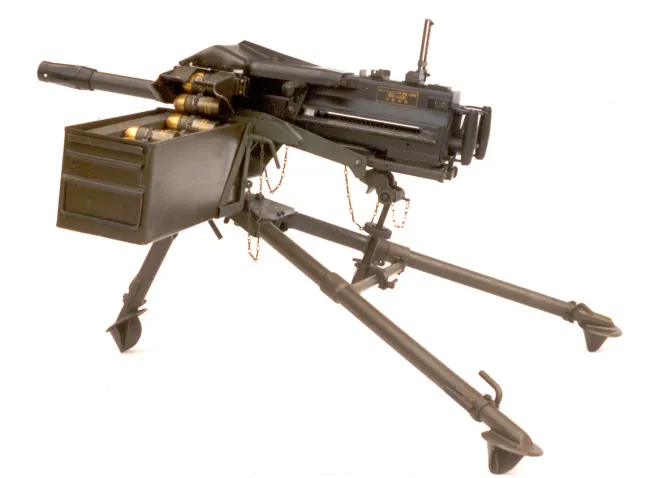
According to a Ground Operations Command investigation, from January this year the 1st Corps stood guard by leaving the ammunition belt disconnected from the K6 and keeping an ammunition can filled with live rounds beside it. Materials submitted by Ground Operations Command in response to a National Assembly inquiry also said personal weapons such as K2C1 rifles had been carried without live rounds loaded for years.
The 1st Corps' position was that the ammunition can was close at hand, and that the remote-controlled KR-6 deployed alongside it at the GP was loaded with live rounds, making an immediate response possible. Former corps commander Han Gi-seong pushed back at the October National Assembly audit, saying the term 'empty guns' was inappropriate. He said the ammunition can was attached to the weapon, and only the first round had been set down so it would not catch in the feed mechanism. Reports differed somewhat on exactly how the weapons were kept unloaded, and the practice also appears to have varied by unit.
■ Why were the rounds removed?
The most likely motive was accidental discharge. K6 machine guns are usually mounted in sentry positions aimed at North Korean GPs. If one goes off accidentally, North Korean troops could interpret it as aimed fire and respond in kind, potentially escalating into an armed clash. Accidental discharges are not uncommon on the front line, and each time the military notifies the North through broadcasts. In May 2025, a live K6 round flew toward the North during an inspection at a GOP of the 25th Division in Yangju, Gyeonggi Province. A month earlier, in April, there had been a similar accidental discharge at a GP on the central front. Some reports said former corps commander Han Gi-seong had been the 25th Division commander at the time. One interpretation is that the experience influenced the decision, but that has not been officially confirmed. Reasons cited in materials Ground Operations Command submitted to the National Assembly included the possibility of malfunctions during live fire, and accidental discharges during safety inspections or non-firing drills.
Manpower was also an issue. Former corps commander Han Gi-seong said at the National Assembly audit, in substance, that the measure was taken because troop numbers had fallen while safety inspection duties had increased. This suggests that keeping weapons in a loaded state increases the burden of inspection and management, and with it the risk of accidents.
This was not just an isolated move by a single commander. The Defense Ministry said each corps changed its ammunition-carrying method at a different time and that the shift was not made across the board during any one period. Even without a single order coming down from above, several corps separately reached the same conclusion. It can be seen as the same conditions - the risk of escalation from accidental discharges and pressure from manpower shortages - producing similar decisions.
■ Where did the reporting stop?
The command structure matters here. According to the Defense Ministry, the JCS decides the amount of live ammunition to be carried in frontline guard operations, while Ground Operations Command controls how it is carried. In the immediate aftermath of the controversy, Ground Operations Command said keeping weapons loaded is the principle, but that a corps commander may adjust the ammunition-carrying method in light of terrain, weather and seasonal conditions. Under the guidelines, the corps commander decides the carrying method, but if it is changed, the change must be reported to Ground Operations Command for review. In other words, the rules opened the door to discretion, and Ground Operations Command was also responsible for reviewing how that discretion was used.
In the 1st Corps case, the information appears to have gone up the chain. According to multiple reports, Ground Operations Command received notice through an automatic relay system that the 1st Corps had changed its guidelines, but did not flag it and did not report it to the JCS. The JCS learned of the situation only after media reports. The reporting went from the corps to Ground Operations Command, and stopped at the stage between Ground Operations Command and the JCS.
The audit measures also appear at odds with the conclusion that higher headquarters 'did not know.' The Defense Ministry included Ground Operations Command among the institutions to receive an institutional warning on the grounds that ammunition-carrying methods fall under its control duties, and decided to order the JCS to improve its procedures. In other words, it judged that they did not know, yet still held them responsible for oversight. Within the military, criticism emerged that in an organization where everything is reported, it is hard to understand a conclusion that higher headquarters knew nothing at all, and that the audit was ultimately shifting responsibility onto each corps. Some in the military even claimed the conclusion was meant to protect the Ground Operations Command commander.
■ The second 'we didn't know' to surface this year
This was not the first time. On Nov. 28 last year, the JCS revised its guard operations guidelines after receiving a proposal from Army Headquarters. The revision allowed rear-area units and school units south of the Civilian Control Line, with approval from a general-rank commander, to use nonlethal means such as expandable batons or Tasers instead of firearms on guardhouse duty. The guidance went down through Ground Operations Command and the 3rd Corps, and the 3rd Corps instructed subordinate divisions to implement it starting Jan. 1. The 3rd Corps commander at the time is the current Ground Operations Command commander.
In early January, controversy erupted after it became known that the 21st Division in Yanggu, Gangwon Province, had instructed guardhouse personnel to carry expandable batons instead of firearms, and the guideline was withdrawn. But materials submitted to the National Assembly in March showed that the 22nd Division, 23rd Guard Brigade and 3rd Artillery Brigade, also under the 3rd Corps, had actually stood guard carrying expandable batons from mid-December last year through Jan. 4. That was even earlier than the implementation date set by the corps. The JCS had not grasped this, and the defense minister was criticized for giving inaccurate answers about the matter in the National Assembly in January. The JCS said communication had been inadequate in the process of identifying the actual situation, but there had been no false reporting or cover-up. It later narrowed the units allowed to use nonlethal means to military hospitals and school units.
The two issues are different in nature. One is the use of nonlethal means at rear-area guardhouses, and the other is ammunition handling for weapons in frontline areas. But the pattern is similar. Higher headquarters opens room for discretion, lower units apply that discretion early on their own judgment, the actual situation comes to light through media reports or National Assembly materials, and higher headquarters says it did not know. The same pattern surfaced twice in six months.
■ Warnings issued, but no one held accountable
The Defense Ministry plans to issue institutional warnings to the Ground Operations Command, the 1st and 2nd Corps, and the 22nd Division under the 3rd Corps. The 5th Corps was excluded because it revised its own guidelines on the corps commander's orders before switching to a no-live-rounds-loaded posture. The ministry's position is that whether to keep ammunition loaded is a matter that can be handled under a corps commander's responsibility, and that it did not consider it a problem if the prescribed procedures were followed.
There will be no individual disciplinary action. The Defense Ministry said it was difficult to determine exactly when the practice diverged from the guidelines and hard to identify specific individuals because many people at each unit were involved. Han Gi-seong, the former 1st Corps commander who was removed from duty, also will not be disciplined on the basis of this audit. The People Power Party called for a parliamentary investigation and a special counsel probe.
That action leaves one question. If a no-live-rounds-loaded posture is legitimate as long as procedures are followed, was the problem removing the live rounds or failing to complete the paperwork? In this round of action, at least, what separated the 5th Corps from the 1st Corps was procedure, not readiness.
■ Counterarguments and limitations
There are clear limits to this article's interpretation. The Defense Ministry's Inspector General's Office still officially judges that the Joint Chiefs of Staff and the Ground Operations Command did not know. Multiple reports said the change was reported through an automated relay system, but some reports also said the 1st Corps did not report it even to the Ground Operations Command. It has not been disclosed what information was conveyed through that channel or in what detail, or whether changes by corps other than the 1st Corps were also relayed to the Ground Operations Command. The full audit report has not been made public either, so this account relies on information disclosed through the National Assembly.
The audit also did not establish how much the no-live-rounds-loaded practice actually reduced response capability. Ammunition boxes were beside the weapons, and other weapons loaded with live rounds were also in operation. The risk that an accidental discharge could escalate is not hypothetical, either. It cannot be said categorically that keeping live rounds loaded is always the safer choice.
The office of the lawmaker who released the audit results said all of the cases began after North Korea declared the two Koreas "two hostile states" in December 2023. But that is only a matter of chronology, and the Defense Ministry said each corps separately decided when to change its method of carrying ammunition, making it unrelated to any specific period, with the timing differing in every case.
■ What to watch next
First is who will set the rules for carrying ammunition. The key question is whether to impose a common standard at the Joint Chiefs level or keep corps commanders' discretion while strengthening reporting and review obligations. Second is what the ordered "improvements to the work system" at the Joint Chiefs will actually entail. If there is no change in who reviews automatically relayed reports and by what standards, the same thing could happen again.
Pressure in the field is expected to grow. The Defense Ministry has put forward a plan to reduce personnel at GOP posts from about 22,000 to around 6,000. It is a phased plan aimed at around 2040. The fewer troops there are, the more judgments commanders on the ground must make between safety and readiness. In the meantime, North Korean troops crossed the Military Demarcation Line around 50 times over the two months of August and September, and in September three South Korean military personnel were injured in an explosion during a search operation in the Demilitarized Zone. On Oct. 5, the military concluded that a mine planted by North Korea south of the Military Demarcation Line was the cause.
Now return to July 30. The flight plan for the U.S. military drone reached a working-level official at the 1st Corps in a single text message and went no further. The change in live-ammunition guidance reached the Ground Operations Command through an automated relay system and went no further. What the two incidents had in common was not a lack of information. It was a failure of judgment by those who received it.