Whose national prestige is it: Different standards of military service for medals, Billboard rankings, and researchers
Medals are for special cases, Billboard No. 1 is for service, and researchers have 3 years of alternative service. This highlights the different standards applied to military service exemptions for the same national prestige.
강병지
Published
Updated
■ "I am not going to the military"
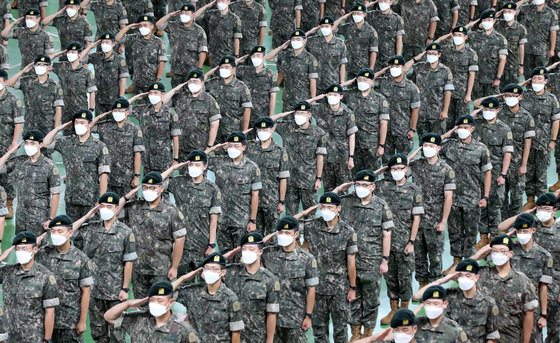
After winning the gold medal in men's football at the Aichi-Nagoya Asian Games, team captain Lee Gi-hyuk said, "I am not going to the military." He added that if he had not won the gold medal, he would have had only 9 days left before enlistment. Yang Min-hyuk stated that he played with the intention of seeing military exemption as a reward rather than medals or trophies. Park Seung-soo posted a photo wearing a military cap in the locker room on social media but later deleted it.
As criticism poured in, all three athletes apologized via social media. Lee Gi-hyuk stated that he did not consider the weight of his words as a captain and apologized to those fulfilling their military duties. Park Seung-soo explained that the hat he received from a fan was not meant to mock anyone.
In the same tournament, the baseball team lost 0-5 to Japan, which was made up of amateur players in the super round, but won the final 3-1 to take the gold medal. Among the 24 players in the roster, 16 who had not completed their military service benefited. Both ruling and opposition parties rarely voiced in unison that the system should be revised or abolished. The Ministry of National Defense stated at a regular briefing on October 6 that it was "very regrettable" regarding the athletes' comments. It added that it plans to reflect the reduction and abolition of supplementary military personnel, including arts and sports personnel, in the basic plan for defense reform.
■ Why does it keep repeating?
This controversy is not the first. In 2002, after reaching the semifinals in the World Cup and finishing 3rd in the 2006 World Baseball Classic, the government created new provisions such as '16 or more in the World Cup' and '4 or more in the WBC' to grant exceptions based on performance, which were removed in 2008. In 2018, when controversies arose regarding the selection of the baseball team, the head of the Military Manpower Administration stated during a national audit that it could be abolished if necessary. In 2022, there was a debate over BTS's military service.
Despite repeated controversies, the framework of the system has hardly changed since 1990. The criteria of finishing 3rd or higher in the Olympics and 1st in the Asian Games have remained the same for 36 years. Let's trace back to the starting point.
■ In 1973, the country needed medals
The starting point of the system is the "Act on the Regulation of Special Cases for Military Service Obligations" enacted on March 3, 1973. It was a system that recognized individuals who were deemed to have the need to develop or demonstrate their special skills for the national interest in the fields of academia, arts, and physical education, allowing them to be considered as having completed their military service after working in that field for a certain period.
The background is traced back to the 1972 Munich Olympics. North Korea, which participated in the Summer Olympics for the first time, ranked 22nd overall with five medals, including one gold medal. South Korea finished 38th with one silver medal. During the period when the two Koreas competed for ideological superiority, the Park Chung-hee government developed elite sports centered around the Taereung Training Center, and military service exemptions were an incentive for that.
Initially, a special selection committee chose the candidates. The criteria were vague, and there were few athletes who benefited. The first beneficiary in the sports field is known to be Yang Jeong-mo, who won the first gold medal after liberation in wrestling at the 1976 Montreal Olympics. Right after the confirmation of hosting the Seoul Olympics in 1981, the criteria were significantly broadened to include finishing within the top 3 in major international competitions such as the World Championships and Universiade. As the number of beneficiaries surged, the government narrowed the criteria to its current form in 1990.
The reason the system was created was clear. The country needed medals on the international stage. The current debate ultimately questions whether that premise is still valid in 2026.
■ The reality of the system that is not 'exemption'.
Legally, sports personnel do not receive military service exemption. They are incorporated into supplementary service, receive basic military training within 30 days, and must work in the relevant field for 34 months under the management of the Ministry of Culture, Sports and Tourism. During this period, they must also complete 544 hours of public service utilizing their talents, and if they fail to do so, their service period is extended, and if they ultimately do not complete it, their incorporation is canceled.
The problem is that 'engagement in the relevant field' is essentially the athlete's original activity. Professional athletes play as they did with their teams, and those in overseas leagues continue their careers abroad. There is virtually no gap in experience due to military service. This is also the reason why athletes freely use the term 'military exemption'.
The management situation has also come under scrutiny. According to data submitted to the National Assembly by the Ministry of Culture, Sports and Tourism, 21 sports personnel were caught violating the Military Service Act by engaging in advertising and promotional activities without permission from 2022 until August of this year. Among them, 16 were participants in the 2023 Hangzhou Asian Games, and 10 were baseball players. The punishment was limited to a warning.
■ Three Standards
Dissatisfaction surrounding this system does not remain solely within sports. Under the same justification of 'national prestige' and 'national competitiveness', completely different standards are applied in each field.
The first field is sports. The standard is the result of a single competition. It is determined by a gold medal at the Asian Games or a 3rd place finish at the Olympics, without considering the level of the opposing team or previous experience.
The second field is arts. Pure arts such as piano, violin, ballet, and traditional Korean music benefit from the arts personnel system. One must place 2nd or higher in designated international competitions or 1st in domestic competitions. However, popular culture is excluded. When the government revised alternative service in 2019, it did not include popular cultural artists. The reasons were fairness, equity, and the trend of reducing alternative service. Unlike competitions with clear rankings, it is difficult to determine what to use as a standard among charts, awards, and sales in popular culture, and there were also criticisms about whether commercial success can be seen as an individual's contribution to national prestige. In 2020, the amendment of the Military Service Act allowed popular cultural artists who received cultural medals and were recommended by the Minister of Culture, Sports and Tourism to postpone enlistment until the age of 30, but it was merely a postponement. In a public opinion poll commissioned by the National Assembly's Defense Committee in 2022, 60.9% supported alternative service for popular cultural artists who contributed to national prestige.
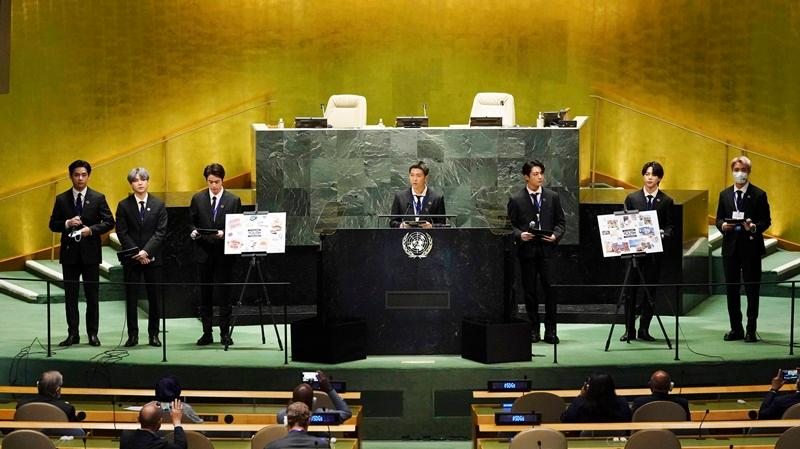
The records accumulated by BTS were not comparable to just one gold medal at the Asian Games. In 2020, they became the first Korean artist to reach No. 1 on the Billboard Hot 100 with 'Dynamite', and subsequently topped the charts again with 'Butter' and others. They were the first K-pop group to be nominated for a Grammy and spoke at the UN General Assembly. In 2018, they received the Hwagwan Cultural Medal at the youngest age. That same year, a private research institution estimated the production and added value generated by BTS to average about 5.56 trillion won per year. It is hard to find a case that better fits the justification of national prestige than this.
However, BTS did not receive special treatment. They announced their enlistment in October 2022, and the members completed their service as active duty or social service personnel in turn. The last member will be discharged in June 2025, and all seven will reunite. In March of this year, they reached No. 1 on the Hot 100 for the seventh time with the title track 'Swim' from the album 'Arirang'. The two-and-a-half-year hiatus in group activities did not end their status as global leaders. This is where the logic of sports special treatment, which argues that career interruptions should be avoided, is most significantly shaken.
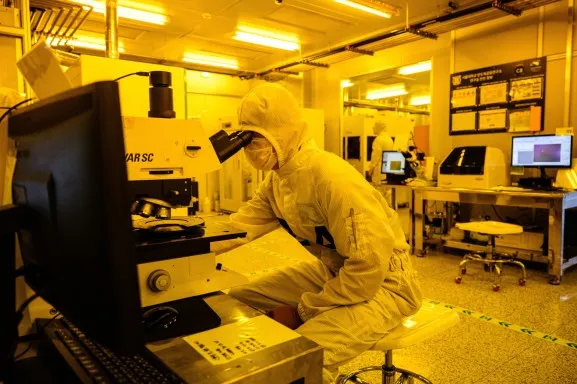
The third field is science. Master's and doctoral degree holders in science and engineering are required to work for 36 months at designated research institutions as professional research personnel. If a doctoral professional research personnel does not obtain their degree within five years, they must serve the remaining period as active duty soldiers. Industrial function personnel work for 34 months at designated industries, and if they are supplementary service personnel, they work for 23 months. In either case, the places where they can serve are limited to institutions and companies designated by the government.
The weight of the work they undertake accumulates for the country in ways other than medals. The industrial competitiveness in areas such as semiconductors, batteries, and artificial intelligence, as well as the foundation of national defense, ultimately comes from research personnel. However, what is given to them is not special treatment but rather longer service. The 36 months of service for specialized researchers is double that of the 18 months of active duty in the Army. The places where they can serve are also limited to institutions designated by the government. Since 2013, new assignments to large corporate research labs have been halted, and they will only reopen next year for the field of artificial intelligence. Specialized researchers in doctoral programs must obtain permission to go abroad and cannot exceed one year of service abroad in total. Except for specific reasons such as joint research, only three months of that can be recognized as service. This means that researchers are tied down at the most critical times for overseas joint research, conferences, and training. Starting a business is also prohibited. They cannot perform alternative service in a company where they are the representative.
Even if both are 34-36 months, athletes continue their careers with their teams and in overseas leagues, while researchers are bound to designated institutions.
Classification
Recognition criteria
Service Method
In case of failure
Sports Personnel
3rd place at the Olympics, 1st place at the Asian Games, one competition.
34 months of activity in the sport + 544 hours of public service
Extension or cancellation of transfer for failure to fulfill public service obligations
Art Personnel
Winning in pure art competitions (excluding popular culture)
34 months of activity in the field + 544 hours of public service
Same
Professional research personnel
Master's and Doctorate, Institution Assignment
Designated research institution for 36 months
If a doctoral degree is not obtained within 5 years, active duty service is required.
There is also a paradox surrounding money. One of the logics excluding popular culture was commercial success. However, among the beneficiaries of this football and baseball, there are quite a few professional players with high salaries. The same commercialism is a reason for exclusion on one side, while it is not a problem on the other. However, this paradox does not directly lead to the conclusion that special treatment should also be given to popular cultural artists. Rather, it shows that the government has never established consistent principles on what criteria to recognize contributions.
■ Why reduce research but keep medals?
In 2019, the government made two decisions regarding alternative service. First, it decided to reduce the annual allocation of professional research personnel, industrial function personnel, and reserve personnel combined from 7,500 to 6,200. The number of master's professional research personnel was cut from 1,500 to 1,200, and industrial function personnel from 4,000 to 3,200. The reason was the decrease in military resources. On the other hand, arts and sports personnel were left unchanged. At that time, a government official explained that since the number was 30-40 per year, it was not significant in terms of securing military resources, and considering their morale, it was preferable to maintain them.
The core of the government's logic is scale. Research and industrial personnel number in the thousands, so reducing them contributes to the military, while art and sports personnel number in the dozens, so reducing them is of no use. At first glance, this seems plausible, but there are flaws in three aspects.
First, in terms of scale, the reduction is not significant. According to the Military Manpower Administration, the number of active duty enlistment candidates last year was 322,674. A reduction of 1,300 per year is just over 0.4% of that. The standing military force was about 450,000 as of July last year, and if the current trend continues, it is projected to decrease to about 270,000 by 2040. In the face of this trend, the reduction of research personnel cannot serve as a solution to fill the manpower gap.
Secondly, while the reason for 'reducing' the scale can be valid, the reason for 'keeping' it cannot. If there are about 40 people a year, eliminating them would not harm military strength. Nevertheless, the real reason for keeping them was a value judgment of morale and national prestige. If that is the case, why was the same value judgment not applied to researchers who support national competitiveness and defense technology? One side continues their main work for 34 months, while the other is bound to a designated institution for 36 months with even reduced quotas.
Thirdly, equity is a matter of individuals, not total volume. Whether there are 40 or 4,000 people receiving special treatment, the standards must be understandable to each young person who bears the same obligations. According to the Military Manpower Administration, a total of 656 arts and sports personnel have been incorporated from 2010 to 2024, averaging about 40 per year. The fact that these dozens of exemptions provoke outrage among hundreds of thousands is not a matter of arithmetic but of fairness. The Ministry of National Defense also listed fairness and equity as the first considerations in this announcement.
The difference in scale can explain what to reduce first. However, it cannot explain why one side has special treatment while the other side is shackled.
■ The Ministry of National Defense's declaration of 'abolition', remaining questions
This announcement is significant in that it has clarified the direction. The Ministry of National Defense stated that it would consider fairness and equity among military service members, the reduction of military resources, and national consensus together. However, no specific schedule has been provided. It is still unclear how far 'reduction or abolition of supplementary service' goes. Whether it refers only to arts and sports personnel or includes professional research personnel and industrial function personnel will completely change the implications. If alternative service for research personnel is also abolished, the reform aimed at correcting equity could weaken the Ministry of National Defense's own vision of moving towards a technology-centered military structure.
There are several options. Proposals include completely abolishing the system, implementing a mileage system that reflects the results of multiple competitions rather than just one, allowing only deferment of enlistment, and providing economic compensation instead of military service benefits. The mileage system was promoted by the Military Manpower Administration in 2013, but it became stagnant amid concerns that the number of beneficiaries could increase as the sports community demanded relaxed scoring criteria and the inclusion of world championships. Other conscription countries can also serve as references. There are few countries that significantly reduce military service burdens through medals, and according to some reports, only Taiwan and Iran besides South Korea do so. Singapore only defers enlistment for world-class athletes, while Turkey does so for qualified athletes. In countries like Israel, Finland, Switzerland, and Austria, winning medals does not exempt one from military service. What remains to be seen is the specific plan to be included in the new basic defense reform plan, as well as the reactions from the Ministry of Culture, Sports and Tourism, the sports community, and the science and technology sector.
■ The question of 1973, the question of 2026
The question in 1973 was simple. Does the country need medals? At a time when the medal ranking lagged behind North Korea was a national task, the answer was 'yes'.
The question for 2026 is different. South Korea has become a country known to the world without medals. Now, what we need to ask is whose national prestige is being upheld, by what standards, and at what cost. Among the youth of the same era, some protect their careers with a single medal, some achieve Billboard No. 1 while fulfilling military service, and some return to active duty if they do not obtain a degree. The phrase "I am not going to the military" has sparked such a strong backlash not only because of its recklessness but also because it exposes the naked truth of a 50-year-old standard.