3,600-ton-class Seo Hui launched as the two Koreas race to bolster undersea forces
Fitted with domestically developed lithium batteries and vertical launch tubes, it is set to be delivered to the Navy and enter service in 2028
North Korea's Kim Gun-ok Hero also has 10 vertical launch tubes, underscoring a race to expand underwater strike capabilities
Published
Updated
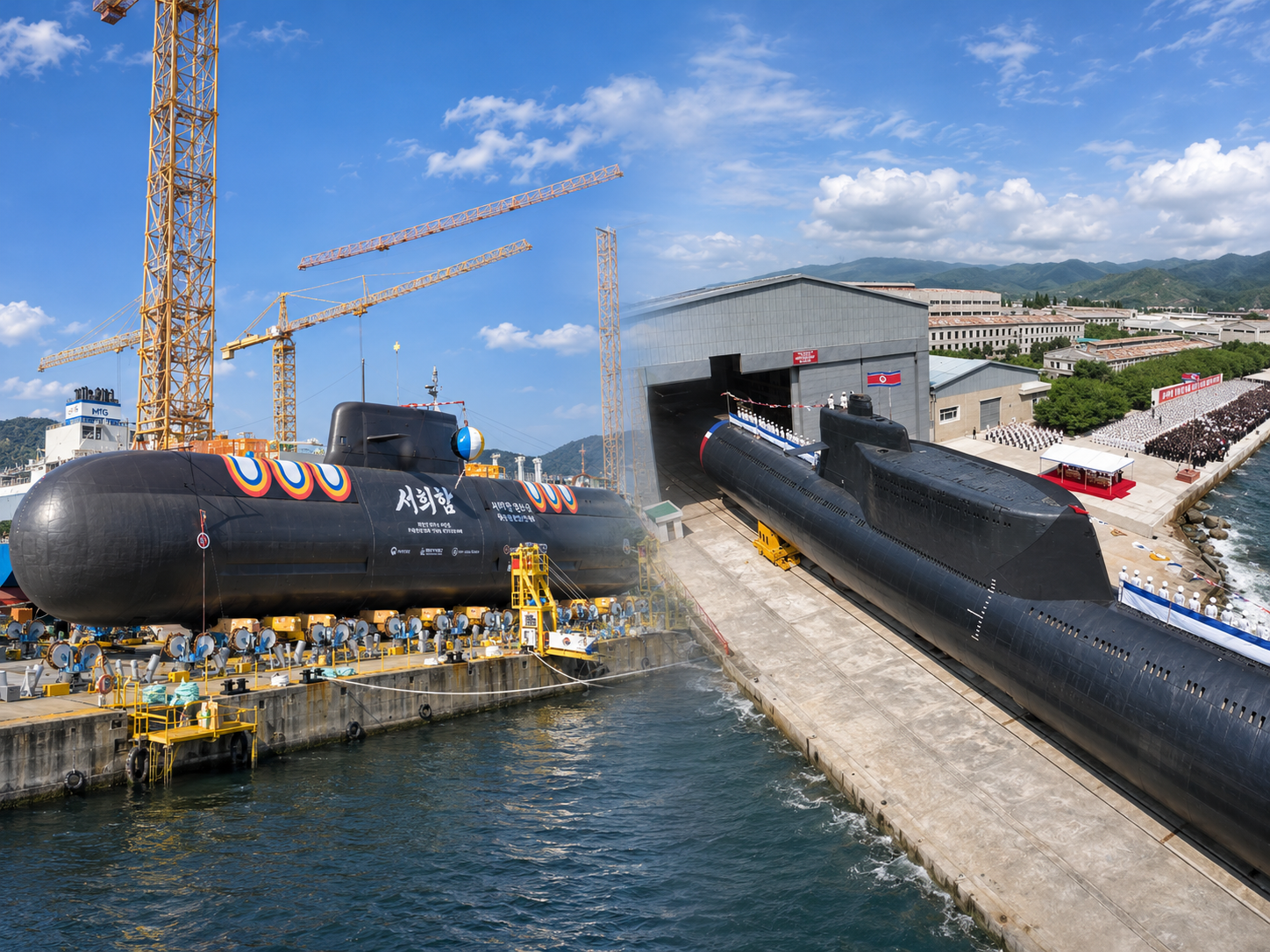
The Navy's newest 3,600-ton-class submarine, Seo Hui (SS-088), was launched in Geoje, South Gyeongsang Province, on the 3rd. With North Korea last month test-firing two types of strategic cruise missiles from a submarine believed to be the Kim Gun-ok Hero, the two Koreas are accelerating efforts to expand underwater strike capabilities. Both submarines have 10 vertical launch tubes for missiles, but while North Korea retrofitted an aging submarine, South Korea is strengthening its submarine force with an indigenously developed new hull, propulsion system and combat system.
The Navy and the Defense Acquisition Program Administration held a launch ceremony that day at Hanwha Ocean's Okpo Shipyard in Geoje for Seo Hui, the second boat of the Jangbogo-III Batch-II program. Seo Hui is the second 3,600-ton-class submarine, following Jang Yeong-sil (SS-087), which was launched in October last year. After a construction contract was signed in 2021 and the keel was laid in 2024, hull construction has now been completed. The submarine is set to undergo sea trials and performance verification before being delivered to the Navy in 2028.
Seo Hui is an upgraded follow-on to the existing 3,000-ton-class Dosan Ahn Changho-class submarine, with its hull length increased from about 83 meters to 89 meters and its displacement up by about 600 tons. The enlarged hull increases the number of vertical launch tubes capable of carrying submarine-launched ballistic missiles (SLBMs) and other weapons from six to 10, while improved combat and sonar systems strengthen long-range target detection, multi-target identification and precision strike capabilities. It was designed to operate cruise missiles and ballistic missiles in addition to torpedoes and mines.
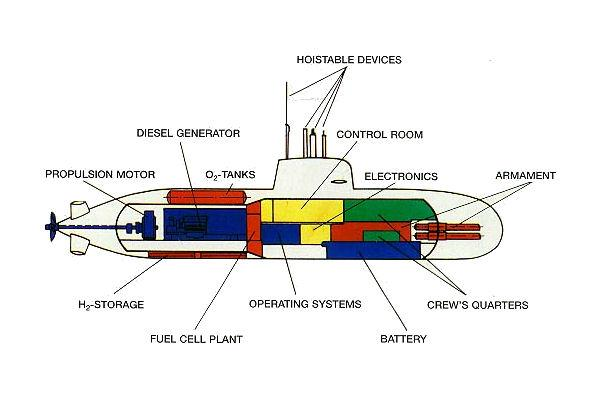
The propulsion system has also been revamped. Seo Hui uses both a domestically developed high-capacity lithium-ion battery system and a fuel-cell-based air-independent propulsion (AIP) system. Diesel-electric submarines must periodically snorkel, rising close to the surface to draw in outside air to recharge their batteries. AIP can generate electricity without outside air, while lithium-ion batteries offer higher energy density and output than conventional lead-acid batteries, helping extend submerged endurance and high-speed underwater cruising capability.
When Hanwha Ocean opened the interior of Seo Hui to the media this past September, it said the propulsion system combining lithium-ion batteries and AIP had significantly improved the ability of conventional submarines to sustain underwater operations. According to the Navy and the Defense Acquisition Program Administration, the battery system underwent safety verification at a land-based test facility, and the submarine is also equipped with noise- and vibration-reduction technology and an auxiliary thruster that can keep it maneuvering even if the main propulsion system fails. It also has a penetrating periscope for direct observation if a problem arises with the electro-optical sensor.
The scope of localization has also expanded. Compared with the Dosan Ahn Changho-class, 12 additional types of equipment, including the lithium battery system, were developed domestically, bringing the total number of locally developed systems installed to 70. The Navy and the Defense Acquisition Program Administration believe localizing key equipment will improve the reliability of maintenance and parts procurement needed during ship operations and help strengthen competitiveness in overseas submarine export projects.
North Korea's development of underwater forces has recently drawn renewed attention through missile launch tests. On Oct. 15, the Korean Central News Agency said the Missile Administration had tested two types of submarine-launched strategic cruise missiles in the East Sea the previous day. North Korea did not disclose the submarine's name, but based on the hull and sail structure shown in released photos, military experts assessed that the Kim Gun-ok Hero, launched in 2023, was used in the test.
The Joint Chiefs of Staff assessed at the time that one type of missile launched by North Korea was fired from a vertical launch tube and another from a torpedo tube. The use of both launch methods in an actual test shows that North Korea is verifying its ability to operate different types of cruise missiles from a submarine. North Korea said the test was part of a process to inspect the mobilization readiness of the submarine's combat system.
The Kim Gun-ok Hero is submarine hull number 841, first unveiled by North Korea in September 2023. North Korea touted the vessel at the time as its first "tactical nuclear attack submarine," but it is assessed to be a heavily modified former Soviet Romeo-class diesel-electric submarine. The term "nuclear attack submarine" also appears intended to emphasize its ability to carry nuclear weapons rather than indicate that it has a nuclear propulsion system.
North Korea expanded the vessel's weapons-carrying capacity by extending the section behind the sail on the existing hull and installing a large missile launch compartment. According to analyses of satellite imagery and open-source video by 38 North and the Center for Strategic and International Studies (CSIS), the Kim Gun-ok Hero is fitted with four large launch tubes and six small launch tubes. The large tubes are presumed to be for Pukguksong-series ballistic missiles, and the small tubes for Hwasal-series cruise missiles.
However, parts of the gap between the launch tubes' outward appearance and their actual weapons employment capability still need to be verified. The October test showed an ability to launch cruise missiles from a submarine, but it did not confirm the ability to fire multiple missiles in succession, conduct prolonged underwater operations or operationally employ ballistic missiles.
38 North and the Korea Institute for Maritime Strategy (KIMS), among others, have raised the possibility that because the Kim Gun-ok Hero uses the hull and propulsion system of an existing Romeo-class submarine, it may face constraints in underwater noise, range and operational endurance. The extensive modification of the hull structure to add missile launch tubes is also assessed as a factor that could affect the submarine's stability and maneuverability.
By contrast, Seo Hui has been upgraded in an integrated way, with more vertical launch tubes as well as improvements to its propulsion system, sonar and combat systems, and noise-reduction technology. A submarine's actual combat capability depends not only on the number of missiles it carries, but also on its ability to move to an operational area while evading enemy anti-submarine surveillance networks, acquire target information underwater and fire its weapons at the required moment. In conventional submarines in particular, reducing the frequency of snorkeling and remaining submerged for longer are key factors in lowering the risk of detection.
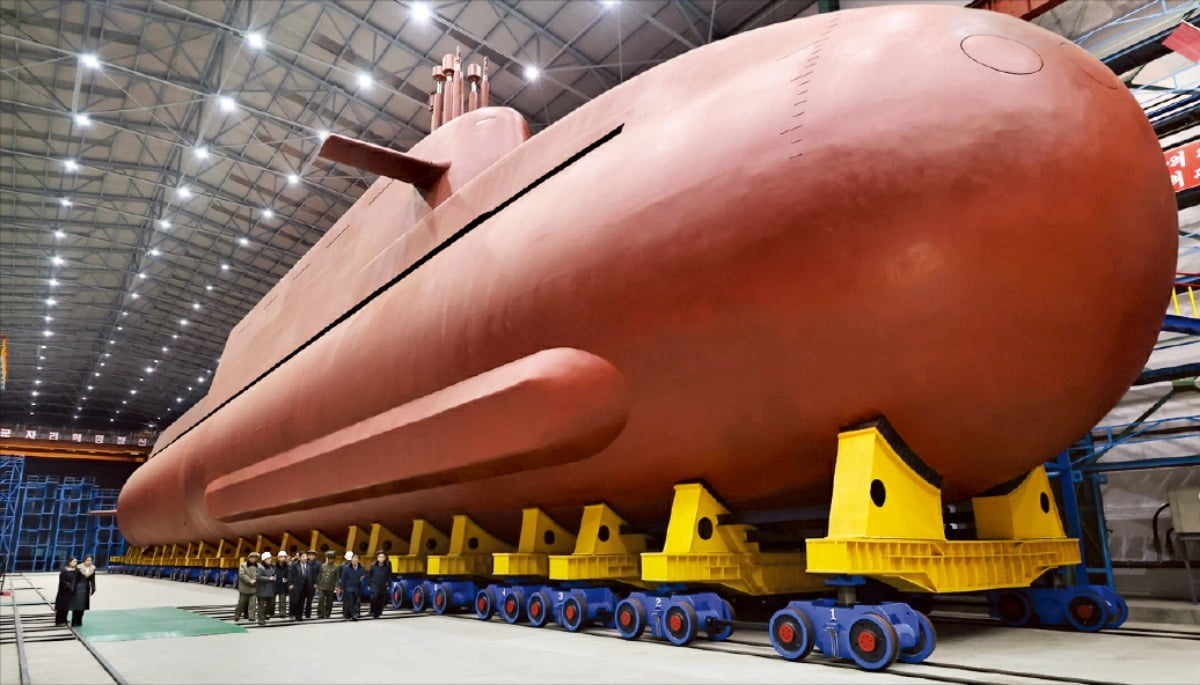
North Korea is also pursuing a separate project to build a new nuclear-powered submarine. The 8,700-ton-class nuclear-powered strategic missile submarine unveiled in December last year is being built on a much larger scale than the Kim Gun-ok Hero, but the level of development of its reactor and propulsion system, as well as its actual completion schedule, is unknown. In effect, North Korea is seeking to secure a sea-based nuclear force while simultaneously pursuing weapons modifications for aging submarines and the construction of new submarines.
South Korea is also considering the development of submarine capabilities beyond Jangbogo-III Batch-II. The government is pursuing the acquisition of nuclear-powered submarines as a medium- to long-term defense task, while also exploring ways to expand sustained underwater operational capability alongside performance upgrades for existing conventional submarines.
Lee Sang-woo, head of the Defense Acquisition Program Administration's Nuclear-Powered Submarine Project Group, said the launch of Seo Hui shows the achievements of domestic submarine design and construction technology, adding that he expects broader localization to help strengthen the Navy's capabilities and lay the groundwork for submarine exports.
Seo Hui is scheduled to be assigned to an operational unit after its delivery to the Navy in 2028 and the completion of its force integration process. North Korea's Kim Gun-ok Hero recently revealed part of its weapons employment capability through a cruise missile test, but whether it has actually been assigned to an operational unit and its long-duration submerged performance remain unconfirmed. As the two Koreas each seek to expand their ability to operate submarine-launched missiles, the key yardsticks for assessing the level of their submarine forces are likely to be sustained underwater operational capability and the reliability of their launch systems.