After Hormuz, Bab el-Mandeb: Why Saudi Arabia Must Keep the Houthis in Check
While Hormuz has been blocked, the Houthis have seized control of Bab el-Mandeb. Saudi Arabia's ability to keep the Houthis in check is now a matter affecting the world's alternative oil route.
강병지
Published
■ The Capital Airport Breached
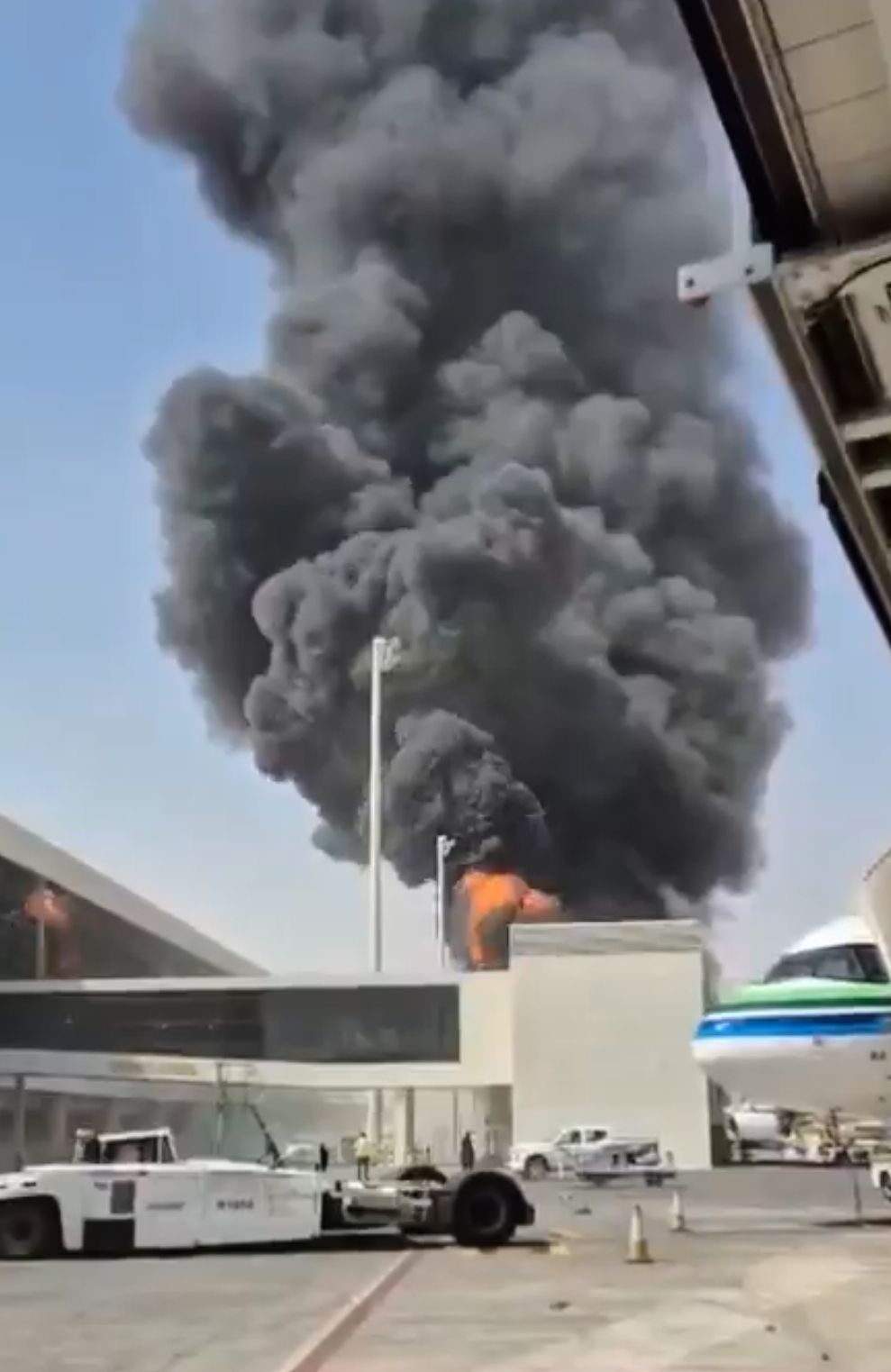
On Oct. 10, the passenger terminal at King Khalid International Airport in Riyadh, the Saudi capital, came under attack. According to Saudi Arabia's General Authority of Civil Aviation (GACA), at least 12 people were killed and 309 injured. The dead were four Saudis, two Bangladeshis, and one each from the United States, Jordan, Palestine, Syria, Sudan and Egypt. It was described as Saudi Arabia's deadliest loss of life in more than a decade. Airport operations were immediately suspended and remained halted through Oct. 11.
The Saudi-led coalition identified Yemen's Houthi rebels as responsible and vowed a firm response, calling it a "clear war crime." The U.S. State Department also pointed to the Houthis. The Houthis, however, did not claim responsibility for the attack that day. Instead, they repeated warnings to airlines and blamed Saudi Arabia for the failure to intercept it.
It was the third attack on the airport in a week. Strikes on Riyadh and Abha airports on Oct. 6-7 killed three people and injured 36. On Oct. 8, amid a Houthi claim of a ballistic missile attack, three Saudis were killed, including a Saudia captain. Asked whether the United States might join the fight against the Houthis, U.S. President Donald Trump replied, "It could. I'll look into it."
The Saudi-Yemen front, which had been quiet for more than four years since the 2022 U.N.-brokered truce, has within three months expanded into a war that is killing civilians in the heart of the capital. To read this only as a renewed Yemeni civil war misses the point. While the Strait of Hormuz has been effectively blocked for more than half a year by the war with Iran, the Red Sea, where the Houthis have now reached, is Saudi oil's alternative outlet to the sea.
■ July: The Rupture That Began on a Runway
It began with a single airplane. On July 3, an Iranian aircraft landed in Sanaa, the Houthi-held capital. According to local media, it was the first publicly known flight from Iran to Sanaa in about 10 years. On July 13, as an Iranian aircraft carrying a Houthi delegation returning from the supreme leader's funeral in Tehran headed again for Sanaa, the airport runway was bombed.
Who carried out the airstrike remains disputed. Yemen's Defense Ministry said it had directly struck the runway to prevent the landing, while the Houthis pointed to Saudi Arabia. Local media also noted that government forces lacked fighter jets or long-range missiles capable of striking Sanaa airport. The Iranian aircraft is reported to have landed instead at Hodeidah, a Red Sea port. The Houthis retaliated the same day by firing a missile toward Abha International Airport in southern Saudi Arabia, and Saudi Arabia said it intercepted the projectile. It was the moment the four-year truce broke down.
On July 20, the Houthis declared a maritime blockade against Saudi Arabia. The attacks then shifted to Saudi oil tankers and oil facilities along the Red Sea coast. A 400,000-barrel-a-day refinery in Jizan near the border was attacked on July 25, and Aramco halted operations on July 27. The Houthis also claimed attacks on the refinery on Aug. 9 and Aug. 13.
Saudi Arabia also responded diplomatically. On Aug. 7, it signed a joint defense pact in Mecca with Turkiye and Pakistan. Under the agreement, an attack on one member is to be treated as an attack on all three.
■ September: Coastline and Pipeline Shaken on the Same Day
On Sept. 8, Houthi missiles and drones struck southern Saudi cities including Abha, Khamis Mushait, Jizan and Najran. At least 73 people were injured, according to the coalition. Then, on Sept. 10, two incidents unfolded on the same day.
One was on Yemen's west coast. The Houthis seized the Red Sea port of Mocha that day, then took the southern coastline and Perim Island in the middle of the Bab el-Mandeb Strait the next day. That put the entire Yemeni side of the strait's coastline in Houthi hands. Within days, the Hanish Islands to the north also fell. Government forces effectively collapsed. According to some reports, the advance was backed by guidance and weapons support from Iran's Islamic Revolutionary Guard Corps (IRGC). Those reports anonymously cited Yemeni government, Iranian and regional sources, and Iran has officially denied claims that it militarily directs the Houthis.
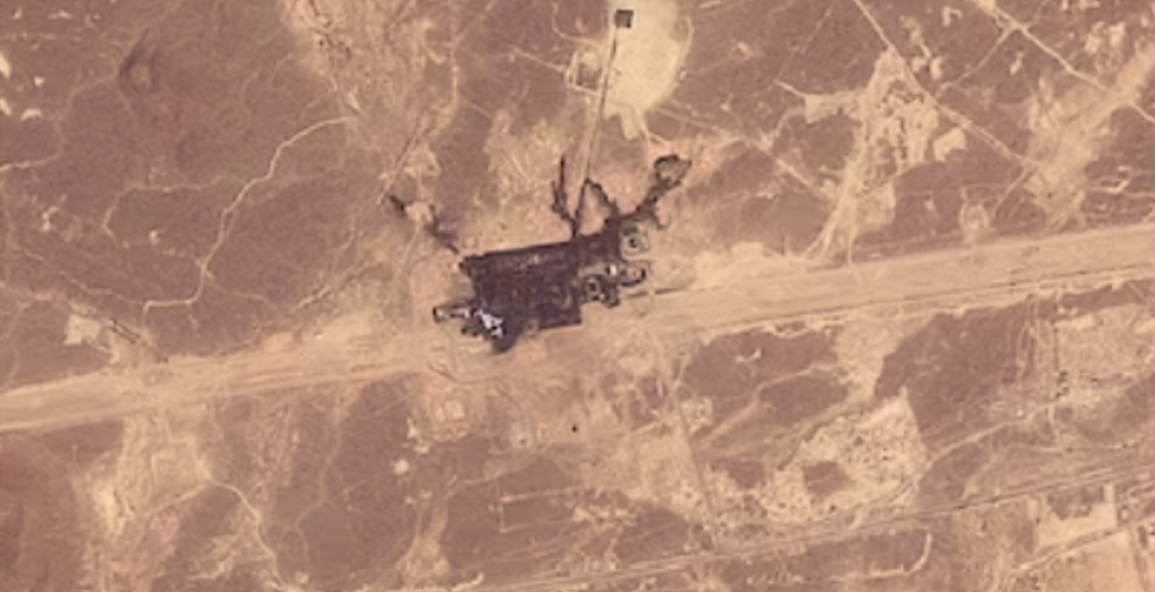
The other was in the Saudi interior. That same morning, the East-West pipeline linking Saudi Arabia's eastern oil fields to the Red Sea port of Yanbu came under repeated attack along the Riyadh-Medina stretch. Saudi Arabia halted pipeline operations the next day. The Saudi and Iraqi governments both confirmed that the drones had come from Iraqi territory, while pro-Iran Iraqi militias denied involvement. The pipeline was restarted on Sept. 22 and is reported to have recovered to more than 80% of its maximum capacity, about 7 million barrels a day, by early October.
There is no evidence the two attacks were coordinated in advance. But in effect, Saudi oil's alternative outlet came under pressure from both sea and land on the same day.
On Sept. 19, Riyadh itself came under attack for the first time in the current clash. According to reports citing regional officials, Saudi Arabia, running short of interceptor missiles, asked France, Britain, Pakistan and Egypt for air defense support.
■ October: Counteroffensive, and Strikes on the Capital
On Oct. 2, reports said Saudi Arabia was preparing an offensive against the Houthis. According to Gulf and Yemeni officials, options under consideration included a limited attack around Bab el-Mandeb and an offensive across multiple fronts at once. Depending on the scale, more than 100,000 Yemeni troops could be mobilized, they said. Yemeni forces would handle the ground war, with Saudi Arabia providing air support.
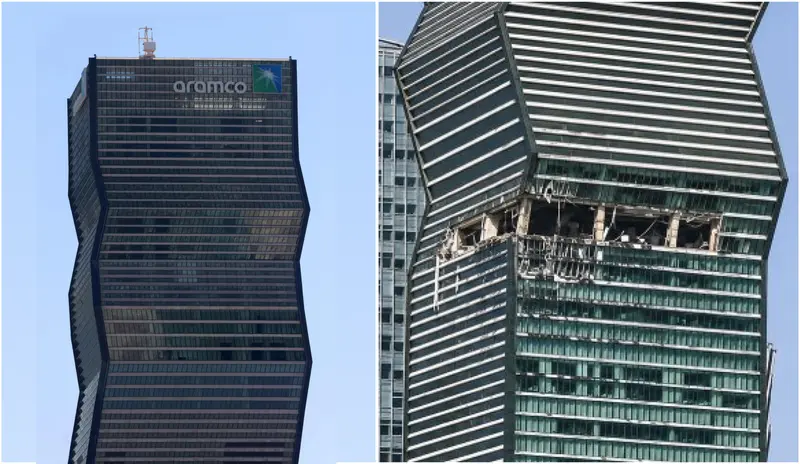
The next day, Oct. 3, large flames shot up from an Aramco refinery south of Riyadh. The Houthis claimed they had attacked Aramco facilities in Riyadh and Khurais, but the coalition dismissed that as a distortion of the facts. On Oct. 4, the Houthis seized Turbah, on the route linking Taiz and Aden. The same day, the Yemeni government announced a large-scale operation. The ground offensive began at dawn on Oct. 5. Rashad al-Alimi, chairman of the Presidential Leadership Council, said that day the operation was named "Dawn of Yemen" and that its objectives included retaking Sanaa. The coalition claimed 100 fighter jets were supporting government forces and had destroyed hundreds of targets, but that has not been independently verified.
Claims about the battlefield differ sharply. The Yemeni government said it had taken the Dhubab area by the strait and had also retaken Mocha. But even government sources said forces had only reached the outskirts of Mocha, and the recapture of Mocha has not been independently confirmed beyond the government's announcement. Inland, by contrast, the Houthis are tightening their encirclement of Taiz. On Oct. 5 in Riyadh, the Mecca alliance held an emergency meeting and decided to rapidly deploy Turkish and Pakistani forces to Saudi Arabia. It was the pact's first activation just two months after it was signed.
The Houthis shifted their counterattack to Saudi skies. They declared all Saudi airspace except Mecca and Medina to be within their operational range and warned airlines to suspend flights. Over the following week, Riyadh airport was hit three times. The Houthis claimed responsibility only for the first two incidents and stayed silent about the Oct. 10 attack, which caused the heaviest casualties. Since Oct. 8, several airlines have suspended flights to Saudi Arabia, and the Yemeni government has asked the U.N. Security Council for a decision holding the Houthis responsible.
■ Why Saudi Arabia's 'Keeping the Houthis in Check' Is a Global Issue
How effectively Saudi Arabia manages the Houthis is now an issue that goes beyond the outcome of Yemen's civil war. That is true on four levels.
First, energy. After the war involving the United States and Israel and Iran began in late February and transit through the Strait of Hormuz became severely restricted, Saudi Arabia rerouted its crude exports to Yanbu through the East-West pipeline. Exports from Yanbu peaked at about 4.07 million barrels a day in March, but fell 41% by June. Then in September, its sea outlet and overland route both came under pressure on the same day. That is why people say Bab el-Mandeb comes next after Hormuz.
Second, shipping and aviation. According to the UN Conference on Trade and Development (UNCTAD), about 10% of global seaborne trade and 22% of container trade passes through the Suez Canal in normal times. After the shortest sea route linking Asia and Europe, even Gulf air routes have now come within the reach of a single armed group.
Third, Iran's proxy network. Since Hezbollah was severely weakened by Israel, the Houthis have been seen as Iran's strongest regional ally. Given that the Houthis on the Red Sea coast and the drones launched from Iraqi territory are both linked to Iran, one possible interpretation is that Iran's camp is squeezing Saudi Arabia's outlets from both sides. That said, this is a structural reading, and there is no evidence the two attacks were coordinated under the same command.
Fourth, the negotiating framework. According to Western diplomats and Gulf officials, Saudi Arabia has concluded that it cannot enter new peace talks as long as the Houthis hold Bab el-Mandeb. Taken together, the 'success' Saudi Arabia needs in managing the Houthis can be broken down into three stages: retaking the coast, restoring passage, and returning to negotiations.
■ Air power can retake it, but ground forces must hold it
The question is whether Saudi Arabia can pull this off. Three variables will determine the outcome.
The first variable is the quality of the ground forces. One hundred fighter jets can dominate the skies, but in the end it is soldiers on the ground who hold the coast. Internal divisions within government forces were also cited as a reason for the collapse of the west coast in September. Last winter, southern forces backed by the UAE tried to break away and clashed with Saudi-backed forces. One Yemen analyst said much of the anti-Houthi camp is not organized enough to sustain a prolonged offensive. Even an analyst close to the Saudi government's position said success or failure would depend on the capabilities of local ground forces.
The second variable is air defense. The Oct. 10 attack showed that Saudi air defenses may not be able to protect even key facilities in the capital. The longer the offensive lasts, the greater the drain on interceptors and the greater the damage on Saudi soil. What may limit the duration of the operation is not the front line, but Saudi Arabia's rear areas.
The third variable is alliances. According to U.S. media reports, the United States has so far provided intelligence, target identification and operational planning support, while rejecting requests for direct airstrikes. Pakistan's Foreign Ministry said its forces would only take part in territorial defense and would not enter Houthi-held areas. But with U.S. citizens among the victims of the Riyadh airport tragedy, that framework is showing signs of strain. If President Trump's comment that he would "consider it" leads to actual intervention, the character of the war itself would change.
■ Counterarguments and limitations
This interpretation also has its limitations.
First, the battlefield situation is uncertain. The two sides give conflicting accounts over control of Mocha and Dhubab, and government forces' claim that 1,860 Houthi fighters were 'neutralized' has not been verified. If government forces' claims of an advance are true, then the counterargument that air power is changing the game holds.
It may also be an exaggeration to explain the Houthis' motives solely through Iran's strategy. The immediate trigger for this clash was a dispute between the Yemeni government and Saudi Arabia on one side and the Houthis on the other over control of Sanaa airport. The Houthis claim their attacks on Saudi airports are retaliation for Saudi airstrikes on Sanaa airport and elsewhere.
There are also buffers against an energy shock. Ship-tracking data showed that on some days in late September, Middle Eastern crude exports exceeded prewar levels. If Hormuz reopens, the importance of the Red Sea detour will decline. Even so, tanker attacks during one week from late September to early October reached their highest weekly total since the war began, and ship-tracking data showed the number of commodity-carrying vessels passing through the strait in a day fell to as few as seven. Before the war, about 125 large commercial vessels passed through each day.
■ South Korea: Already paying the price
South Korea is also within the impact zone. In January-August this year, the share of crude imports from Saudi Arabia fell to 29.90%, dropping below 30% for the first time in five years. The overall share from the Middle East also fell to 61.8%, the lowest since 1986. Refiners raised the U.S. share into the 20% range, making up part of the decline.
The defense industry is also involved. In November 2023, Saudi Arabia signed a $3.2 billion contract to buy 10 Cheongung-II batteries. According to industry sources, the first delivery is expected in 2028, and Saudi Arabia is reported to have sounded out in April this year whether the schedule could be moved up. It has not yet been delivered, so it is not being used in Saudi Arabia's current defense. But with the capital's airport now breached, Saudi demands for earlier delivery could grow more urgent.
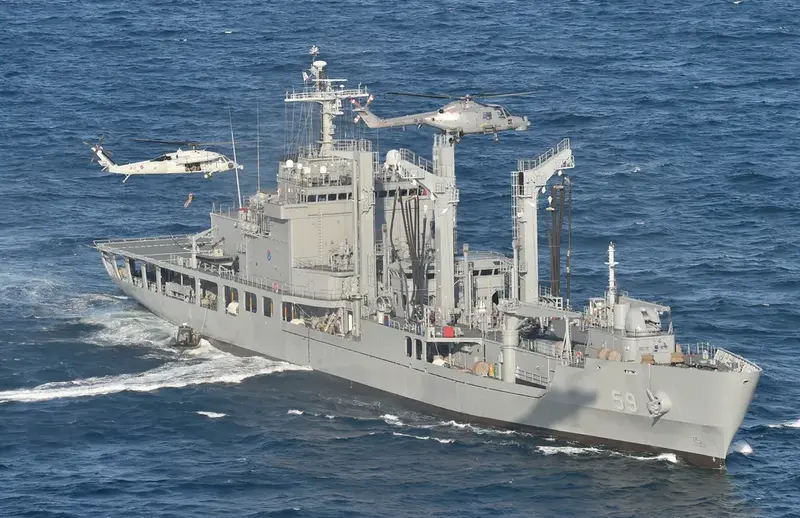
The navy is part of the picture as well. The Wang Geon, the 48th contingent of the Cheonghae Unit that deployed in May, has been carrying out missions in the Gulf of Aden. Any expansion of its mission to Hormuz or elsewhere would first require parliamentary approval and a review of the rules of engagement.
There are five indicators to watch going forward.
Whether the United States intervenes directly
Who actually controls Mocha and Dhubab
When Saudi airports and air routes return to normal
Yanbu shipment volumes and trends in Hormuz traffic
Whether the scope of the offensive expands
■ Who holds the strait
The wreckage at Riyadh airport's terminal will be cleared, and flights will return someday. What matters more is who controls the coast that hosts the launch sites for missiles and drones aimed at Saudi Arabia. Even if 100 fighter jets fill Yemen's skies, guarding the shores of Bab el-Mandeb will still fall to soldiers on Yemeni soil. Whether Saudi Arabia succeeds in managing the Houthis will be decided not in the air, but on the ground there.