Did diesel shipped from South Korea help offset Ukraine's refinery strikes?
Amid a POW dispute, Ukraine raised the issue of "diesel shipped from South Korea." Its origin remains unconfirmed and no law was violated, but sanctioned vessels did use South Korean ports.
강병지
Published
On July 19, a sanctioned tanker left the port of Ulsan. It was carrying diesel, and its destination was Vladivostok, Russia. That summer, Ukrainian drones were repeatedly striking refinery facilities inside Russia. Russia was facing such severe fuel shortages that, 11 days earlier on July 8, it had announced a ban on diesel exports.
Two and a half months later, on Oct. 6 local time, Vladyslav Vlasiuk, sanctions adviser to the Ukrainian president, brought up that voyage. On the same day British media published an analysis saying large volumes of oil products had been shipped from South Korean ports to Russia, he shared it on Facebook and wrote that it stood "in stark contrast to the sanctions policy South Korea has adopted since the full-scale invasion." The claim was that fuel shipped from South Korea had helped offset the impact of Ukraine's attacks on refinery facilities.
■ Criticism raised in the middle of a POW dispute
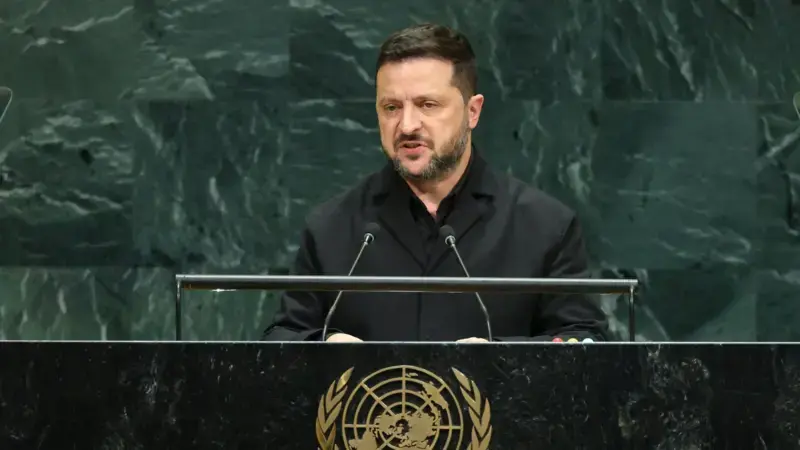
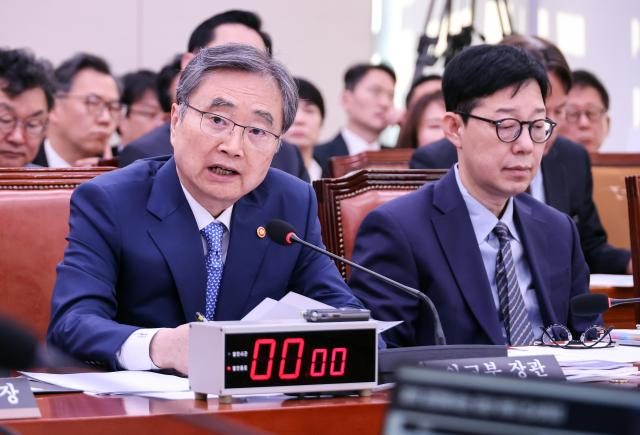
Relations between the two countries were already fraying. After President Volodymyr Zelenskyy disclosed in a September speech at the U.N. General Assembly that two North Korean POWs would go to South Korea, the South Korean government demanded an explanation and an apology, saying a private agreement had been broken. Foreign Minister Cho Hyun said during a parliamentary audit on the 6th that he had received a message from Ukrainian Foreign Minister Andrii Sybiha containing an apology, but that it fell short of expectations. A spokesperson for Ukraine's Foreign Ministry pushed back the next day, saying what Sybiha had expressed was "regret" that the situation had reached the point of public criticism being exchanged. The spokesperson added that the two sides had interpreted the private agreement differently. On the 8th, South Korea's foreign ministry decided to recall the ambassador to Ukraine. It was the first recall of an ambassador in protest in 18 years, since Seoul recalled its ambassador to Japan in July 2008 over Japan's inclusion of its territorial claim to Dokdo in a textbook guide. Even after the recall was announced, Ukraine's Foreign Ministry said the door to dialogue remained open, adding, "Diplomacy must come before emotion."
It has not been confirmed whether this criticism was a response to that dispute. Vlasiuk's post was a personal social media post, not an official protest by the Ukrainian government, and it was uploaded the same day the report he cited was published, so the timing can also be explained by the publication schedule. Still, because the apology issue had not been resolved, some South Korean media linked the two issues, reporting that Ukraine had launched criticism without apologizing over the POW matter.
■ Seven ships, 14 voyages, 176,000 tonnes
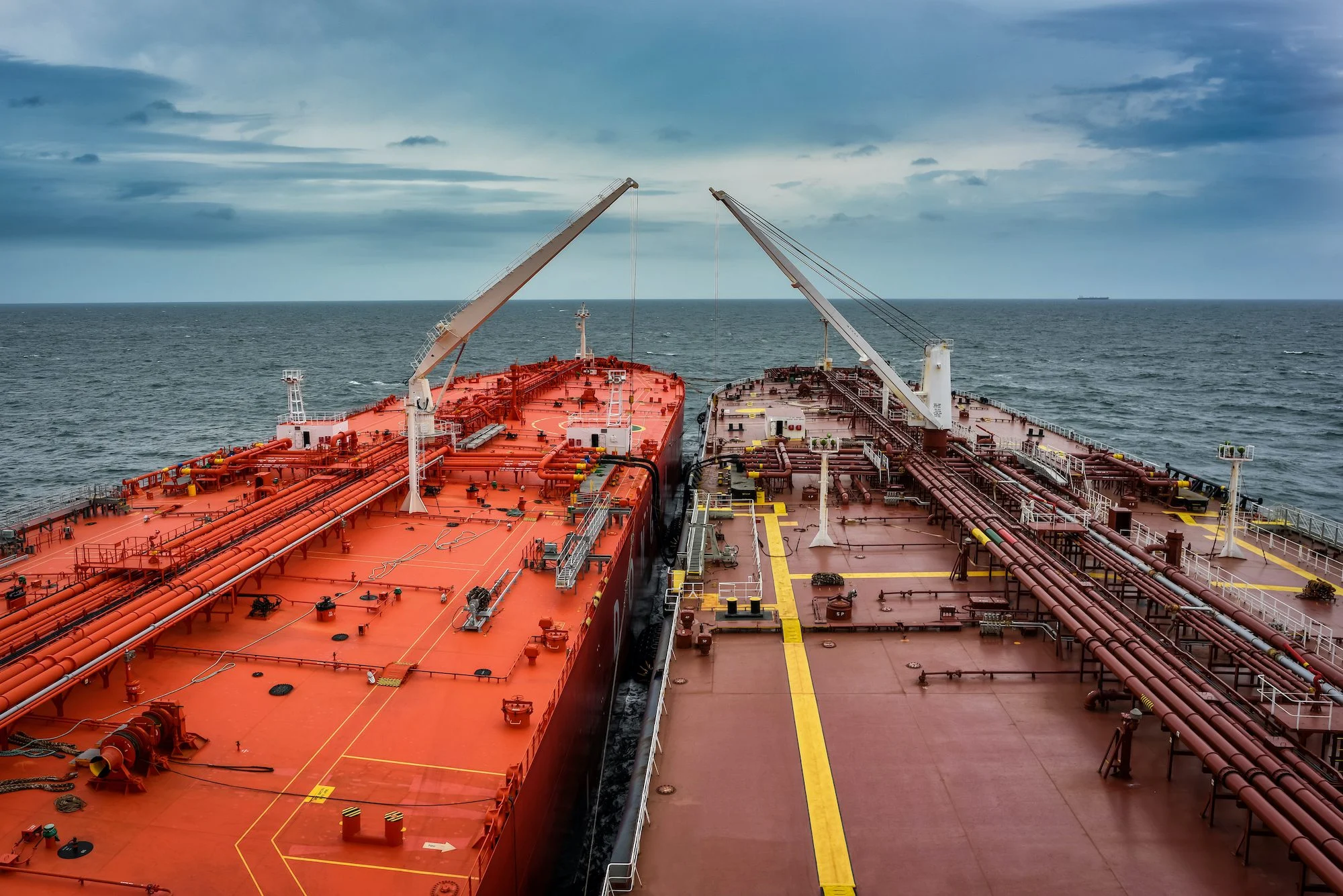
According to an analysis by British media of port records and vessel-tracking data, in July and August seven tankers carried more than 176,000 tonnes of oil products to Russia's Far East in 14 voyages from South Korean ports such as Ulsan and Yeosu and nearby waters. Most of it was diesel.
Three of the seven ships were under British and European Union sanctions. The tanker Laila left Ulsan twice, on July 19 and Aug. 10, carrying about 57,000 tonnes of diesel to Vladivostok. On its first departure, it declared Vladivostok as its destination, but on the second it listed Niigata, Japan. The Russian tanker Astoria loaded about 11,000 tonnes in Ulsan and on Aug. 1 declared Japan as its destination, but in fact went to Vladivostok. The ship is also on Australia's sanctions list. Isaac Levi, an analyst at the Finland-based Centre for Research on Energy and Clean Air (CREA), called it "shocking" that an EU-sanctioned tanker loaded fuel at a South Korean port and went to Russia, saying it undermined both the sanctions regime and South Korea's support for Ukraine.
The third sanctioned ship, the Chongchon, did not enter a South Korean port at all. In early August, off Yeosu, it received about 26,000 tonnes from a tanker that was not under sanctions through a ship-to-ship transfer, or STS. The ship, which had declared Singapore as its destination, headed for Vladivostok after taking on the cargo. Ship-to-ship transfers are seen as a typical sanctions-evasion method because they obscure the cargo's origin.
South Korea's share of Russia's total imports was also not insignificant. According to data from vessel-data firm Kpler extracted by CREA on Sept. 24, Russia's seaborne imports of oil products in August totaled 368,000 tonnes, the highest level since the full-scale invasion. British media said 112,000 tonnes of that, or about 31%, came from South Korea, second only to India.
The figures vary by tally, but they do not contradict one another. The roughly 30,000 tonnes reported by foreign media in early August covered only loadings in late July, while the 18,000 tonnes from South Korea in August cited in a CREA report in early September excludes tankers whose destinations had not been confirmed. The 176,000-tonne figure is the combined total for the two months of July and August.
■ Why did Russia need fuel from South Korea?
Ukraine's attacks on refinery facilities help explain why Russia, one of the world's leading diesel exporters, was buying fuel. According to the International Energy Agency, Russia's refinery throughput in June was about 3.8 million barrels a day, down 1.6 million barrels from a year earlier and the lowest in more than 20 years. Ukraine's General Staff claimed in July that it had disabled nearly 43% of Russia's refining capacity. Vlasiuk's "offset" claim rests on the timing. The increase in shipments from South Korea in July and August coincided with a second fuel crunch that began in late July, following a first fuel shock in June.
The assessment changes depending on the scale used. If all seaborne imports in August are simply converted on a diesel basis, they amount to about 90,000 barrels a day, of which around 27,000 barrels a day came from South Korea (this article's own estimate; because some gasoline was mixed in, the actual figure could be somewhat higher). Compared with Russia's daily refinery throughput in mid-July, estimated by Kpler at about 3.8 million barrels, total imports were a little over 2% and South Korean shipments were about 0.7%. That was not enough to overturn Russia's overall fuel balance.
However, compared with capacity knocked offline by the attacks, estimated by Kpler at 1.5 million to 2 million barrels a day, total imports come to 4% to 6% and South Korean shipments to 1% to 2%. "Offset" is an exaggeration, but there is room to say they made up part of the lost refining volume. Nor was this only about South Korea. In CREA's August tally released in early September, based on a total of 172,000 tonnes, 70% of Russia's oil-product imports came from India, and Turkiye also appears to have started sending gasoline to Russia from August.
■ It is still unclear who sent it
The phrase "South Korea supplied diesel to Russia" needs qualification. A shipment leaving a South Korean port is not the same thing as diesel produced by a South Korean refiner.
According to foreign media reports in early August, the cargo loaded in late July involved traders transferring fuel stored in tanks at Ulsan's container port onto small tankers. There was also a report in July that a deal to send more than 200,000 barrels of jet fuel, originally due to be loaded in Chiba, Japan, to Russia via South Korea had fallen through. There is also precedent: in February 2022, about 22,000 barrels of jet fuel were shipped from Yeosu to Vladivostok. It cannot be ruled out that South Korea was used not as the place of origin but as a transshipment point.
An official at the presidential office's National Security Office also said on the 7th that trade statistics showed no cases of diesel, gasoline or jet fuel being exported from South Korea to Russia from 2025 through August this year, and that it had not been confirmed that South Korean fuel was exported. However, because some vessels declared Japan or Singapore as their destination, the absence of exports to Russia in the statistics alone is not enough to conclude the fuel was not South Korean.
It has not been confirmed which company sold it or how much of the cargo was produced by domestic refiners. South Korean port records alone could not identify the cargo's owner or seller. The buying side is somewhat clearer. According to some reports, buyers identified in ship-data analysis were Russia's state-run oil company Rosneft and oil company NNK. Rosneft is under U.S., EU and British sanctions, and NNK's owner and affiliates are under British sanctions.
The government's stance also changed. The Ministry of Trade, Industry and Energy declined comment on foreign media inquiries in August, but the day after Vlasiuk's criticism, the presidential office directly issued a rebuttal. Senior spokesperson Kang Yoo-jung said in a written briefing that Ukraine's claim was "contrary to the facts and inappropriate." The point was that it was based on individual transactions whose trading parties, origin and ultimate buyer had not been confirmed. She also said, "We ask the Ukrainian side as well to refrain, without sufficient fact-checking, from making public remarks that could distort the Republic of Korea's related policies or damage its international credibility." She added, however, that relevant agencies were examining the facts and export-control issues, and that necessary measures would be taken if problems were found.
On the 8th, the foreign ministry, the trade ministry and the Korea Customs Service issued a joint press handout. The government said, "Loading refined petroleum products at our ports does not constitute a violation of domestic law," but added that it would strengthen inspections to prevent indirect exports.
■ Not illegal, and that is the problem
The British media analysis and the South Korean government's position are the same. Loading diesel at a South Korean port is not in itself a violation of domestic law. The main remaining question is whether destinations were falsely declared. A National Security Office official said the relevant authorities would establish the facts and make that determination.
South Korea's sanctions on Russia are item-based export controls. The Foreign Ministry said that, under the Foreign Trade Act, it is strictly enforcing controls not only on strategic items but also on 1,402 non-strategic items that could be diverted to military use. The controls focus on industrial machinery, electronics and vehicles, and do not cover refined fuels such as diesel and jet fuel. That does not mean there was no way at all to restrict fuel exports. After the Strait of Hormuz was blocked by the Iran war, South Korea capped exports of gasoline, diesel and kerosene from March at no more than the level of the same month a year earlier. But that measure was intended to protect domestic supply, not to target shipments to Russia.
The same goes for ships. South Korea in April 2024 effectively introduced unilateral sanctions targeting Russian vessels for the first time, but the targets were ships involved in transporting military supplies between North Korea and Russia. Even if tankers sanctioned by Britain, the EU and Australia load fuel at South Korean ports and depart, there appears to be little clear domestic legal basis to stop them.
Japan, which banned jet fuel exports to Russia in coordination with the G7, made clear on July 7 through Economy, Trade and Industry Minister Akazawa Ryosei that shipments routed through third countries or transshipped at sea would also be banned after it became known that there had been an attempt to send Japanese-made jet fuel to Russia via South Korea. It is not confirmed whether that also covers diesel, since the measure concerns jet fuel. But by closing indirect routes as well, Japan stands in contrast to South Korea, where no such mechanism is apparent.
In a separate assessment, Vlasiuk mixed valid points with exaggerations. While praising the expansion of export controls on Russia and Belarus and sanctions on vessels linked to North Korea-Russia dealings, he also took issue with South Korea's non-participation in the crude oil price cap, its continued purchases of Russian coal and LNG, and its review of resuming crude oil and naphtha imports.
The purchases of coal and LNG are real. According to CREA, South Korea was the fourth-largest buyer of Russian coal from December 2022 through this past August, purchasing 12% of Russia's coal exports. LNG accounted for 6% of Russian exports in CREA's tally by buying country. It is also true that South Korea reviewed resuming crude imports. As supplies through the Strait of Hormuz were shaken by the Iran war, the country's four refiners discussed import options with the Ministry of Trade, Industry and Energy after the United States temporarily eased sanctions on Russian crude in March. South Korea, however, halted imports of Russian crude in 2022, and no actual resumption has since been confirmed. Naphtha went beyond review and was actually imported. LG Chem imported about 27,000 tons of Russian naphtha during the same period of eased sanctions, and the trade ministry reported this at a March 30 meeting of the ruling party's special committee on economic responses to the Middle East war.
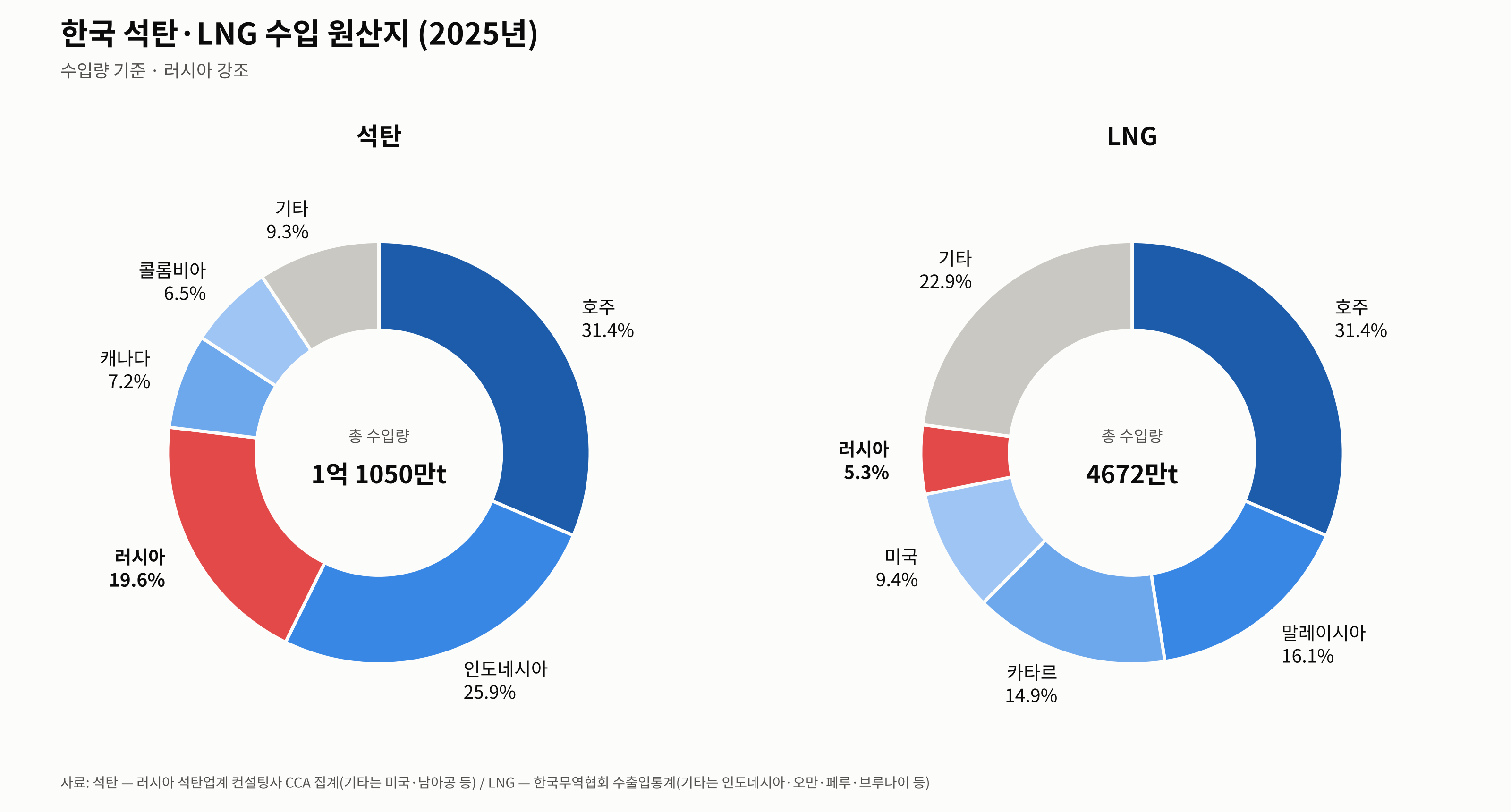
The claim that South Korea did not join the price cap is only half right. South Korea is not a member of the formal price-cap coalition formed by the G7, the EU and Australia, but in July 2022 then-Deputy Prime Minister for Economic Affairs Choo Kyung-ho said South Korea would support the U.S.-led cap.
■ A question that will outlast the ambassador recall
The conflict over the disclosure of the prisoners could one day be resolved through an apology and explanation. The diesel issue is different. Whatever Vlasiuk's intent, the data show that sanctioned vessels moved in and out of South Korean ports and nearby waters while carrying fuel to Russia.
The government said it would verify the facts. Its rebuttal has some basis, given that the seller and the origin of the cargo have yet to be identified. But analysis has already pointed to sanctioned Russian companies as the buyers. The issue raised was not enforcement of controlled items, but fuel outside those controls, sanctioned vessels and ship-to-ship transfers at sea. Before the Western sanctions coalition asks the same questions, the government needs to provide answers first. It needs to identify who sold the fuel and decide how far it will allow sanctioned vessels to enter port and conduct coastal ship-to-ship transfers.
On its second departure from Ulsan, the tanker Leila listed Niigata as its destination. It took nearly two months, and analysis of ship-tracking data, for it to emerge that the declared destination and the vessel's actual route did not match. What Ukraine ultimately pointed to was the loophole revealed by that lag.