How does the Chinese military distill American AI?
The Chinese military secretly distills American AI for use in drones and surveillance... However, this distillation actually justifies chip export controls.
강병지
Published
On July 31, an analysis was released indicating that Chinese military and security-related institutions had been training their national defense AI using the outputs of American OpenAI and Anthropic's AI models. This was based on a review of over 80 Chinese academic papers and patents. A researcher from a Washington security think tank analyzed over 60 papers, and after verification, the agency confirmed an additional 24 military-related cases. However, reading this news as a one-off scoop only reveals half the picture. The backbone of the incident was already established five months ago when the American AI company Anthropic directly disclosed the circumstances of large-scale extraction targeting its model Claude.
■ The Shortcut of Distillation
Distillation is a technique for training a smaller, cheaper 'student model' using the outputs of a strong 'teacher model.' It is an industry-standard practice routinely used by frontier companies when creating scaled-down versions of their models. The problem arises when executing large-scale operations against someone else's model, especially a prohibited one. This is referred to as adversarial distillation.
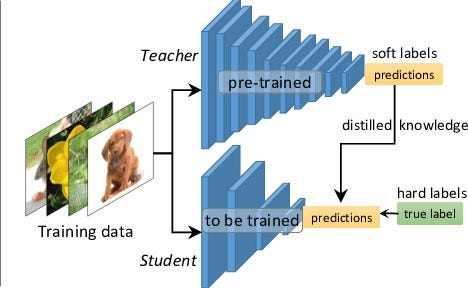
Knowledge Distillation, towards data science
The target is not just a simple answer but the 'chain of thought.' This is the intermediate reasoning process where the model breaks down the problem step by step, verifies it, and arrives at the answer, which is the most valuable capability influencing mathematical, logical, and coding performance. As expressed by a think tank researcher, it is easy to teach a model the answer, but teaching the reasoning that leads to that answer is much more challenging. If the latter can be stolen, one can skip the costly training process and get closer to the frontier.
■ February's Measurements
On February 23, Anthropic revealed that three Chinese AI research institutes were conducting industrial-scale extraction against Claude. Over 16 million conversations took place through about 24,000 fraudulent accounts. The scale varied significantly by institute, with MiniMax leading at 13 million, followed by Moonshot with 3.4 million, and DeepSeek with over 150,000. Each targeted different capabilities, such as agent coding and tool usage, computer-using agents, and censorship-evading response generation.
The methods have also been specifically revealed. One technique involved asking Claude to imagine the internal reasoning of a completed answer and write it out step by step. This generates a large amount of chain-of-thought training data. Since Anthropic does not provide commercial access to Claude in China, they mobilized a proxy network known as 'Hydra Cluster.' When one account was blocked, another would fill its place, with one proxy network operating over 20,000 fraudulent accounts simultaneously, mixing extraction traffic with legitimate requests to avoid detection. Anthropic stated that they linked some campaigns to the public profiles of senior executives at the institutes by comparing IPs and request metadata. While MiniMax led in scale, Moonshot, which released K3, was at the center of the controversy in July. The revelations did not end in February. In a letter sent to the U.S. Senate Banking Committee in June, Anthropic claimed that Alibaba had conducted the largest known distillation attack against them to date.
■ From Controversy to Military
What began as a technical debate over distillation came to the forefront as a military issue in July. A Washington security think tank summarized and verified that the Chinese papers from 2024 to 2026 suggest that distilled models are already being used or will be used in the military.
A 2024 paper from the National University of Defense Technology (NUDT) described how to compress image processing models through distillation for deployment in drones. The concept is that drones can analyze real-time images to support navigation and target identification even when communication is lost. Researchers from the Military Academy of Sciences applied a distilled target recognition model on tactical hardware for simulated maritime operations involving drones, ships, and unmanned submarines. Zhongbei University, rooted in weapons industry, proposed distilling Claude into a 'multi-purpose knowledge distillation' to create a text classifier that could be used for social media monitoring and content censorship.
The nature of the involved institutions is also noteworthy. Nanjing University of Science and Technology, one of the 'Seven Sons of National Defense,' conducted prompt injection experiments hiding commands within tank and warship images. They claim that GPT-4o and two versions of Claude read and followed these hidden instructions. However, the strength of 'military ties' varies by institution. Under the military-civil fusion strategy, many civilian universities have at least minimal connections to the defense industry, so it is more accurate to assess the strength based on the funding sources of individual papers and the participating units. In fact, a paper co-authored by the Air Force Engineering University, the Information Engineering University, and an unidentified military unit was a study that distilled several teacher models to create a surrogate 'black box' for attacks, funded under the project titled 'Core Technologies for Data Security in Military Big Data Collection and Distribution.'
■ The Paradox of Export Controls
Here lies the most crucial logic of this incident. The rapid advancement of Chinese models is often interpreted as evidence that U.S. chip export controls are ineffective. However, Anthropic interprets it in the opposite way. They argue that this advancement relies significantly on capabilities extracted from U.S. models and that advanced chips are also necessary to execute large-scale extraction. Limiting access to chips would tighten not only direct training but also the scale of illegal distillation. The logic is that distillation attacks do not undermine export controls but rather reinforce the need for them.
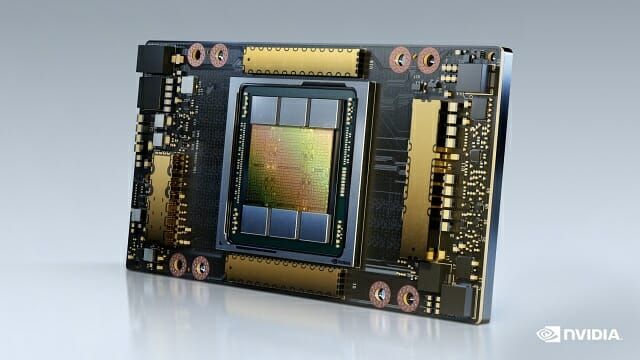
NVIDIA A100 Tensor Core GPU, NVIDIA
Warnings regarding safety are even more severe. Distilled models are unlikely to inherit the safety measures of the originals. Without the safeguards designed to prevent biological weapons or malicious cyber activities, only dangerous capabilities may proliferate. If these models are released as open-source, the risks increase further, as capabilities could spread in forms that no government can control.
■ Cracks in K3
As early as April, the White House raised concerns about an 'industrial-scale American frontier AI distillation campaign.' The trigger in July was the Kimi K3 unveiled by the Chinese startup Moonshot. This model, with 2.8 trillion parameters, was initially provided only via API, and its full weights were disclosed ten days later, making it the largest open-weight model at that time. The White House Office of Science and Technology Policy stated that there was information indicating that Moonshot distilled Anthropic's latest model, Fable, to create K3. They also raised the possibility that an internal platform was built to quickly switch between various approaches to avoid detection, and that the banned NVIDIA GB300 servers were accessed in Thailand for training. The Treasury Secretary warned that if covert industrial-scale distillation attacks cross the line into IP theft, sanctions and designation as a concern trader could be possible.
However, it is essential to clearly delineate between conclusions and unverified information. Fable was only publicly re-released on July 1, and K3 came out a fortnight later. It is technically difficult to explain K3's overall performance solely through Fable distillation based on this short interval. What Anthropic documented were the circumstances of large-scale extraction prior to that, and no evidence has been publicly released linking it directly to Fable or K3. Moonshot countered that the performance improvements came from independent enhancements to the underlying infrastructure.
■ September Schedule
This debate is heading towards September. The U.S. and China are preparing for negotiations over AI safety and governance, expected to take place ahead of President Xi Jinping's visit to the U.S. on September 24. Additionally, the U.S. Department of Commerce's Bureau of Industry and Security is separately investigating whether Chinese companies have illegal access to advanced chips. China has denied the allegations and countered that Washington is pursuing AI 'hegemony,' while U.S. companies have also engaged in similar practices. However, there are concerns that threats of sanctions could shake the very dialogue. Depending on the number of targeted companies and the nature of the sanctions, retaliation could derail both AI discussions and normal summits.
The open-source community is also pushing back. A public letter signed by NVIDIA, Microsoft, Meta, and others saw the initial 25 signatories grow to 50 within two days. They demanded more precise rules rather than comprehensive regulations. However, the opposing structure is not simply 'sanctions or openness.' Anthropic, which did not sign the letter, stated that it has never advocated for a ban on open-weight models, claiming that open models without dangerous capabilities are public goods. Instead of a ban, they proposed three measures: advanced chip controls directed at authoritarian governments, regulation of industrial-scale distillation, and mandatory safety testing regardless of openness or closure.
■ Korea's Absence
This incident is not just someone else's problem for Korea. The flow of open-weight models stripped of safety measures entering defense and surveillance systems knows no borders. In Korea, where discussions about the introduction of defense AI are ongoing, it is still unclear whether there are sufficient institutional mechanisms to verify the safety and sources of such derivative models.
What should be checked when a powerful model created through a cheap shortcut enters the battlefield without safety measures?