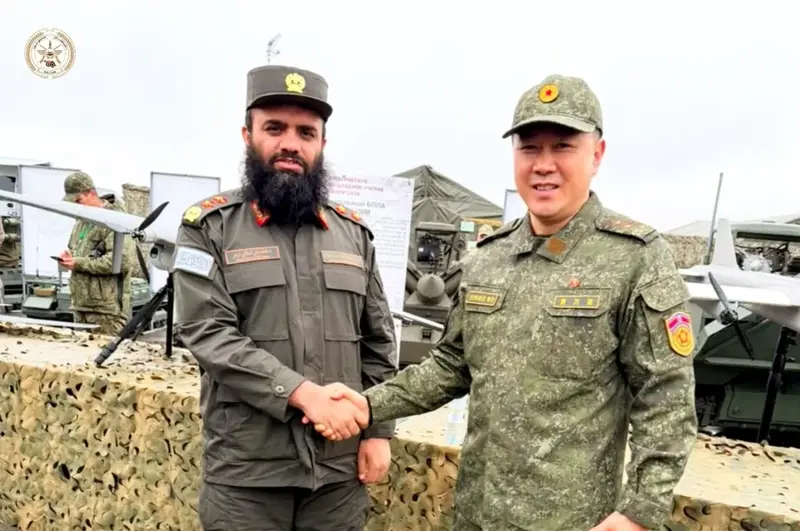
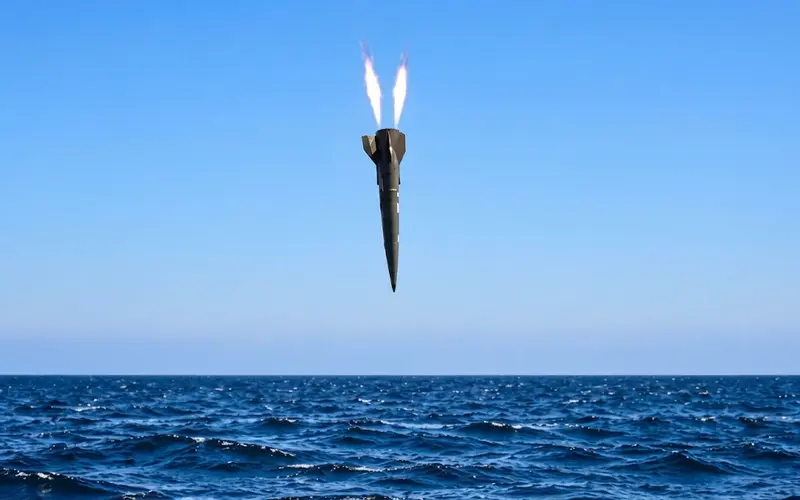
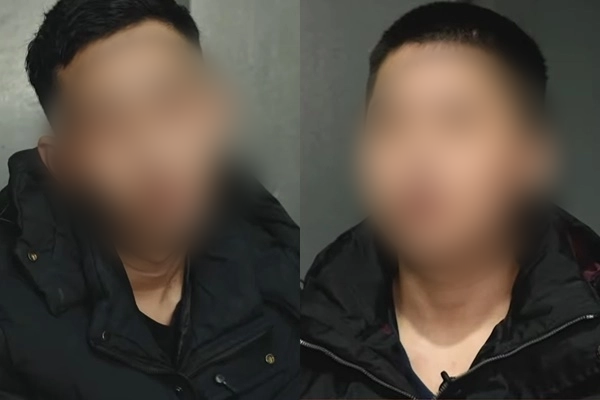
The side that wanted confidentiality was the first to disclose: two North Korean soldiers and Cheongung-Ⅱ.
Even if there was no agreement, the safety of the prisoners and their families was an obligation required by the Geneva Conventions. Zelensky's disclosure contradicts that protective purpose.
강병지
Published
■ A sentence from the UN podium
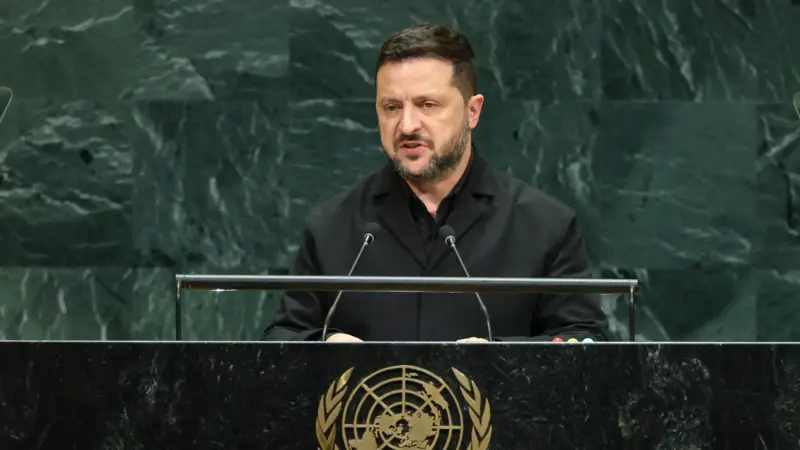
On September 23 (local time), Ukrainian President Volodymyr Zelensky, speaking at the UN General Assembly, criticized Russia for recruiting mercenaries from 47 countries and added a sentence: "Recently, we sent two North Korean war prisoners to the Republic of Korea." He also revealed that one of the two attempted to take his own life when he was captured.
This was a matter that the South Korean government had refused to confirm, citing the safety of the parties and their families. The fallout escalated to a vice-ministerial summons after five days. The next day, President Lee Jae-myung expressed regret to Ukraine for breaching the private agreement through social media. On the 25th, a communications officer from the Ukrainian presidential office rebutted that there was no such agreement. On the 27th, the Blue House designated this as 'false public relations' and demanded an official clarification and apology. On the 28th, the first vice minister of foreign affairs summoned the acting Ukrainian ambassador to protest. It was unusual for a vice minister to take part in a summons typically handled by a director-level official.
According to the National Intelligence Service's report to the National Assembly on the 30th, Ukraine has not officially or unofficially expressed regret or apology. Andrii Sybiha, Ukraine's Foreign Minister, attempted to downplay the incident on October 1 (local time), stating, 'Let's consider this a diplomatic misunderstanding.' In response, President Lee Jae-myung defined the issue on the 2nd as one that concerns the dignity of the nation and its people. He also issued a warning that if Ukraine continues to refuse to acknowledge the facts and publicly apologize, further actions would be taken. The subject of the demands has risen to the level of the president himself. An apology has yet to be confirmed.
■ Where Was the Agreement Made?
The issue at hand is the existence of an agreement. After a closed meeting of the National Assembly's Intelligence Committee on the 30th, the reports from the NIS shared by the ruling and opposition party secretaries specifically addressed this layer. There was no private agreement or consultation between the two national leaders. The agreement was made during the communication process between diplomatic officials and embassies, and the party that first requested confidentiality was Ukraine.
The reasons presented by Ukraine were related to negotiations for prisoner exchanges with Russia and the impact on third-country prisoner exchanges. The Blue House explained the situation more specifically in a statement on the 27th. Ukraine's concern was that sending North Korean prisoners to South Korea could lead to domestic criticism for giving up the opportunity to exchange them for many of their own prisoners held by Russia.
The fact that 'there was no agreement between the leaders' does not weaken the South Korean claim. In diplomacy, leaders set the direction, while practical lines determine conditions such as whether to disclose, timing, and route. President Lee Jae-myung and President Zelensky agreed to resolve the prisoner issue according to international law during their summit in Ankara, Turkey, in July. It was the practical line that set the condition of confidentiality under that direction. Rather, the question should be whether a promise made by the practical line can be overturned by a single line in a leader's speech.
There is also a counterargument from the Ukrainian side. A spokesperson from the Ukrainian presidential office claims that they informed South Korea in advance that prisoners could be mentioned in the speech. A senior official from the South Korean presidential office also acknowledged that they had heard of such a possibility. However, they were not informed about how it would be mentioned, and the South Korean side explained that they conveyed the position that the fact of repatriation itself should not be disclosed. The National Intelligence Service report conveyed the contents of a closed meeting. It has not been disclosed whether an agreement was documented, or exactly when and between whom requests were exchanged.
The controversy then shifted in another direction. On October 4, President Zelensky told reporters in Kyiv that "South Korea requested to hand over North Korean soldiers." He also added that under the South Korean constitution, they are also South Korean citizens. However, he did not respond to the controversy over the breach of the private agreement or the demand for an apology from President Lee Jae-myung.
This statement does not overturn the South Korean explanation. It is already known that South Korea expressed its intention to accept the prisoners. The Ministry of Foreign Affairs has stated that from February 2025, North Korean prisoners will be considered our citizens under the constitution, and if they wish to come to South Korea, we will accept them all. This was reaffirmed in a regular briefing in June this year. The issue is not who requested the repatriation, but who requested the confidentiality. President Zelensky's response only changed the subject of the question and did not mention anything about the private agreement.
■ Even if there was no agreement
Ukraine's rebuttal has two branches. The communications officer stated that Ukraine is an open country and that secretly handing over soldiers would have been more unusual. They also emphasized that what was disclosed was only the fact that they were sent to South Korea, and the routes or timing were not revealed.
Both claims collide with international norms for the protection of prisoners. Article 13, Section 2 of the Third Geneva Convention of 1949 stipulates that prisoners must always be protected, especially from violence, threats, insults, and 'public curiosity.' In the past, it was typical to parade prisoners in front of crowds as a propaganda act. Now, the disclosure of photos and videos has taken its place.
The International Committee of the Red Cross (ICRC) specified the scope of this provision in its revised commentary in 2020. It included not only photos, videos, and interrogation records but also the disclosure of other private information. The media is not exempt. The reasons for the prohibition include not only insult but also the safety of the prisoners' families and the prisoners themselves after their release. There is also an interpretation that materials that can identify individual prisoners should be presumed to expose them to public curiosity.
Based on this criterion, the explanation that 'only the facts were disclosed' is difficult to establish. The faces and identities of the two prisoners were already known. This is because the Ukrainian government disclosed their faces, identification, and interrogation videos shortly after capturing them in Kursk, Russia, in January 2025. The U.S. Military Academy's Lewis Research Center analyzed that this disclosure could constitute a violation of Article 13, Section 2, and may have endangered the safety of the prisoners and their families. This time, in addition to their identities, their destination has been added.
The fact that North Korea has operated a system of collective punishment against the families of those who cause political issues has been repeatedly pointed out in international human rights investigations. There are also testimonies that the families of defectors face surveillance and disadvantages. Family safety is not an abstract concern.
The claim that 'there was no agreement' misses the core issue. The obligation to protect prisoners from public curiosity arises from the Geneva Conventions, regardless of agreements between the two countries. The private agreement is more about the two countries reaffirming this obligation.
The background to South Korea's insistence on confidentiality also includes domestic law. The government views the two individuals as defectors and is likely to protect them under the North Korean Defectors Protection Act. Currently, the National Intelligence Service is conducting an investigation and temporary protection for a maximum of 120 days. This law allows the Ministry of National Defense or the police to provide personal protection for the safety of settled protected individuals, setting a basic period of 5 years. If there is a significant risk to life and body due to the exposure of their residence, it allows for support in relocating their residence. This means that exposure itself is seen as a risk factor. However, this law only binds the South Korean government and does not bind Ukraine.
South Korea's principles are not a new logic created this time. In February 2025, when domestic media reported on prisoner interviews and exposed their faces, the Ministry of Foreign Affairs expressed regret, stating that there could be disadvantages for the individuals and their families.
There are also clear limitations. The ICRC's commentary is an interpretation, not the text of the treaty. Some in academia caution against the ICRC's broad interpretation of 'public.' In 2008, the U.S. Federal Appeals Court ruled that the publication of photos of detainee abuse in Iraq and Afghanistan was not prohibited if there was no intent to conceal identities or insult. There remains a dispute over whether Article 13 can be directly applied if the prisoner status ends with repatriation to South Korea. However, since the commentary cites safety as a reason for protection after release, this disclosure directly contradicts the protective purpose of the convention.
Criticism has also emerged within Ukraine. Valerii Zaluzhnyi, Ukraine's Ambassador to the UK, criticized the president for disclosing this despite the agreement and confidentiality promise between the two countries, calling it a 'show' and 'attention-seeking.' The statement from a presidential aide that 'there was no such agreement' was a direct rebuttal to this.
■ Why does Ukraine want South Korea's air defense weapons?
Then why did Ukraine bring this fact to the UN stage? The National Intelligence Service analyzed that Ukraine likely hoped for public opinion in South Korea to support arms assistance as a result of the prisoner repatriation. However, this is merely an estimation by South Korean intelligence authorities and not a motive acknowledged by Ukraine. Nevertheless, the context in which this estimation arose is clear.
President Zelensky claimed on August 8 that 30,000 to 50,000 North Korean soldiers would be additionally deployed to Russia and requested support for air defense systems from South Korea. He also expressed a willingness to cooperate on drones, which was interpreted as suggesting a quid pro quo for air defense support. Ukraine's air defense network was under significant strain. Just three days earlier, on August 5, Russia launched 24 ballistic missiles, 4 hypersonic missiles, and 115 drones. Ukraine shot down 98 drones but did not intercept a single missile, resulting in 17 deaths.
Concerns that the prisoner issue and arms support could become entangled existed even before the disclosure. In August, there were speculations in diplomatic circles that Ukraine might link the prisoners' transfer to support for air defense systems. The trend following the disclosure is also in the same direction. Kyrylo Budanov, head of the Ukrainian presidential office, warned in an interview on the 27th that North Korea is strengthening its military power based on the experiences from this war. He even mentioned the recent explosion incident involving suspected North Korean landmines in the Demilitarized Zone (DMZ). A diplomatic source reported that Ukraine showed an attitude of not clearly separating the prisoner issue from the arms agenda during the negotiation process. On the 28th, President Zelensky again emphasized the risks of military cooperation between North Korea and Russia, stating that there are more than 8,000 North Korean soldiers in Russia.
■ As the Patriot is blocked, Cheongung-II has been mentioned
The background of Ukraine turning its eyes to South Korea lies in the difficulties surrounding the U.S.-made Patriot missiles. Due to the Iran war, the U.S. stockpile of interceptor missiles has decreased, leading to a reduction in the quantities that could go to Ukraine. As an alternative, Ukraine has been demanding a license to produce Patriot interceptor missiles domestically.
President Trump's responses were inconsistent. At the NATO summit in Ankara on July 8, he stated that he would grant Ukraine the right to produce Patriots. However, in an interview with a British economic newspaper on July 30, he backtracked, saying he was not sure. The next day, at a cabinet meeting, he said there was no agreement and mentioned that a country receiving technology could turn against them at any time. Concerns that key technology could flow to Russia were cited as a background for this reversal. On September 13, he stated that they were discussing a license for an older version. President Zelensky claimed on the 25th that during a meeting at the UN General Assembly, President Trump made a 'final decision' on granting the production license. However, President Trump once again avoided giving a definitive answer on the 26th.
South Korea has been mentioned as a candidate to fill this gap. President Trump shared a column by conservative foreign policy and security expert Marc Thiessen on his social media on September 4 (local time). This column, published in a U.S. daily, pointed out that even if Ukraine receives a production license for Patriot missiles, it urgently needs interceptors. It suggested that President Trump implicitly pressured South Korea to sell the Cheongung-Ⅱ, known as the 'Korean Patriot,' to Ukraine.
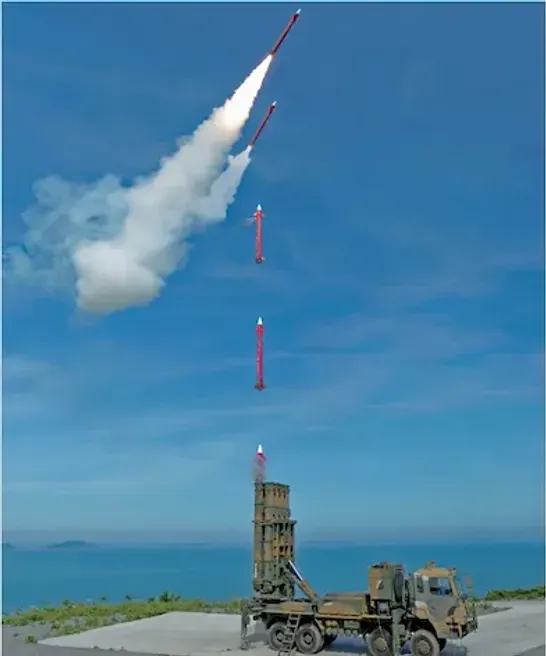
The logic of the above column has three branches. First, it suggests that South Korea should take the opportunity to improve relations since President Trump is already angry about South Korea's refusal to support in the Strait of Hormuz. Second, it points out the contradiction of South Korea selling the same interceptor missiles to the war-torn United Arab Emirates (UAE) while claiming it cannot sell weapons to a country at war. Third, it argues that the performance of Cheongung-II can be tested against North Korean missiles flying toward Ukraine.
President Trump shared the column without any explanation. It cannot be seen as an official request. However, given that he has shared articles and contributions he likes in the past, many interpret it as a signal of pressure on South Korea. South Korea is effectively receiving the same demands from two directions.
■ South Korea's Calculations
The government's official position remains unchanged. The provision of defense materials has been carried out in accordance with domestic laws and policies, and humanitarian support and reconstruction cooperation with Ukraine continue in areas such as energy, infrastructure, and healthcare. South Korea has adhered to the principle of not providing lethal weapons since the outbreak of the war in 2022.
The actual constraints are more about the situation than the law. A diplomatic source stated that if the 'implicit red line' between South Korea and Russia is broken in the context of the Ukraine war, the disadvantages would outweigh the advantages. There are concerns that arms support could inadvertently encourage military cooperation between North Korea and Russia.
The UAE contradiction theory has points to consider. The UAE case was about fulfilling a contract made before the war, and the counterpart was Iran. Sending weapons to Ukraine is about making a new support decision, and the counterpart is nuclear-armed Russia. The backlash will return to the Korean Peninsula.
The National Intelligence Service (NIS) also made it clear that there were no conditions or costs associated with this repatriation. NIS Director Lee Jong-seok stated that Ukraine has never set conditions for repatriation, nor has South Korea provided support to Ukraine. The two prisoners entered the country in mid-September and reportedly have no major health issues. It is explained that their desire to go to South Korea has been confirmed multiple times.
■ Two People at a Crossroads
Three variables remain for the future. First, if additional North Korean prisoners emerge, how will the two countries negotiate? In a situation where trust has been broken, it is difficult to make or believe in private promises again. Next is the content of the 'additional measures' warned by President Lee Jae-myung. Finally, there is the fate of the Patriot license. If the U.S. ultimately does not grant the license, demands for Cheongung-II may increase.
The issue of using prisoners as political material is not limited to Ukraine. Some sectors of South Korean politics have also called for the repatriation facts to be made public. However, the more the faces and names of the two individuals are consumed, the greater the risks for their families remaining in North Korea.
Promises can be restored through diplomacy. We can receive an apology and a commitment to prevent recurrence. However, once identities and destinations are made public, they cannot be reversed. The two prisoners now stand at the intersection of Ukraine's weapon requests, U.S. pressure, and South Korea's principles.