The United States breaks its silence and opens the era of space armament.
The United States has officially acknowledged the existence of space weapons in orbit for the first time. This statement aimed at deterrence has raised concerns that it could provoke counteractions from China and Russia and lead to an arms race.
강병지
Published
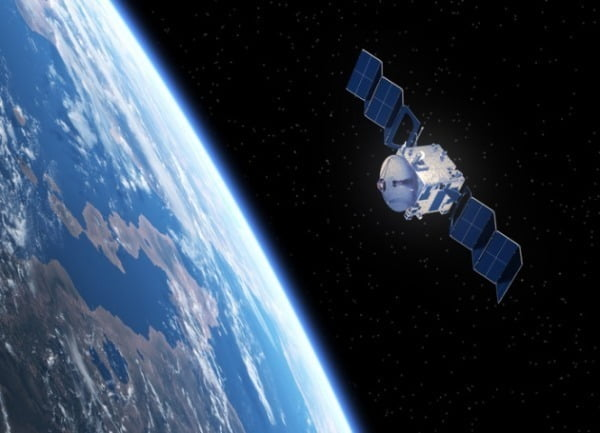
On September 14, 2026, U.S. Air Force Secretary Troy Mineck broke decades of silence with a single sentence: "The United States now possesses orbital space control weapons capable of defending joint forces from hostile acts." This is the first time a U.S. government official has officially acknowledged the existence of weapons deployed in space. However, he stopped right there.
■ The weight of a single sentence
Mineck holds a senior civilian position overseeing both the Air Force and the Space Force. His remarks came during a keynote speech at an aerospace conference held in Maryland. The Space Force subsequently elaborated on the concept of 'space control.' It is a mission area that disrupts enemy capabilities, degrades performance, and, if necessary, destroys them using both physical and non-physical means. This capability can be used for offensive or defensive purposes according to the directives of the combat command. The following day, Douglas Shyuice, the newly appointed Chief of Space Operations, reinforced this point in the same venue, stating that Space Force personnel, known as Guardians, are already operating weapons in orbit.
■ What was said and what was not said
An interesting point lies in what Mineck did not say. He revealed that he chose his words very carefully. He remained silent about the type of weapons, when they were placed in orbit, and whether they had been tested. The logic was that revealing details would not actually help deterrence. It is a calculated ambiguity that deters the opponent with the mere fact of 'existence' while leaving the substance shrouded in fog. What kind of weapon it actually is remains in the realm of speculation. Some experts predict that, based on the previous reluctance to create debris, it is more likely to be space-based electronic warfare or jamming systems rather than physical interceptors. Means such as lasers, robotic arms, and satellite collisions have also been mentioned, but nothing has been confirmed.
■ Why now?
The background of the disclosure is the acceleration of competition. China and Russia have steadily developed capabilities aimed at satellites, and last month, the U.S. Space Commander stated, "There is no safe haven in space," asserting that a credible, recognized means to neutralize enemy assets is key to deterrence. The Trump administration issued an executive order last year directing the establishment of space superiority. The Trump administration's missile defense concept 'Golden Dome' is centered on space-based interceptors, and Mineck also stated in the same speech that those interceptors have reached a "flight-ready" stage. This acknowledgment is not an anomaly but rather the culmination of several years of trends.
■ The loophole of legality and the paradox of deterrence
Here, it is important to address the norms. The Outer Space Treaty, which came into effect in 1967, prohibits placing nuclear weapons and other weapons of mass destruction in orbit. However, it does not regulate the deployment of conventional weapons. This is the basis on which the United States can claim it is not violating the treaty, and at the same time, it is a significant loophole left by this treaty. The United States has announced its existence while standing right on that loophole.
The problem is that while the announcement aimed at deterrence, it could operate in the opposite direction. A space security expert described this as a "very unstable statement." Since the United States has acknowledged it first, China and Russia gain justification to reveal and justify their own capabilities. In that case, the deterrent effect could be reversed, the existence of space weapons could become 'normal,' and an arms race could accelerate. Experts point out that it is unclear why the United States chose to disclose this now. Of course, there are counterarguments. Some interpret this statement as a calculated strategic signal aimed at China. Either way, the door opened by a single sentence will not close easily.
■ South Korea's position
In an era where space has become a battlefield, where does South Korea stand? The operations of the South Korean military increasingly rely on satellite assets, yet there is still no independent Space Operations Command. The military has been expanding its organization from the Satellite Surveillance Control Unit to the Space Operations Brigade, and the Joint Chiefs of Staff aims to establish a Space Operations Command by 2030. With the 425 project, they have established a system of five reconnaissance satellites and are increasing surveillance capabilities with small satellite clusters, but it is also true that there is a heavy emphasis on the ability to 'see.' On the day the United States acknowledged the existence of weapons in orbit, the question South Korea must ask again is clear: How are we preparing for the battlefield of space?