Tiny-camera threat warned of nearly 20 years ago reaches beyond exams to national security
Education Ministry warned of camera-assisted CSAT cheating in 2007; actual cases uncovered in TOEIC tests in 2013 and national qualification exams in 2023
Tax-accountant exam’s top scorer admits cheating as a Telegram channel draws 23,000 users; allegations spread to the CSAT and civil service exams
Detection systems remain insufficiently validated despite risks to military and industrial secrets; cross-government technology development involving the Science Ministry, intelligence service and Defense Ministry is urgent
Published
Updated

A day before the College Scholastic Ability Test (CSAT) for the 2027 academic year, the government decided to inspect every test-taker’s glasses and place stickers on each clothing button. The emergency measures followed revelations of cheating in the tax-accountant examination using a miniature camera and artificial intelligence (AI). Yet the government has warned for nearly 20 years about photographing exam questions and transmitting them outside, and the method was confirmed to have been used in organized cheating in 2013. As the recurring threat resurfaces ahead of the CSAT, concerns are growing that the response to miniature recording devices must extend beyond fairness in national examinations.
In a public address on the 17th, Prime Minister Han Seong-sook said more than 8,400 additional proctors would be deployed to CSAT sites and checks would be strengthened on glasses, sleeves, collars and other items brought into examination rooms. The government will continue investigating suspected cheating after the test and is pursuing an extension of the ban on taking the CSAT for offenders from the current one year to 10 years. It has launched a cross-government response, viewing cheating using miniature cameras and smart glasses as a serious crime that undermines examination fairness.
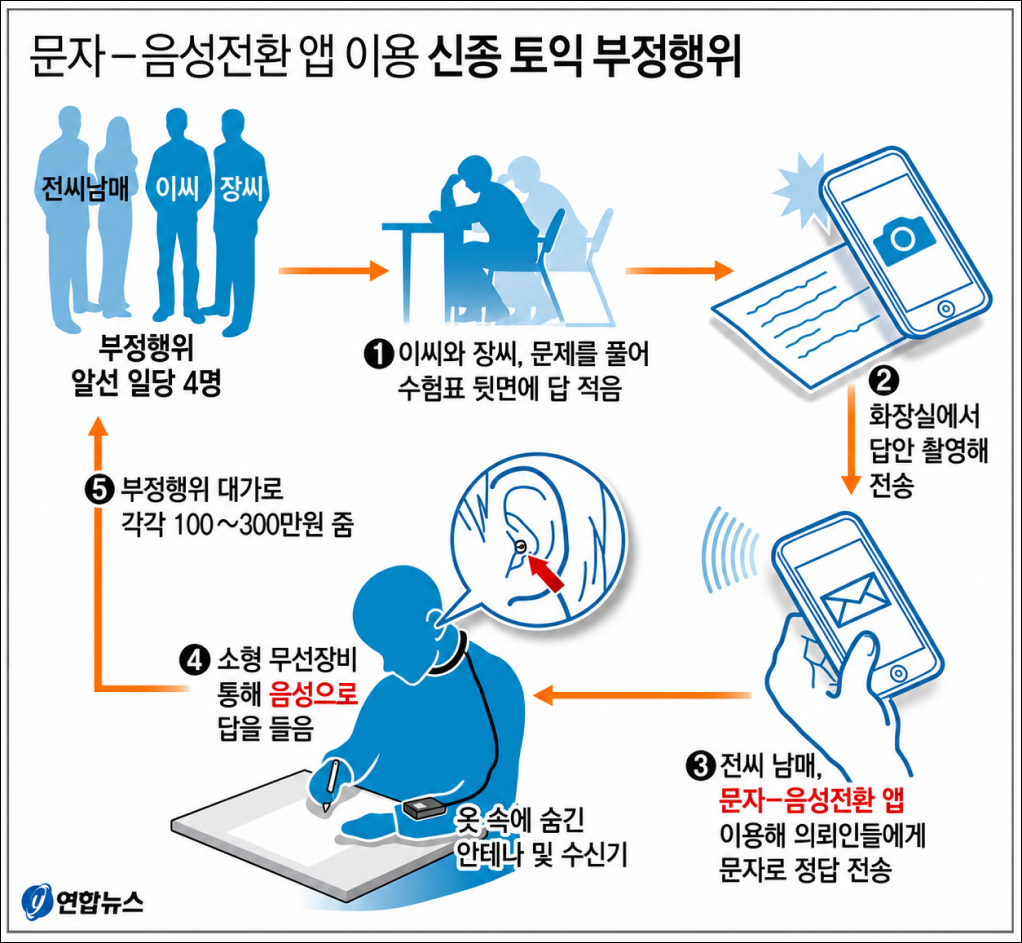
The controversy began with a confession by a 34-year-old man surnamed Han, the top scorer in the 63rd tax-accountant examination. Appearing on a lawyer’s YouTube channel on the 15th, Han said he photographed questions with a miniature camera and used generative AI to obtain answers in both stages of this year’s exam. A seven-page account he submitted to the examination authorities said he used a modified calculator to transmit questions and answers and checked the answers on a separate miniature monitor. Police said he did not view the answers on the calculator’s screen and are conducting digital forensics to establish what equipment was used and how the cheating took place. Han is also reported to have attempted cheating in the certified public accountant examination, and police are investigating whether he had accomplices.
Two proctors were assigned to Han’s examination room. He sat in the second row in front of the podium for the first-stage examination and in the front row for the second stage. The proctors nevertheless failed to detect the cheating, and the Human Resources Development Service of Korea, which administered the examination, found nothing unusual in its subsequent internal checks. The possibility that the cheating might have remained undiscovered without questions over Han’s exceptionally high scores and his own confession has raised doubts about the effectiveness of existing supervision.
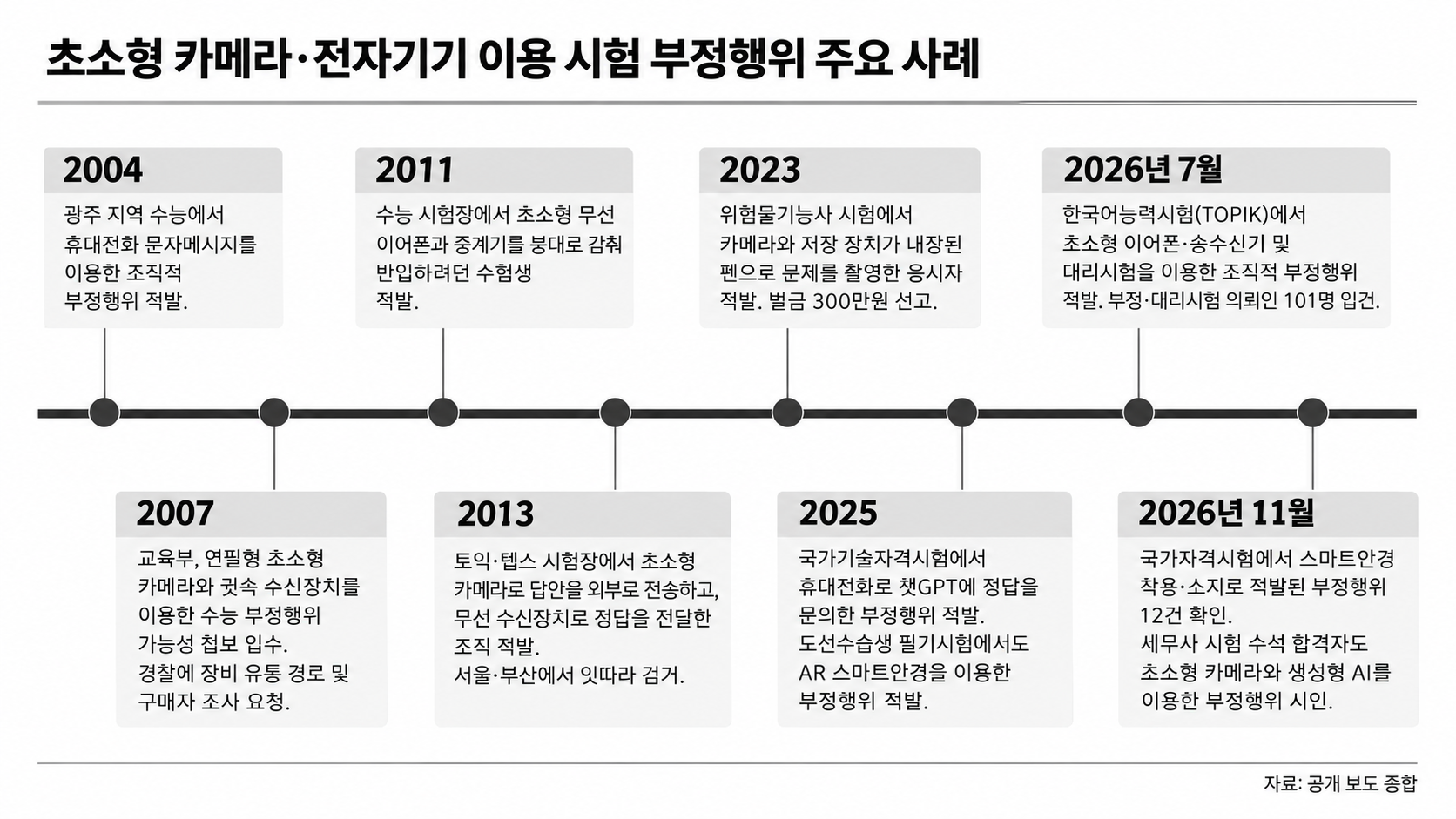
These methods did not emerge overnight. Education authorities have strictly limited electronic devices in examination rooms since an organized CSAT cheating ring using mobile-phone text messages was exposed in Gwangju in 2004. In October 2007, however, the Education Ministry received intelligence that equipment such as a tiny camera fitted to a pencil and a receiver concealed inside the ear might be used to send questions outside and receive answers. The ministry asked police to identify distribution channels and purchasers of such equipment and even considered stepped-up checks and searches of vehicles parked near examination sites.
During the 2011 CSAT, a test-taker attempting to enter an examination site with a miniature wireless earpiece and relay device concealed on the body was caught by a metal detector. Investigators found that the test-taker had used bandages to hide the equipment and intended to write down answers supplied from outside. It was an actual instance of cheating with advanced electronics detected at a CSAT site.
In 2013, miniature cameras were used to transmit questions and answers in organized cheating. In April that year, Seoul’s Gwanak Police Station uncovered a group that filmed answer sheets in TOEIC and TEPS examination rooms, transmitted the images live to accomplices waiting outside and supplied correct answers to other candidates. A similar group was arrested in Busan in November. Investigators found that high-scoring TOEIC candidates had been sent into examination rooms to photograph and transmit answers, which were relayed to 12 test-takers using separate receivers. The group charged each candidate several million won, and some obtained scores hundreds of points higher than their actual ability would have warranted.
These cases show that the basic structure of miniature-camera-assisted exam cheating has existed since at least the early 2010s. At the time, it required communications equipment and someone outside the examination room to work out and relay answers. More recently, generative AI has become capable of handling some of the question-solving and answer-generation work. The equipment needed to record images, process information and check answers has also become smaller, multiplying the ways it can be concealed and brought into examination rooms.
In April 2023, a candidate was caught photographing questions in a hazardous-materials craftsman examination administered by the Human Resources Development Service of Korea using a pen containing a miniature camera and storage device, and was fined 3 million won. In April last year, a candidate in another national technical qualification examination was caught by a proctor after secretly bringing in a mobile phone and asking ChatGPT for answers; a court imposed a 3 million won fine in February this year. Cheating using augmented-reality (AR) smart glasses was also uncovered in last year’s written examination for trainee marine pilots at the Korea Institute of Maritime and Fisheries Technology, resulting in a conviction.
An organized cheating case involving the Test of Proficiency in Korean (TOPIK), announced by police in July this year, is also noteworthy. The Seoul Metropolitan Police Agency uncovered a predominantly Chinese group that had used miniature earpieces and transceivers to relay answers from outside or arrange proxy test-takers for about four years from 2021. During its investigation into brokers and proxy candidates, police booked 101 Chinese nationals who had sought cheating or proxy-examination services. Investigators found that the group recruited clients through Chinese social media and charged fees reaching several million won. The use of separate miniature electronics even in an examination that required candidates to hand in their phones revealed a problem shared with the tax-accountant case.
Recent detections have also increased. According to the Human Resources Development Service of Korea, 12 cases this year were treated as cheating after candidates were found wearing or possessing smart glasses in national qualification examinations. Equipment was discovered in examinations for fire protection equipment engineers, information processing engineers and electrical industrial engineers, among others, with some cases leading to police investigations. Long-term comparative statistics are insufficient to establish how much cheating using advanced devices has actually increased. What is clear is that new forms of equipment have recently been discovered in a succession of examinations.
More worrying are indications that the equipment and cheating services are expanding into an openly accessible online market. MBC, Channel A and News1 reported on the 17th that a Chinese-language Telegram channel was selling miniature cameras and earpieces and advertising services in which helpers outside examination rooms supplied answers. The channel had more than 23,000 users, and its operator claimed to have assisted the top scorer in South Korea’s tax-accountant examination. Services targeting the CSAT, civil service examinations and various language tests were also advertised.
Claims that similar cheating had already occurred in the CSAT and civil service examinations are spreading online. After the tax-accountant exam’s top scorer confessed, an anonymous community post claimed its author had cheated in the CSAT for the 2024 academic year using a miniature camera and AI and had entered a medical school in the Seoul metropolitan area. A comment under Han’s confession video also claimed that its author had passed a Grade 9 civil service examination using electronic equipment and had lent the equipment to acquaintances. Hankook Ilbo and The Korea Economic Daily reported the claims, but the authors’ identities and whether the alleged cheating actually occurred have not been established.
Anonymous allegations alone cannot establish that past CSAT or civil service examinations were compromised by organized cheating. There is nevertheless broad recognition that undetected cases cannot be ruled out, given the long history of confirmed incidents and the recent exposure of cheating missed during examinations. The Ministry of Employment and Labor and the Human Resources Development Service of Korea have decided to investigate all 528 qualification categories examined this year, comprising 491 national technical qualifications and 37 national professional qualifications. They plan to identify suspicious cases by analyzing unusually high scores and variations between subject scores.
High scores alone, however, are difficult to treat as proof of cheating. Even actual cheating may be hard to detect through statistical analysis if it did not produce conspicuous results. Physical evidence and records must remain available for subsequent checks when misconduct is not detected during the examination itself. The reach of investigations and the extent to which the reliability of past examinations can be verified therefore remain separate challenges.
After the CSAT, are industry and national security next?
One point that must not be overlooked is that miniature cameras are not used solely for examination cheating. The same recording technology can be misused to leak the internal layouts and equipment positions of military facilities, defense manufacturers’ production processes and design materials, and information from research facilities handling nationally critical technologies. Examination questions are often made public once a test has ended. By contrast, recovering leaked weapons-system designs or internal security-facility documents cannot undo the exposure of that information. Allowing entry without identifying recording devices creates direct risks to military and industrial secrets.

At a parliamentary audit of the Defense Ministry on the 7th of last month, Reform Party lawmaker Chun Ha-ram released footage he had recorded inside the ministry’s building while wearing smart glasses. The ministry, which had not noticed the recording in advance, subsequently ordered stronger security screening for smart wearables throughout the armed forces, effective from the 1st of this month. Last month, the National Intelligence Service also instructed relevant agencies to strengthen entry controls and security measures for camera-equipped Internet of Things (IoT) devices and connected vehicles at national security facilities.
Restrictions on recording devices are also tightening in the defense industry and at major manufacturers. Korea Aerospace Industries (KAI) notified all employees on the 16th that camera-equipped IoT devices, including smart glasses and portable IP cameras, were prohibited at its worksites. Controls on wearables with recording and communications functions are also being strengthened at defense and shipbuilding companies such as Hanwha Aerospace and HD Hyundai, and at major businesses including Samsung Electronics, SK hynix, Hyundai Motor and LG.
The difficulty is that a ban has limited practical effect without sufficient means to identify the prohibited equipment. Radio-frequency detectors struggle to find devices that do not emit the signals they monitor, while optical lens detection and X-ray screening vary in effectiveness depending on the device’s form and surroundings. Metal detectors and visual inspections can help identify electronic components, but further checks are needed to determine whether a suspicious object is a recording device. Because no single instrument can detect every type of recording equipment, combining detection technologies with screening procedures is increasingly important.
Ironically, South Korea has already accumulated substantial technology and experience for addressing these threats. Since 2018, when the social response to illicit filming intensified, the Ministry of the Interior and Safety, local governments and police have used detection equipment in regular inspections of public toilets and other facilities used by the public. According to the government’s digital-sex-crime response implementation plan, it supported the introduction of 7,298 illicit-recording detectors nationwide in 2018, and approximately 520,000 locations were inspected from the second half of 2018 through 2019.
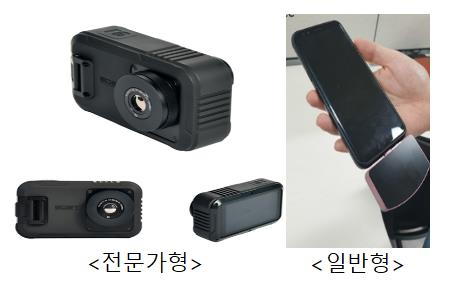
There is also a record of technological development. In 2021, the Korea Electronics Technology Institute (KETI) announced that it had developed a precision multi-sensor detector capable of finding miniature cameras that transmit video over Wi-Fi. Introducing technology that combines radio-frequency (RF) signals, infrared and image processing, the institute also cited potential military and industrial security applications. Relevant domestic research and development had therefore been under way for years, with working prototypes already produced.
The research, personnel and equipment-operating experience developed in responding to illicit filming should be assessed for use in national security systems. According to the ‘2025 Report on Support for Victims of Digital Sex Crimes,’ published by the Ministry of Gender Equality and Family and the Women’s Human Rights Institute of Korea, the central support center received 3,856 reports of illicit-filming victimization last year, accounting for 21.9% of reports across all categories of harm. These figures are not a nationwide total of illicit-filming crimes, but they show that the harm remains substantial. South Korea has long pursued facility inspections, equipment purchases and research to tackle illicit filming. Whether that experience has translated into the high detection reliability required in military facilities and industrial security still needs separate validation.
The Korea Communications Agency (KCA), under the Ministry of Science and ICT, recently launched a 50 million won project to develop radio-frequency detection equipment for AI smart glasses. The plan is to build a portable detector that analyzes Bluetooth Low Energy (BLE) and Wi-Fi signals within 70 days of signing the contract, then conduct pilot operations and field validation at national qualification examination sites from February through June next year. The technology seeks to identify suspicious devices by analyzing the communications characteristics of smart glasses. It has not been established whether the current development scope can cover the full variety of miniature recording equipment.
The government and National Assembly are also pursuing an 18.2 billion won increase in next year’s related budget to prevent cheating with advanced devices in national qualification examinations. The plan would fund the purchase of 7,200 radio-frequency detectors and the deployment of specialist monitoring personnel to each examination room, supplementing existing supervision. But if the performance and scope of the equipment have not been adequately validated, increasing the number deployed will not resolve the risk of missed detection. This is why a separate effort is needed to develop and validate detection technology for military and industrial facilities as well as national examinations.
Equipment deployed at national security facilities should do more than recognize particular products whose appearance is already known. Detection rates, false-positive rates and screening times should be assessed against recording devices from different manufacturers and equipment using different communications methods. Screening systems should also be tested for their ability to identify devices when no wireless signal is detected. Rapid demonstration projects are needed to connect laboratory performance with validation at actual entry points.
One approach would use existing research and development procedures while conducting prototype production and field trials at security facilities in parallel, introducing equipment into limited pilot operation once a defined level of performance is demonstrated. Common evaluation standards for defense, industrial and public facilities could also reduce the time and cost of separate procurement and testing by individual ministries. Policy should focus on improving real detection capability while ensuring privacy protection and the necessary legal authority for security screening.
If the ability to identify recording equipment brought into national security facilities has not been adequately validated, strict entry-control procedures alone cannot guarantee safety. Checking access passes and providing security training will still leave gaps in the final line of defense for sensitive information if recording devices can pass through screening. It cannot be assumed that every security facility nationwide has the same vulnerabilities. Equally, it is difficult to rely on the security of facilities whose detection performance has not been established.
The government’s emergency response to the latest case is a positive step. Its measures have not, however, been sufficiently convincing, and the problems surrounding miniature recording devices will remain across many sectors after the CSAT is over.
Substantial research personnel and funding need to be invested in detection technology and field demonstrations to protect not only the fairness of examinations, a central mechanism of competition in South Korea, but also military secrets, advanced industrial technologies and personal privacy. Bringing together domestic research institutions and security companies that have already developed relevant technologies, and moving quickly to verify their effectiveness at real security facilities, would hardly be an excessive response.
The dangers of miniature cameras have long been known, and some have already been used in examination cheating and illicit filming. What is needed now is more than adding each new device to a list of prohibited items: it is technology and validation systems that can find them in the field. With warnings repeated for nearly 20 years again drawing public attention ahead of the CSAT, the government’s response must extend beyond examination rooms to national and industrial security.